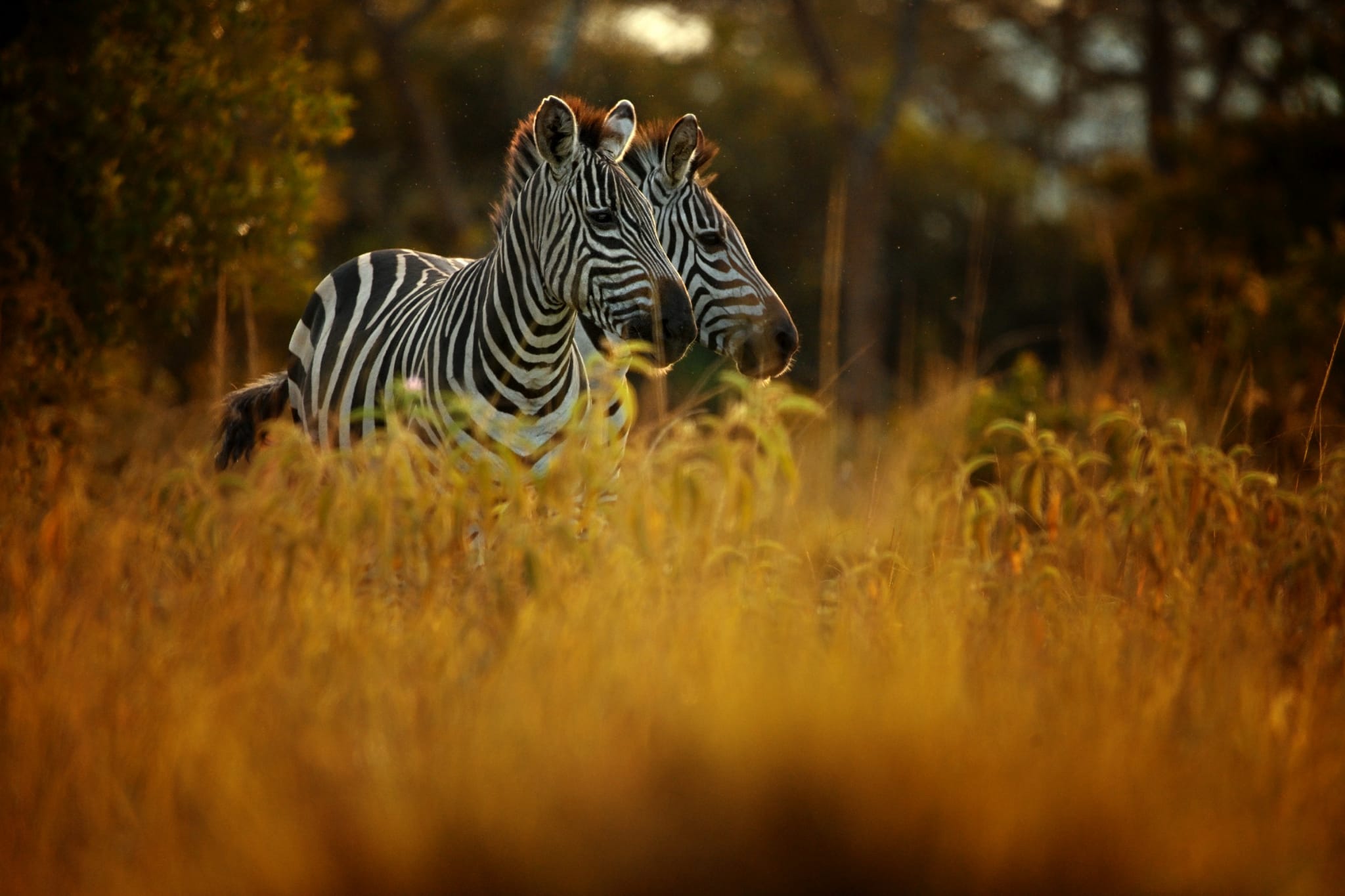
Tourism attractions
Uganda is endowed with 10 National Parks and many Game Reserves home to over 340 mammal species in all sizes; from large mammals and birds.
Review information on wildlife parks and reserves:
BWINDI IMPENETRABLE NATIONAL PARK
Bwindi Impenetrable National Park is located in South Western Uganda. It is Impenetrable because of its dense ground cover of vines and shrubs. Set over 331 sq. km of improbably steep mountain rainforest, the park is a Home to an estimate of 340 gorillas almost half the world’s surviving mountain gorillas of which they are less than 600 still left in the entire world. The park is one of East Africa’s most famous national parks. You will need to reserve a Gorilla Permit at least 3 months in advance as a requirement for tracking these Uganda Gorillas. Bwindi is one of the richest areas for flora in Eastern Africa. The park contains 120 other species of mammal which include forest elephants, 11 species of primates (including chimpanzees and L’Hoest’s monkeys), antelopes, duikers, bushbucks, African golden cats, and the rare giant forest hog.
The park is a host of birds not found anywhere else in the world, butterflies, reptiles, trees and insect species. For birdwatchers, it’s one of the most exciting destinations in the country, with over 350 species, including 23 of the 24 endemics to the Albertine Rift and several endangered species, such as the African green broadbill. The main birding spots are along the Buhoma waterfall trail, the Mubwindi swamp trail and in the bamboo zone. Bwindi also harbors eight endemic plants.
Accommodation: Bwindi brings you a comprehensive list of trusted Hotels and Safari Lodges located within the different sections of the park and offering different levels of comfort and pricing. From basic / budget accommodation to mid-range and upmarket/luxury accommodation options, you will find a lot of choices.
In Buhoma section, there’s Buhoma Community Rest Camp (Budget), Sanctuary Gorilla Forest Camp – (Luxury), Lake Kitandara Camp – (Luxury), Buhoma Lodge – (Luxury), Silverback Lodge, Volcanoes Safaris Bwindi Lodge, Engagi Lodge, Gorilla Resort, Mahogany springs camp, Bwindi Guest House, Bwindi View Bandas, Eco Marvels Gorilla Resort, Gorilla Friends Lodge and Jungle View Lodge. In the Nkuringo section, there’s Clouds Mountain Gorilla Lodge, Nkuringo Gorilla Camp, Nshongi Camp, and Chameleon Hill Lodge. In the Nyundo section, there’s Nyundo Valley Hill Bandas. In Ruhija section offers Cuckoo land Tented Lodge, Ruhija Gorilla Safari Lodge, Ruhija Gorilla Mist Camp, Trekkers Tavern cottages, Gift of Nature Lodge, Ruhija Gorilla Resort, Ruhija Gorilla Friends Resort & Campsite, Ruhija Community Rest Camp and Wagtail Eco-Safari Camp. In Rushaga, there’s Gorilla Safari Lodge and Chameleon Hill Lodge.
In addition to the above hotels, camps and safari lodges in Bwindi, new facilities keep springing up and as such, you can be sure there are always plenty of choices for your accommodation in Bwindi and we are eager to help you find one that fits your exact needs and budget.
Activities in Bwindi impenetrable forest
- Gorilla trekking
- Chimp trekking
- Camping,
- Hiking,
- Biking,
- Birdwatching,
- Cultural encounters with Batwa Pygmy culture.
Best Time for Wildlife Viewing: Rainfall is the main factor to consider when deciding the best time for gorilla trekking. Heavy rains result in slippery and challenging hiking trails. It can rain at any time of the year, but June to August and December to January have less rain and are therefore considered the best time to go. The park stays open throughout the year.
Best Time for Bird Watching: The birdlife in Bwindi is good year-round, but at its best in March and September. June and July have the least rain while March to mid-May has the most. Heavy rains might result in delays due to impassable roads and slippery hiking trails, which can limit your bird-watching time. The main nesting season is in May and June, with food being abundant from late May through September. Migratory birds are present from November to April.
KIBALE NATIONAL PARK
Kibale National Park is situated to the north-east of Queen Elizabeth National Park. It is popular for its impressively varied primate population. It offers one of the most rewarding experiences since it abounds in wildlife that include the likes of chimpanzees, elephants, warthog leopards, Bushbuck, Waterbuck, Duiker, the giant forest hog and African buffalos. It is a refuge for East Africa’s largest population of the rare L’Hoest’s monkey and the endangered red colobus monkey. Several nocturnal primate species are present as well, including Potto, Demidov’s dwarf Galago, and the eastern needle-clawed bush baby. The very specialized Sitatunga antelope can be found in the marshy areas.
Of all the national parks in Uganda, Kibale boasts one of the most beautiful rainforests where you can take nature walks or night safaris to see nocturnal creatures. You can also go hiking through amazing scenery, swim in crater lakes, and explore caves, and tour tea and vanilla plantations. You will also find areas of grassland and swamp supporting almost 300 species of birdlife including the sought-after African pitta, Cassin’s spine tail, blue-headed bee-eater, Nahan’s francolin and masked Apalis which have not been recorded in any other National park of Uganda. The best bird-watching spot is the Bigodi Wetland Sanctuary a community project where experienced guides take you on a four-hour trail.
Accommodation: The Park has excellent accommodation with the Kibale primate lodge that is located in Kanyanchu. Others include up-market accommodation, tree houses, and undemanding cottages that are discovered at Sebitoli. Every accommodation has a campsite with a restaurant serving both local and international cuisine. Budget accommodation is also found at Bigodi, Nkingo and Ndali crater area. Ndali is well known for its up-market accommodation and other budget alternatives such as Chimpanzee guesthouse along with Lake Nkuruba Fort Portal town also has high standard accommodation.
Common activities include,
- Birding
- Chimpanzee Tracking and Habituation
- Cultural encounters
- Hiking and
- Nature Walks
Best Time for wildlife viewing: Kibale is open for chimpanzee trekking throughout the year. December to February and the months of June and July are the driest months and are therefore the best times for this activity. Walking the trails is easier at this time and the overall experience tends to be more enjoyable.
Best Time for Bird Watching: Wet Seasons from March to May and August to November is a great time for birders with migratory birds’ present. The views are spectacular when the clouds lift. June to September is the main fruiting season, so food is abundant, and many birds are in breeding plumage.
Migratory birds can be found here from November to April. The rains might result in delays due to impassable roads and slippery hiking trails, limiting your bird-watching time
MURCHISON FALLS NATIONAL PARK (KABALEGA NATIONAL PARK)
This park is located in North-Western Uganda and it is the largest and oldest National Park in Uganda covering approximately 3,877 sq. km. it is one of the most spectacular parks in Africa. If you could only visit one of the national parks in Uganda, Murchison Falls might be your best pick.
Murchison Falls National park is bisected by the Victoria Nile, which plunges 45m over the remnant valley wall, creating the dramatic falls, the park’s unique attraction and the final event in an 80km stretch of rapids. The mighty cascade drains the last of the river’s energy, transforming it into a broad, placid stream that flows quietly across the rift valley floor into Lake Albert. The Victoria Nile is a magnet for wildlife, and it teems with crocodile and hippo. Chimpanzees can be tracked in neighboring Budongo Forest. The vegetation of Murchison Falls National Park is made up of Savannah, Riverine forest and woodland.
East of the Murchison Falls within the park, are the Karuma Falls, where the Nile River cascades over a breathtaking 23 km of rapids. The scene creates one of the most exciting white-water rafting opportunities in Africa. Launch trips stand out as the most common exciting activities because it gets you close to the centerpiece of the park. For those that want an aerial wildlife viewing experience, hot air ballooning activities are available within the park.
The park supports four of the Big Five; only rhino is absent. Buffalo and elephant are particularly common. Animals are in plentiful supply and game drives here offer you a very healthy population of lions that like to prey on the abundant Uganda Kob. Oribi antelopes are also found here. Their chances to see Jackson’s hartebeest, grey duiker and bushbuck, big cats, chimpanzees, bushbucks, warthogs, reedbucks, hartebeest, Rothschild giraffes, and a variety of monkeys like the rare Patas monkey can sometimes be spotted on the grassy plains. Hyena is present but rare.
Birdwatchers will be in paradise here with hundreds of birds’ species. You can also take a Nile River boat cruise to spot Nile crocodiles, hippos and water birds such as the crested crane, the country’s national bird. Murchison Falls NP is one of the best places in Africa to find the prehistoric-looking shoebill stork. Sightings of this sought-after bird are almost guaranteed on a boat trip on the Victoria Nile towards the Lake Albert delta. This boat trip, as well as the more popular ‘launch’ trip towards Murchison Falls, are, in fact, great for checking off many water-associated birds. With 53 species recorded, raptors are also very well represented. The park’s impressive checklist contains more than 450 species in total.
Accommodation goes for luxury, mid-range and budget facilities and these include; Red Chilli Rest Camp, Boomu Women’s Group Bandas, Budongo Eco Lodge, Global Village Guest House, Kalalo Cottage Inn, Masindi Hotel, New Court View Hotel, Parkside Safari Lodge, Shoebill Campsite, Uganda Wildlife Campsite, and Yebo Safari Camp.
Common activities include:
- Wildlife viewing/game viewing,
- Chimp tracking (Budongo Forest)
- White water rafting (Murchison and Karuma falls)
- Launch trips to the bottom of the falls and hikes to the top
- Boat cruise (Nile River)
- Hot air ballooning
- Birding and
- Nature walks.
Best Time for Wildlife Viewing: Murchison Falls National Park can be visited throughout the year, but the best time for wildlife viewing is the Dry season from December to February when animals congregate around the Victoria Nile and other reliable water sources. June through September is also a high season when most tourists are visiting the national park. This is when you will be more likely to enjoy relief from both heavy rains and high temperatures.
Best Time for Bird Watching: The birdlife in Murchison Falls is good year-round, but at its best from January to March. This is the low tourist season, but there is plenty of bird activity. December to February has the least rain, while April to May and August to October have the most rain. The heavy rains might result in delays due to impassable roads and slippery hiking trails and can limit your bird-watching time. Migratory birds are present from November to April.
KIDEPO VALLEY NATIONAL PARK
This is a rolling, short-grass savannah of the 1442-sq-km national park ringed by mountains and cut by rocky ridges located in Kaabong district North Eastern Uganda. It’s named the 3rd best wildlife park in Africa and it’s worth a visit for any traveler to Uganda. It offers some of the most stunning scenery of any protected area in Uganda. Kidepo Valley National Park is the most isolated national park in Uganda but still stands out to be one of the best virgin places every wildlife viewer can ever visit in Uganda.
This virgin national park is undoubtedly among the best wilderness areas in Africa, harboring a couple of extinct species of wildlife that can’t be found in any other Ugandan national park. A traveler can opt for 2 hours scheduled flight or charter flights from Kampala but this will reduce the excitement of exploring the countryside.
The national park derives her name from the Kidepo valley. In the indigenous community dialect, Kidepo loosely translates “to pick” from under. Possibly the name was coined from the many communities who wander into the valley to pick fallen ripened Borassus palm fruits for domestic use during the dry season. In Kidepo valley is the seasonal Kidepo River that flows north into South Sudan where Narus River supplements it before pouring into the White Nile.
Kidepo valley has the largest heard of buffalos in Africa and its notable for harboring several animals found nowhere else in Uganda, including cheetahs, bat-eared foxes, aardwolves, caracals, and greater and lesser kudus. You can also view a plethora of game such as giraffes, cheetah, lions, and maneless zebras, leopards, roan antelopes, elephants, Oryx, gazelle, kudus, Uganda Kobs, mountain reedbuck, Guenther’s dik-dik, duikers, zebras, jackals, striped hyenas, Nile crocodiles, waterbucks, baboon and bush baby. Twelve antelope species occur in the park, including Jackson’s hartebeest, Oribi, eland, and klipspringer. The endangered Rothschild’s giraffe is also present. Kidepo is also the only national park where you can see ostriches in the wild. Two game viewing routes connect the rest camp with the prime wildlife areas near the Winwing River and the rock escarpment to the southwest. On the park’s northern borders are the Kanangorok Hot Springs.
Kidepo valley national park is a less trampled chaste and many travelers on tour into Uganda cannot resist the temptation to wander into the wilderness, explore nature and make personal discoveries. A nature walk into the beautiful Lamoj hills gifts the visitors an opportunity to spot wildlife within the adjacent valleys. For wilderness photography safaris the walk Kidepo valley national park and the Lamoj hills, in particular, is an opportunity to grab bestselling photographs. Many other travelers drive a distance away from Apoka to visit and explore the Kanangorok hot springs a natural spa in the wilderness. In the dry season when River Kidepo National Park is all quiet and dead, many travelers cannot resist the urge to do the nature walk barefoot into the Kidepo valley sands and get a proud feeling of conquering nature and wilderness under their feet.
Travelers in need of quiet corners to explore and get authentic wilderness experiences to visit the Namamukweny Valley. Namamukweny literary translates to place without birds, lonely or isolated places. True to its name, it is an absolute gem blessed by nature’s beauty in abundance. Namamukweny valley is a perfect setting for travelers seeking solitude and places of retreat to explore and refresh their minds without inconveniences of modern-day life luxuries.
Kidepo Valley national park is an intersection where unique bird species from different geographic zones meet. It has a very impressive bird list of over 470 species, the second-highest population of any Ugandan reserve, following only Queen Elizabeth National Park. Sixty birds on its list haven’t been recorded in any other Ugandan park. Kidepo is especially good for spotting raptors. The birding safaris in Kidepo valley national park have also high possibilities of sighting famous Ostriches, Abyssinian roller, Verreaux’s eagle, Yellow-billed hornbill, Egyptian vulture, Kori bustard, Pygmy falcon, Karamoja Apalis, Jackson’s hornbill, and many other species.
You can also take a guided hike to meet the ethnic Karamojong People and Acholi. The Karamojong is an indigenous community inhabiting the Karamojong region. Travelers on tour can learn about their culture and their nomadic lifestyle, share life experiences, learn about the survival games in the wilderness and explore the authentic lifestyle of an indigenous African community.
Apoka tourism center is the heart of tourism and every traveler on tour into Kidepo Valley National Park often makes errands at. The park offices are at Apoka where travelers make clearance for all park tourism services and other administrative issues. It is an ideal place to book a ranger to escort you on game viewing safari, guided walk, birding safaris, community tour, camping safari or any inquiries. There is an airfield for light aircraft and Apoka is the main gateway to Kidepo Valley National Park by air.
South of Kidepo Valley national park is Mount Morungole range covers and it’s the source of River Kidepo and the Narus River the blood vessels of wildlife species in the park. For adventure travelers on tour into Uganda, hiking into the Morungole mountain ranges is one sure way of satiating extreme adventure adrenalin. The hike into the mountain gifts hikers with commanding views of the Narus and Kidepo plains and the rest of Kidepo valley national park in the foothills. The Morungole mountain range is the sacred place and former ancestral home of the Ik people; a minority group in Uganda. The UNESCO rates the Ik people numbering just thousands of individuals as severely endangered notably after losing their ancestral lands to pave way for wildlife conservation. Hiking to Mount Morungole is a stern test for body physical fitness and starts early morning before the temperatures of Kidepo valley national park hit melting levels. The hike to Mount Morungole is an opportunity for photography and filming safaris to capture wonderful images of the entire Kidepo valley national park and the lands beyond. Many travelers satisfied with wilderness safari into the national park, Visit the Ik homesteads in the Morungole mountain range to interact with a community that lives a traditional African lifestyle. Overnight camping close to the Ik manyatta allows the visitors to venture into the wilderness under cover of darkness to have firsthand honey harvesting experiences.
The Ik love for honey and bees is legendary and individuals have special skills to detect colonies of bees and honey harvesting. Traditionally, the Ik people live a polygamous lifestyle and look at childbearing as a sign of blessing from the ancestors. There is a high teenage marriage amongst the Ik people where the families have no wealth to speak of. Amongst the Ik, the major requirement to get a marriage partner is the ability to provide the family with basic needs of survival; gather food from the wilderness and shacks for shelter.
Climate and weather: Kidepo Valley National Park is a semi-arid region with average annual temperatures of 290C. In extreme cases, day temperatures get to 400C. Kidepo Valley National Park receives one season of rains per year April-September. The rain season may seem long in time, but is erratic and the volume low on average 700mm per annum. The soils in large parts of the Karamoja region are sandy with low plant nutrients and cannot hold the rainwater for long periods. The combination of climate and types of soils influence the vegetation patterns in the entire Kidepo Valley National Park. During the rainy season, vegetation is all green, grasslands, shrubs sprout and the wilderness is agog with a visible vibrant wildlife presence.
Accommodation: Kidepo national park offers guests a wide range of accommodation options ranging from High-end, luxury, Budget, and Mid-range. Apoka safari lodge is a luxury safari camp that offers high-quality hospitality services to travelers, Apoka Rest Camp offers basic accommodation for budget travelers while there is a campsite for travelers with a high preference for camping. Apoka is a hill with commanding views of a manmade dam where wildlife species congregate to cool the irritating heat of the day. Other accommodations include Kidepo Savannah Lodge and Ngamoru Wilderness Camp.
Common activities include:
- Wildlife viewing/game viewing,
- Touring Kanataruk hot springs
- Camping
- Caving
- Birding
- Nature walks
- Visiting Karamojong and Manyatta homesteads
- Cultural encounters
Best Time for Wildlife Viewing: The best time for wildlife viewing is the middle and end of the Dry season (November to February) when animals concentrate around reliable water sources.
Best Time for Birding: The birdlife in Kidepo is good year-round, but at its best from March to April for all the specials and the many migrants.
QUEEN ELIZABETH NATIONAL PARK
Located in Kasese District, in the western arm of the Great East African Rift Valley, Queen Elizabeth covers approximately 2,056 sq. km. It was named after the present queen of England following her visit in 1964; this national park offers you a little bit of everything. Queen Elizabeth National Park has been designated a Biosphere Reserve for Humanity under the auspices UNESCO. Queen Elizabeth National Park lies against the back of the great Rwenzori Mountains with stunning and panoramic views that are made up of various crater lakes. These lakes are carved dramatically into the green rolling hills.
This park features a diversity of habitats like savannah grasslands, lowland forests, green meadows, and wetlands, so this means a wide variety of wildlife potentially including several big cat species including the famous tree-climbing lions are a specialty of the Ishasha sector of the park, where they can often be found in huge fig trees, chimpanzees, giraffes, antelope species, zebras, crocodiles, elephants, baboons, monitor lizards. There are many interesting antelope species such as Uganda Kob, Topi and bushbuck. Hippo and crocodiles are common in the Kazinga channel. A troop of chimpanzees has been habituated for tracking with other primate species including the black-and-white colobus monkey in the steamy, tropical forest of Kyambura Gorge. Buffalo are particularly attractive as they are often reddish-brown due to interbreeding with forest buffalo from neighboring Congo.
Due to the wide variety of habitats, from savannah to forest to wetland, the park harbors some amazing birds totaling to 611 bird species which are regarded as specials within East Africa and this makes it a prime destination for birders. The swamp areas in the Ishasha sector are a good place to look for the elusive shoebill stork. The park is great for raptors as well. Besides the usual wildlife drives, the park is well worth a visit for the wonderful boat trip on the Kazinga Channel and a walk through beautiful Kyambura (Chambura) Gorge.
The park is also home to incredible scenery and natural wonders such as a volcanic Crater Lake, Lake Katwe Explosion Crater, awe-inspiring Mountains of the Moon, the Blue Mountains of the Congo and Lake Edward. Best of all, you can explore this national park by way of lake cruises, hot air balloon rides, hiking trails, and safaris (both day and night).
There are many scenarios and opportunities for tourists to meet up with the local communities and be part of amazing cultural activities like traditional dances, storytelling moments, listening to traditional music and more. You can further engage in community projects and leave footprints behind.
When visiting the park, you can also engage in the eye-catching crater drive of about 27km, with the attracting crater lakes like Katwe and Nyamunuka. These lakes provide a good hiking ground like around Nyamunuka crater you can watch flamingos, warthogs and other animals.
Accommodation: Queen Elizabeth National Park offers a wide range of accommodations ranging from Luxury to midrange and budget lodges that suits your budget. Some of the lodges offered when you visit Queen Elizabeth National Park include: Mweya Safari Lodge, Kasenyi Safari Camp, Ishasha Wilderness Camp, Enganzi Lodge, Park View Lodge, Elephant Plains Lodge, Elephant Hub Lodge, Simba Safari Camp, Queen Elizabeth Safari Camp, Queen Elizabeth Bush Lodge, Mweya Hostels and Cottages, Lake Chibwera Camp, Kyambura Tented Camp, Kyambura Gorge Lodge, White house hotel, Pumba Safari Cottages, King Fisher Lodge Kichwambwa, Katara Lodge, Jacana Safari Lodge, Ishasha Ntungwe River Camp, Ishasha Jungle Lodge, Ihamba Safari Lodge, Ishasha Tented Camp and Kitandara Hippo Hill Lodge.
Common activities include:
- Wildlife viewing/game viewing,
- Chimp tracking
- Boat trip
- Hot air ballooning
- Birding
- Caves
- Lake Katwe salt exploration
- Nature walks / hiking and
- Cultural encounters
Best Time for Wildlife Viewing: Queen Elizabeth National Park can be visited throughout the year, but the best time for wildlife viewing is the Dry season from June to August and January to February when animals are concentrated near rivers and waterholes. Some of the roads can become impassable after heavy rain.
Best Time for Bird Watching: The birdlife in Queen Elizabeth NP is good year-round, but at its best from late May to September, when the rain is less and food is abundant. June to July has the least rain, while April to May and September to November have the most rain. The heavy rains might result in delays due to impassable roads and slippery hiking trails. These may limit your bird-watching time.
From November to April, migratory birds can be found in the park.
MT ELGON NATIONAL PARK
Mountain Elgon National Park is an extinct volcano located on Uganda’s eastern border. The park covers an area of 1,279 square kilometers (494 sq. mi) and is bisected by the border of Kenya and Uganda. The Ugandan part of the park covers 1,110 km2 (430 sq. mi) while the Kenyan part covers 169 km2 (65 sq mi). Elgon, whose name is derived from the Maasai name, Ol Doinyo Ilgoon (‘Breast Mountain’), has five major peaks with the highest, Wagagai (4321m), rising on the Ugandan side. It’s the second-tallest mountain in Uganda (after Mt Stanley at 5109m) and the eighth in Africa. Above 3000m the forest fades into heath and then afro-alpine moorland, which blankets the caldera, a collapsed crater covering some 40sq km. The moorland is studded with rare plant species, such as giant groundsel and endemic Lobelia elgonensis, and duiker bounding through the long grass and endangered lammergeier vultures overhead.
Mount Elgon National Park is uniquely split down the middle by the Kenyan-Ugandan border. Mount Elgon is an important water catchment for the Nzoia River, which flows to Lake Victoria, and for the Turkwel River (known as the Suam River in Uganda), which flows into Lake Turkana.
There exist more than 300 bird species including the rare Jackson’s francolin, the eastern bronze-naped pigeon, alpine chat, Hartlaub’s turaco, the Tacazze sunbird, the endangered lammergeier and white-starred forest robin. Various wildlife may also be encountered. It is a good place to spot various primates and larger fauna, including leopard, antelopes, blue monkeys, black and white colobus monkeys, hyena, buffalo, and elephants. Maathai’s long leg, an endangered dragonfly was also discovered here in 2005 and named after Nobel Prize winner Wangari Maathai. Half of Uganda’s butterfly species have been reported in Mt. Elgon.
Most visitors come for the hiking and impressive landscapes that are peppered with cliffs, caves, gorges. The spectacular Sipi Falls are all-natural attractions here that you may enjoy exploring. There also tour coffee plantations, fish for trout on the Sipi River, and a hike to see the prehistoric Nyero Rock Paintings.
Together with the fauna and flora, the park has a variety of scenery; this includes cliffs, caves, waterfalls, gorges, mesas, calderas, hot springs, and the mountain peaks. The most popular areas are the four explorable, vast caves where frequent night visitors such as elephants and buffaloes come to lick the natural salt found on the cave walls. Kitum cave, with overhanging crystalline walls, enters 200 m into the side of Mt. Elgon. At the Endebess bluff there a panoramic view of the areas’ escarpments, gorges, mesas, and rivers. The highest peak of Mt. Elgon on the Kenya side, Koitoboss, measures 13,852 ft (4,155 m), and is easily reached by hikers in about two hours from the road’s end.
Other attractions include ancient cave paintings near the trailhead at Budadiri and hot springs in the former volcano’s crater which bubble at temperatures of up to 48 °C.
Common activities include:
- Mountain/ volcano climbing
- Vehicle circuits leading to animal viewing areas, the caves and the Koitoboss peak.
- Sport fishing (Sipi Falls)
- Hiking to Endebess Bluff and Koitoboss Peak
- Self-guided walking trails
- Mountain biking
- Primate and Bird watching
- Rock climbing
- Cultural encounters
- Cave explorations
- Camping
MGAHINGA GORILLA NATIONAL PARK
This is the smallest of Uganda’s national parks with (34sq km). Located on the slopes of the Virunga Mountains, in the extreme southwest corner of Uganda. The Virungas are yet another haven for the persecuted Mountain Climbing Gorillas. Mgahinga Gorilla National Park is located in the southwestern corner of Uganda. The Park covers the northern slopes of the three northernmost Virunga Volcanoes: Mt. Gahinga (3,474 m), and Mt. Sabinyo (3,645 m). Mt. Muhavura (4,127 m) with a small Crater Lake and Lake Mutanda found nearby the Mgahinga Gorilla National Park in the African Great Lakes region.
The Park is about 10 km south of Kisoro and is bordered to the south by the Volcanoes National Park of Rwanda and the west by the Virunga National Park of the Democratic Republic of Congo.
The park serves up some challenging but rewarding treks of three of the Virunga Volcanoes (Mt. Muhabura, Mgahinga, and Sabyinyo) and unique flora and fauna. A choice of hikes allows for all abilities, ranging from the 8-hour return trip to the summit of Mt. Muhabura to gentle strolls across the lower slopes beneath the magnificent three peak backdrop. Gorilla Tracking is the most popular activity that is done in Mgahinga Gorilla National Park. Most travelers to Mgahinga visit the park for mountain gorilla trekking. There is one habituated gorilla family i.e. Nyakagezi Gorilla Family plus a troop of habituated golden-monkey tracking which is endemic to the Albertine Rift and more-or-less restricted to the Virungas, can also be tracked. Challenge yourself an engage in this life-changing activity and achieve an excitement of a lifetime. There’s also the Batwa Trail leads from the base of Muhavura Cave. This walk is conducted by Batwa guides who provide insights into their traditional forest life and culture. The Batwa used to live with the gorillas in harmony within the Mgahinga Forests.
Apart from Gorillas, there Elephants, leopard, giant forest hog, bushbuck, buffaloes, and serval. Other mammals resident in the park (but rarely seen) include golden cat, side-striped jackal, giant forest hog and bush pig. 115 species of birds flutter through the forests, including Rwenzori turaco and mountain black boo among others considered endemic to the Albertine Rift. There are several guided mountain hikes on offer where birders get an opportunity to tick off some Afro-alpine endemics such as the scarlet-tufted malachite sunbird.
Mgahinga Gorilla National Park is ideal for birding. Bird through different places including the Buffalo Wall, forests, wetlands, and other habitats. Some of the birds to see include ibis, speckled mouse, fire finch and many others found in the area. The traveler can also explore the 342m long Garama Cave that lies beneath a plateau northern edge of the park, 3km from Ntebeko. It is set in the former farmland zone but in earlier times, the cave forest when it was occupied periodically by Batwa who used it as a council chamber and a retreat.
Accommodation Mgahinga NP: There exceptional accommodations ranging from budget to upmarket (luxurious) safari lodges delivering well-appointed guestrooms and suites for comfortable stay at reasonable rates. These include Mount Gahinga Lodge, Mount Gahinga Rest Camp, Bwindi Jungle Lodge, Mount Gahinga Lodge, and Camping in Mgahinga Gorilla National Park, Community Campground and Mutanda Island Lodge.
Accommodation in Kisoro: A wide choice of lodging is available in Kisoro. Kisoro Town which is 14kms to the gate of Mgahinga Gorilla National Park offers a wide range of accommodation facilities ranging from the basic Camp-site to the luxurious full board hotels, these include Kisoro Traveler’s Rest, Sky Blue, Mount Gahinga Rest Camp, Virunga Hotel, Mgahinga Safari Lodge, Rugigana Campsite, Mubano Hotel, Mucha Hotel, Muhabura Motel, Montana Guest House, 3 Way Gorilla Resort, Landmark Guest House, Kisoro Tourist Hotel and Kisoro Travelers Lodge.
Common activities include:
- Mountain Gorilla tracking
- Golden monkeys tracking
- Wildlife
- Canoeing and Fishing at Lake Mutanda
- Biking
- Nature walks
- Volcano hiking
- Batwa trail
- Birding
- Garama cave exploration
Best Time for Wildlife Viewing: The Dry seasons from June to August and December to January are the best time for trekking gorillas. The park stays open throughout the year, but in heavy rain, the trails might be difficult to walk and time with the gorillas and photography can be compromised.
Best Time for Bird Watching: The birdlife in Mgahinga is good year-round, but at its best from April to mid-May and from October to November. June and July have the least rain, and March to mid-May have the most rain. The heavy rains might result in delays due to impassable roads and slippery hiking trails, which can limit your bird-watching time. The main nesting season is in May and June. From late May through September, food is abundant. Migratory birds are in the park from November to April.
RWENZORI MOUNTAINS NATIONAL PARK
Rwenzori Mountains National Park was established in 1991 and it is UNESCO World Heritage Site located in the Rwenzori Mountains. It was designated a UNESCO World Heritage Site in 1994 because of its outstanding natural beauty. This park is located in the Bundibugyo, Kabarole, and Kasese districts- South-western Uganda on the east side of the western (Albertine) African rift valley. It lies along Uganda’s border with the Democratic Republic of the Congo (DRC) and borders the DRC’s Virunga National Park; the mist-shrouded peaks of the Mountains of the Moon give you a stunning backdrop to the magnificent Rwenzori Park. In the center of the range, some of the peaks are permanently covered in snow and glaciers, while the lower slopes are covered with dense forests. Almost 1,000 km2 (386 sq. mi) in size, the park has Africa’s third highest mountain peak (Mt Stanley), snowfields and many waterfalls, lakes, and glaciers.
The Rwenzori Mountain ranges the three highest peaks which are Margherita (5109m)-, Alexandria (5083m) and Albert (5087m), all on Mt Stanley, the third-highest mountain in Africa. The park includes most of the central and eastern half of the Rwenzori Mountains, a mountain range rising above dry plains located just north of the equator. Those mountains are higher than the Alps and are ice-capped which of course makes them difficult to climb. There’s an opportunity of making a Walking tour in the foothills of the Rwenzoris however, only the experienced and fit should attempt an ascent on the peaks. The park has trekking and climbing routes, several with unusual scenery. The most popular trek is a seven-day circuit of the park.
The park has many species that are endemic to the Albertine Rift system, and there are several endangered species in the park. It has a high diversity of plants and trees. The park is noted for its botany, which has been described as some of the most beautiful in the world. There are five distinct vegetation zones in the park, which change according to changes in altitude. The park has 89 species of birds, 15 species of butterfly, and four primate species. The park’s wildlife varies with elevation, and its species include the blue monkeys, forest elephant, chimpanzee, hyrax, black-and-white colobus, giant forest hog, L’Hoest’s monkeys, duiker, chameleons, and Rwenzori turaco. Two mammals are endemic to the range, the Rwenzori climbing mouse and the Rwenzori red duiker.
In addition to many bird species that are only found in this region such as the Rwenzori touraco, the francolin and the olive pigeon. The range, which isn’t volcanic, stretches for about 110km by 50km wide and is a haven for an extraordinary number of rare plants and animals, and new examples of both are still being discovered.
Travelers can visit Ruboni Village to learn about their culture with dancing and drumming lessons.
Accommodation: The town has hotels and lodges, while the park has camping, a good trail network and huts for hikers.
Common activities include:
- Birding
- Cultural encounters – Ruboni Village
- Mountain stream fishing
- Nature walks/hiking
- Mountain/volcano climbing
- Wildlife viewing
LAKE MBURO NATIONAL PARK
Lake Mburo National Park is primarily grassland, wetland and acacia woodland located in Southwestern Uganda on 260 sq. km with an altitude range from 1220m-18. It is the smallest park in Uganda. At the center lies the Lake Mburo, one of the largest five lakes that are nearby the wetlands and it accounts for only 20% of this unique lake. The park has 5 lakes within and a good variety of wildlife. It’s located in Kiruhura District and it takes you 4 hours from Kampala to get there.
The main story of how Lake Mburo came about is also an Ankole myth. The two brothers known as Kigarama and Mburo used to live in a big valley. One day Kigarama had a dream and he decides to tell his brother that they had to move. Mburo just ignored his brother and Kigarama decided to move up into the hills.
The Valley down flooded with water and a lake was formed which drowned Mburo. And to the present, the lake is named after him and the nearby hills are called Kigarama after his brother. The area is also related to the cassine tree that has got powerful aphrodisiac effects. On these trees, you can see signs of bark as well as the branch removal and may be seen near the Kigambira loop crossroads. The other part of the park is well covered in acacia savannah as well as famous for associating many antelopes. Five lakes in the park always attract crocodiles, hippos, water birds as well as the swamps that harbor secretive papyrus specialists like the Sitatunga antelopes, black and yellow papyrus ganalex, etc.
This is the only park in the country with Impala Eland, slender mongoose, and giant bush rat. You can also look for, Civet, Rothschild’s giraffe, Defassa waterbucks, warthog, Hyena, crocodiles, leopard (although mostly seen at night). Several antelope species can be seen, including Topi, duiker, Oribi, Bohor reedbuck, and klipspringer. There are also many herds of buffalos and Zebras within this national park. Hippo and crocodile can be found in the lake. The rare and specialized Sitatunga in sometimes is spotted in the marshes. Burchell’s zebra and eland are only found here and in the less accessible Kidepo National Park.
The park has over 357 species of bird including martial eagle, Black crake, cormorant, the fish eagle, pelicans, red-faced barbet, papyrus yellow warbler, marabou stock, shoebill stork crowned crane and African fin foot. This park is the best place in Uganda for acacia-dwelling birds. Forest species are also present in Rubanga Forest. A bonus for birders is are the swampy valleys of Miriti and the Warukiri, in which six papyrus endemics are residents, including the spectacular papyrus Gonolek and the blue-headed coucal. Lake Mburo is also a place to find southern species at the northern limit of their range, including the Black-collared barbet and southern ground hornbill.
The traveler can also have a cultural experience with over 13 community groups, nature guided walks at Rwonyo which will lead you to the salt lick where you will see the animals as they link the salty soil. Game drives through the park will allow you to see many of the animal species as well as birds. Visitors who are interested in fishing can have the activity since Lake Mburo has around 6 species of fish with Tilapia, lungfish, mudfish as well as the Haplochromes. The most fishing spot is at Mazinga. By using the hooks, the visitors can also spend some of their time as they catch this fish, shade is also provided at the campsite to ensure the maximum relaxation for the visitors as they are at the lake. You might walk to the salt nearby as a summary of it all. There is also an observation point that is located in a wooden hideout that offers a good chance to view the 4 different species of animals at any time as they lick the salty soil. This is also done without animal conscience. The tourists might also walk to any area of your interest. The boat cruise will get you to come face to face with the flora and fauna of the lake. And along the bank, you will also see many animals that come to the water especially in the dry season. This lake is the only park in the country where one can carry out a game drive from the back of the horse and also is one of the best ways of viewing the wildlife that is found in the park. Another way of adventuring Lake Mburo, as well as the surrounding area, is on a bicycle tour. These are also well-guided bike rides which are from 1 hour to as long as you like.
It also contains Precambrian metamorphic rocks dating back more than 500 million years. A visit here offers unforgettable experiences like nocturnal boat safari, visiting ethnic villages to learn about African drum making and a stand on the Equator on your back to Kampala
Accommodation: This national park has also got a few accommodation options. The most upmarket lodge is the Mihingo safari lodge that has set its standards or the upmarket, the semi-luxury lodge is the Mantana tented camp and it has got good facilities. The mid-range lodge is the Mburo Safari Lodge. The budgeting options include; Eagle’s nest that are tented cottages with bathrooms. The low budget lodges can also be found in the Rwonyo rest camp that is operated by Uganda Wildlife Authority.
Common activities include:
- Game drives
- Night safari (game drive) with high chances of seeing leopards
- Walking Safari to get close to the animals
- Horse riding
- Boat trip on Lake Mburo
- Birding
- Cultural encounters
Best Time for Wildlife Viewing
Lake Mburo can be visited anytime, with wildlife viewing highlights year-round. In the dry seasons (from June to August and December to February), animals gather around rivers and waterholes, and during the wet seasons (March to May and September to November), large numbers can be seen in the open valleys.
Best Time for Bird Watching
The birdlife in Lake Mburo is good year-round. June and July have the least rain, while March and April have the most rain. The heavy rains might result in delays due to impassable roads and slippery hiking trails. These can limit your bird-watching time. Migratory birds are around from November to April.
THE SEMLIKI VALLEY NATIONAL PARK
The Semliki Valley National Park is unique from other national parks in Uganda. It was made a national park in October 1993 and is one of Uganda’s newest national parks. It covers 220 sq km of the valley floor and harbors some intriguing wildlife, though sightings are difficult due to the thick vegetation. The park is located in Bwamba County, a remote part of the Bundibugyo District, in the Western Region of Uganda. Semiliki is the only park in Uganda composed primarily of tropical lowland forest. The forest is very dense and quite flat, creating a startling contrast to the rugged Rwenzori Mountains nearby. It is one of the richest areas of floral and faunal diversity in Africa, with bird species being especially diverse.
The park borders the Semiliki and Lamia Rivers, which are watering places for many animals. The park is most famous for its two hot springs in a hot mineral encrusted swamp. One of the springs – Mumbuga spring – resembles a geyser by forming a 0.5 m high fountain. The primordial Sempaya hot springs are the other hot springs. They both attract a large number of shorebirds and they are a source of salt for many animals. You can hike through the forest to catch glimpses of its many bird species like the endangered shoebill stork and also visit the hot springs where the water is hot enough to cook eggs and plantain. Toro-Semliki Wildlife Reserve is a bird watcher’s paradise. It has more than 460 species recorded in a variety of habitats. Boat trips on Lake Albert are ideal for a chance to see the elusive shoebill stork. The adjacent Semiliki National Park offers a great opportunity to add several species associated with the Congolese rainforest.
The Semliki River attracts Exotic animals such as flying squirrels, red-tailed monkeys, pygmy antelope, and reptiles. The park is home to 8 species of primates like Vervet and red-tailed monkey, the beautiful black-and-white colobus and olive baboon, Elephant, waterbuck, buffalo, leopard, civet and bush baby. The Uganda Kob is common. Lion and hyena are around, but are rarely seen; it is much more common to hear them at night. Leopards are sometimes spotted on night drives. Many primate species can be found, including a troop of chimpanzees can be tracked; however, they haven’t become much habituated, so sightings are very hit-and-miss. Some of the more unusual primates which inhabit the forest of the reserve include the Central African red colobus, Dent’s Mona and the De Brazza’s monkey. Giant forest hog can sometimes be spotted as well. It possesses many features that are more common in Central Africa such as its landscapes.
The park is home to one of the most ancient forests on the African continent, providing a habitat for more than 400 bird species, for example, the lyre-tailed honeyguide and 300 butterfly species. 216 of these species (66 percent of the country’s total bird species) are true forest birds, including the rare Forest Ground Thrush (Turdus oberlaenderi) and Sassi’s Olive Greenbul (Phyllastrephus lorenzi). Nine species of hornbills have been recorded in the park.
The forests in the park are of great socio-economic importance to the human communities that live near the park. The local people practice subsistence agriculture and use the park’s forests to supplement their livelihoods. Some of the products they obtain from the forests include fruits and vegetables, bush meat, herbal medicines, and construction materials. The local population is increasing at a rate of 3.4 percent per year. The forest also plays an important cultural and spiritual role in local people’s lives. The forests are also the home of approximately 100 Basua people, an indigenous community who still largely live as hunter-gatherers. Because tourism provides the Basua people with an additional source of income, park visitors can learn more about the Basua people’s culture and history at the park and see handmade crafts that they have produced.
Common activities include:
- Chimpanzee tracking
- Sempaya hot springs
- Hiking- nature walks
- Birding
- Game drives
Best Time for Wildlife Viewing
The best time for wildlife viewing in Toro-Semliki Wildlife Reserve is during the Dry season (December to February) when animals are concentrated around predictable water sources. Some of the roads become impassable after heavy rain.
Best Time for Bird Watching
The birdlife in Toro-Semliki Wildlife Reserve is good year-round, but at its best at the height of the breeding season. This is in March, just after the relatively dry spell from December to February. There is rain throughout the year, but March to mid-May and August to October are the wettest months. The heavy rains might result in delays due to impassable roads and slippery hiking trails and can limit your bird-watching time. Migratory birds are in Toro-Semliki from November to April.
UGANDA WILDLIFE GAME RESERVES
KATONGA WILDLIFE RESERVE
Located along the Katonga River valley in western Uganda, this wildlife reserve is home to various plants and animal species that live in swampy habitats. Visiting here presents you with the chance to see more than 40 animal species that include antelope species including reedbuck, bushbuck, and waterbuck. Katonga doesn’t support most of the large safari animals. However, wildlife like Uganda Kob, elephant, River otter, zebra, buffalo, hippo, Baboon and black-and-white colobus are also regularly spotted. The rare, marsh-dwelling Sitatunga antelope can sometimes be spotted as well. The best way to explore this wildlife reserve is by taking a canoe trip along the river where you can spot a diversity of birds, reptiles, and amphibians. The birding is great due to the variety of habitats including rainforest, papyrus swamps, and savannah.
In the reserve, you can only camp. In Kabarole 2 Km from the reserve, basic accommodation is available at Katonga View Hotel and Lodge, meals and cold drinks are available for those unable to camp.
Common activities
- Hiking/Nature walks
- Canoeing
- Bird watching
- Wildlife viewing
- Cultural encounters
- Camping
KARUMA WILDLIFE RESERVE
This magnificent wildlife Reserve is known for the breathtaking Karuma falls and rapids (worth a visit) found along the Victoria Nile. It was established in 1964 to act as a safeguard zone between Murchison Falls Wildlife Park and the surrounding villages as well as other un-conserved regions. It stretches to 902 meters above sea level and 820 sq. Kilometers. This wildlife reserve is situated within Kiryandongo (formerly Masindi district) across the Masindi-Gulu highway traversing the Nile River.
According to local legend, a spirit named Karuma created the magnificent waterfalls for which this wildlife reserve was named. The beautiful Karuma Falls comprises of several naturally cascading interlocking rock- formations that appear like a series of steps to the bottom of the calm Victoria Nile. The art and order in which these rocks are arranged are very impressive and you will be fascinated at first sight. When the calm waters of the Nile reach this point, they flow downwards splashing and hitting the cascading rocks with a roar. The huge masses of water result in a white form as they eventually reach the bottom of the falls. The entire area is encompassed in refreshing water- a spray that comes from the splashing water.
Karuma falls hold a 750-Megawatts hydropower station known as Karuma Power Station. This project was done by the government of Uganda together with some foreign partners and it generates some of the electricity that is consumed by the people of Uganda.
During your visit expect to see common animals like antelopes (Uganda Kobs, Oribis, and Topis), giraffes, elephants, olive baboons, L’Hoest’s monkeys, Vervet monkeys, buffaloes, Rothschild giraffes, black and white colobus monkeys, blue monkeys, lions plus leopards occasionally. Some bird species are also frequently seen within the Wildlife Reserve.
There are several accommodation facilities around this site including luxury, mid-range and budget facilities. Among these are Karuma Falls Campsite and Red Chili Rest Camp both perfect for camping trips.
Common activities
- Camping
- Wildlife
- Birding
- Nature walks
- Exploring Karuma falls
- Primate tracking
KABWOYA WILDLIFE RESERVE
Kabwoya Wildlife Reserve is a conservation area found within the Albertine Rift Valley in western Uganda. This Albertine Rift has numerous attractions stretching from Mgahinga Gorilla National Park in south-western Uganda to the Murchison Falls National Park in north-western Uganda. It was gazetted into a Reserve in 2002 and it occupies an area of 225 square kilometers (87 square miles) of the scenic plains nestled between the Bunyoro Escarpment.
Before and during the 1960s, this Wildlife Reserve was endowed with abundant wildlife species but due to the Civil Wars and Government Overthrows, the poachers also took advantage to graze their cattle there and worse of all poach most of the animals that were remaining. However, since 2002, the Uganda Wildlife Authority implemented several Conservation Efforts including restocking some of the animals that used to be found in the Reserve such as Johnson’s Hartebeests.
Some of the activities you can do there is a game drive and expect to find treasures of the Park such as waterbucks, warthogs, bushbucks, and primates. Therefore if you are interested in doing a mini-chimpanzee tracking adventure, then the Kabwoya Wildlife Reserve will not disappoint you during Uganda safaris. Guided nature walks or hiking in the magnificent Albertine Rift Escarpment that will introduce you to several wildlife species like antelopes such as Uganda Kobs, bushbucks and waterbucks, duikers as well as more than 400 species of birds which make it a great spot for birders. It is undeniable that Lake Albert is home to several fish species including the Nile Perch thus making it an ideal spot for anglers to enjoy wither half day or full day fishing expedition within the Lake. You will use a motorboat in the company of an experienced guide and a maximum of 3 Anglers are allowed in every boat. As strange as it sounds, fossil hunting is possible within Kabwoya Wildlife Reserve, something you will not experience within the National Parks that we all yearn to visit during the Uganda holidays. The good news is that the activity can be conducted by all members of the family including children and some of the items you may find include spearheads, pieces of pottery and arrowheads among others.
While there, tourists can relish the breathtaking views of Lake Albert as well as the Blue Mountains of the Democratic Republic of Congo. Along the shores of Lake Albert underneath the vast savannah plains of Kabwoya Wildlife Reserve is a fishing village where tourists can visit to see and experience what life is like for the locals.
You don’t have to worry or stress about accommodation when you visit Kabwoya Wildlife Reserve because there is a midrange Safari Lodge known as Lake Albert Safari Lodge.
Common activities
- Hiking/Nature walks
- Game drives
- Bird watching
- Fishing
- Fossil Hunting
- Horse Riding
- Quad biking
- Mountain bike riding
- Cultural encounters
BOKORA CORRIDOR GAME RESERVE
Named after the Bokora people who belong to the Karamojong ethnic group of this region, this game reserve is located among the arid plains of eastern Uganda. Bokora Wildlife Reserve is located in the Moroto district, southwest of Kidepo Valley national park and is the second-largest single wildlife protected area in Uganda. It was established in the year 1964, covering about 2056 sq. kilometers.
It touches borders with Matheniko Wildlife reserve in the northeast and Pian-Upe wildlife reserve in the southwest. The three wildlife reserves are a solid connection from which wildlife species migrate from Mt Elgon national park further south to Kidepo Valley National park north. Tourists visiting the Bokora corridor wildlife reserve can engage in the daily activities with the Karamojong like grazing cattle, milking and many more things to learn about the Karamojong.
Within the reserve, you’ll find a prime birding habitat, the Loporokocho swamp, which is home to species that are difficult to see anywhere else. Some species are Jackson’s hornbill and the white-headed buffalo weaver, lemon dove, dusky turtle dove, African hill babbler, grey cuckoo shrike, eastern bronze napped pigeon, alpine chat, black-throated wattle eye, and mountain yellow warbler, Ostriches which is the world’s largest bird among others. In addition to the many birds, there are high opportunities of spotting animal species such as Ugandan Kobs, roan antelopes, Topis, Oribi, buffalos, striped hyenas, the Oryx hartebeests, the Elands, duiker, leopards, Bright’s gazelle, lion, Reed bucks, cheetahs, lesser kudus, elands, zebras and Rothschild’s giraffe among others.
A visit to Bokora Wildlife reserve can be combined with a safari to Pian-Upe wildlife reserve, hiking to the top of Mount Napak or Mount Moroto and finally visiting Kidepo valley national park for a thrilling wilderness experience in Uganda.
Accommodation: The reserve provides tourists with camping grounds or book with hotels in the nearby Moroto town where you can find basic and comfortable accommodation units.
The best time to visit is in the drier seasons of June to September and from December to January.
Common activities
- Hiking/Nature walks
- Game drives
- Bird watching
- Cultural encounters
- Camping
MATHENIKO WILDLIFE RESERVE
Matheniko Wildlife Reserve 1,520km2 located in the Moroto district is part of the larger Kidepo Valley Conservation Area though detached from the national park. Matheniko wildlife reserve is located southeast of Kidepo valley national park touching on the hem of international borderline with Kenya. Matheniko Wildlife Reserve is a semi-arid savanna where dates, acacia, and butterfly pea are dominant tree species. The Wildlife Reserve has a very vibrant wildlife presence with unique species that withstand harsh semi-arid conditions.
Tourism services are not highly developed like other Uganda safaris destinations, but the visitors who travel to Matheniko Wildlife Reserve get surprised at the beauty, population density, and uniqueness of wildlife species. Game viewing safaris often yield fruitful results with cheetah, buffalos, leopards, roan antelope, lesser kudu, elands, serval cats, mountain reedbuck, Topi. wildcats, Bright’s gazelle, blue duikers, Bohor reedbuck, striped hyena, waterbucks, jackals, Ugandan Kobs, Oribi, spotted hyenas, civets, common duikers, Olive baboons, Patas monkey, Vervet monkeys, and other mammals possible sightings. There is a high bird species presence in Wildlife Reserve with unique species from the larger Somali-Masai corridor that stretches from the Horn of Africa to neighboring Kenya.
There are high possibilities to spot The black-headed plover, thick-billed honeyguide, Verreaux’s Eagle, Egyptian vulture, Ethiopian swallow, Pygmy falcon, Clapperton’s francolin, Eastern Bronze-napped Pigeon, the Abyssinian Ground Hornbill, the Mountain Yellow Warbler, the Hartlaub’s Turaco, the Red-billed Ox-pecker amongst many others. Self-catering camping in the wilderness is the only possible accommodation inside the Wildlife Reserve though Moroto and Kotido town are within reasonable travel distance. There are plans to establish a safari camp soon. Many travelers on Uganda tour to Kidepo Valley National Park break the monotony of long travel at Matheniko Wildlife reserve.
To fully develop the Wildlife Reserve and increase tourist visitation, the Uganda Wildlife Authority is intensively putting efforts into developing the Reserve’s Infrastructures particularly lodging facilities and roads connecting to the Reserve. As of 2012, the UWA was seeking for a bidder to construct a 6-roomed Guesthouse within the Matheniko Wildlife reserve. However, there is nothing as interesting as camping in the wilderness of the animals or you can spend overnights within some of the lodges in the neighboring towns of Moroto or Kotido.
Best time to visit:
The best time to visit the Wildlife reserve is the dry season (June to September and December to February) because most of the murram roads become muddy and slippery during the rainy season-the months of April, May, and November. This annual rainfall of the reserve is estimated at 670 millimeters.
Common activities
- Hiking/Nature walks
- Wildlife viewing
- Bird watching
- Cultural encounters
- Camping
PIAN UPE WILDLIFE RESERVE
Pian-Upe Wildlife Reserve is one of the largest wildlife reserves in Uganda also found in the Karamoja region. This game reserve is beautified by its stunning landscape sceneries with surrounding mountains and most of the time you will have the whole game reserve to yourself. It covers an area of about 2,788km2 to the north of mountain Elgon and is managed by Mountain Elgon Conservation department. It is located in the North-Eastern part of Uganda in Nakapiripiti and can easily be accessed by road from Kampala which takes about 8 ½ hours and about 2 ½ hours from Mbale and 6 hours from Pian-Upe to Kidepo Valley national park.
The reserve got its name from the two most popular pastoralist tribes around this reserve. The Pian, being part of a subgroup of the Karamoja, and the Upe, being a Kalenjin speaking people more widely known as the Pakot within Kenya and Uganda thus the name Pian-Upe.
Because of its proximity to the Kidepo National Park, you are likely to glimpse giant ostriches here as they are mostly found in that national park. Featuring predominately savannah grass and woodlands, this reserve protects animal species such as the hartebeest, dik-dik, water back, hyenas, aardvark, velvet and Patas monkeys, Jackals, cape buffalo, Uganda Kob, bush pig, eland, reedbuck, olive baboons and Roan antelope in addition to rock pythons, water snakes, puff adders, chameleons, antelope, geckos, and cheetahs, savannah monitors. Pian-Upe is a birder’s paradise. There are a massive number of birds, with about 242 confirmed, and 11 unconfirmed bird species. This makes the reserve 2nd to Queen Elizabeth National park to bird species density.
A traveler can go for Mountain climbing to the less challenging hills of the area like Mt. Kadam, but you can also go on one of our mountaineering adventure safaris to Mountain Rwenzori National park, up to Margherita peak, the only place with snow in Uganda. Guided nature walks are a great way to get up close and personal to the wilderness at Pian Upe wildlife reserve. For sightseeing, look out for zebras, antelopes, baboons and the many birds in the reserve. The walks are guided by a ranger from the Uganda Wildlife Authority. To learn about the culture and ways of the people living around Pian Upe, go for a guided community visit. You will learn about their traditional weddings and marriages, traditional dances that you can take part in, and their raiding activities for cattle. A visit to Napendio cave. This is an old cave that is close to the hearts of people around the area. During ancient days, the cave was used as a recreational place, especially for art. Drawings of baboons and other animals by the first people who stayed here are still visible to-date.
Accommodation in Pian Upe wildlife reserve includes Uganda Wildlife Bandas– There are two options; one is the self-contained safari tents and the other option is the self-contained cottages. Meals here are basic and the menu includes rice, chicken and spaghetti, Rolex, and chapatti. Alternatively, you can take your food and pay someone at the reserve to prepare your meals. Camping- For the more adventurous traveler, you can opt for camping. You MUST bring your tents to hitch; you can camp at the reserve for about 5 US dollars only. Accommodation near the game reserve: Sipi Falls- On your safari to Pian Upe wildlife reserve, you may stay around Sipi Falls. There are many lodges around the Sipi area and it takes about 1-2 hours’ drive to the reserve.
Best Time to visit Pian Upe is January – March when the vegetation is dry and animals gather at the water sources which makes it easy for game viewing.
A traveler can extend a visit to Pian Upe from Sipi falls and continue on safari to wilderness Kidepo Valley National park. We can organize a tailor-made Uganda and Rwanda safari for you to include this less-visited wildlife reserve. Uganda was nicknamed ‘The Pearl of Africa’ by Winston Churchill.
If you are a traveler who wants to avoid crowds, then the Pian Upe game reserve on one of our safaris is perfect for you.
Common activities
- Guided wildlife
- Bird watching
- Mountain climbing
- Guided nature walks
- Cultural community visits
- Visit Napendio cave
BUGUNGU WILDLIFE RESERVE
Bugungu Wildlife Reserve is a perfect place to be for a traveler looking for a unique destination not thronged by tourists. Bugungu Wildlife Reserve is situated between Bulisa and Masindi district. Bugungu is part of the enormous Murchison Falls Conservation Area that is made up of the Murchison Falls National park-the oldest and largest National park in the whole of Uganda, the Karuma Wildlife Reserve and the Bugungu Wildlife reserve all found within North-western Uganda.
Gazetted in 1968, Bugungu Wildlife reserve is a tinny wildlife reserve that shelters and protects the savannah grassland and temporary/seasonal wetland at the base of the Great Rift Valley escarpment to the western side of the enormous Murchison Falls National park.
This small magnificent Wildlife Reserve covers an area of 501 square kilometers/193 square miles and shelters wildlife like Hippos, more than 600 Uganda Kobs, a large number of Leopards and Lions, over 1200 Oribis, herds of Buffaloes, the warthogs, the Oryx, the elands, Topis, the waterbucks, the Elephants, the warthogs, reedbucks, the bushbucks, the Rothschild’s giraffes, the Sitatungas, primates such as the Olive baboons, the Vervet monkeys, the L’Hoest’s monkeys, the Patas monkeys and black and white Colobus monkeys, dik-dik, Bushbucks, Reedbucks and Topis among others.
Also, there are about 240 species of birds that call Bugungu Wildlife reserve home and they include the elusive shoebill stork, Black-headed Batis, Dark chanting Goshawk, the White-browed Sparrow Weaver, Black-bellied Bustards, the Black-billed barbets, the Eastern grey Plantain-eater, the Speckle-breasted woodpecker, the Yellow-throated greenbul, the Black-billed barbets, the Black-billed wood dove, the Double-toothed barbet, the saddle-billed stork, the Giant Kingfisher, the Swamp Flycatcher, the Black-headed Gonolek, and the Abyssinian among others.
The best time to visit Bugungu Wildlife Reserve
Bugungu Wildlife reserve is an all-year destination but perfect satisfaction and memorable experience are achieved if the activity is conducted in the dry season in the months of late June to mid-September and December to February. The rainy season from late February to May and mid-October to November is always avoided because the poor roads leading to the Wildlife Reserve tend to be muddy and slippery.
The main tourist activities include:
- Nature walks
- Game drives
- Bird watching
- Camping and picnics
- Local encounters
UGANDA REPTILE VILLAGE
The Reptile Village is a sanctuary for about 50 species of endangered reptiles, and an education center for visitors to learn more about reptiles so that they overcome their fear of reptiles and take an interest in their conservation. It is situated 2km off the Entebbe Kampala highway the village is open 7days a week from 8 am to 6 pm including public holidays.
There are cobras, Nile Monitor lizards, Leopard, Tortoise, turtles Jacksons Chameleon and more. With the assistance of trained and knowledgeable staff, you’ll be able to get within proximity of reptiles that would otherwise be out of reach. The most poisonous snake in Africa, the Gaboon viper, is one such creature.
One enclosure is an open basin, as the species hosted there are non-climbing. Another basin is home for four different species of tortoises, your children will love watching these slow but fun animals eat their vegetables. Walking down the gentle slope you will reach the present location of the chameleons. At the end of the compound opens into a swamp area an ideal place for animals like reptiles, birds, and monkeys to breed and feed. Shortly, the village plans to add another enclosure for crocodiles.
The reptiles on display are rescued from within Uganda and given a safe home.
Accommodation in Uganda Reptile Village includes Kidepo Guest House, Lake Heights Hotel, UWEC Leisure Accommodation, and Sienna Beach Hotel.
NGAMBA ISLAND CHIMPANZEE SANCTUARY
Located in Lake Victoria 23km from Entebbe, Ngamba Island Chimpanzee Sanctuary is home to over 40 orphaned or rescued chimpanzees rescued from across East Africa and are unable to return to the wild. Chimpanzee Sanctuary and Wildlife Conservation Trust (Chimpanzee Trust), an NGO, is responsible for all aspects of the sanctuary. The NGO works closely with the Ugandan government and Wildlife authorities to involve in both field conservation and community education. Humans are confined to one of the 40 hectares while the chimps wander freely through the rest, emerging from the forest twice a day for feeding at 11 am and 2.30pm. This coincides with visitor arrival times to the island, with viewings of the chimps via a raised platform.
The sanctuary offers both day Trips (Half and Full Day) and accommodation at Ngamba Ecolodge
ZIWA RHINO SANCTUARY
In 2005, Rhino Fund Uganda and Wild Life Authority opened this private 70-sq-km reserve. About 30 years after poachers shot the nation’s last wild rhino in Murchison in 1983. The ranch is located in Nakasongola district 176km (100 miles) north of Kampala on the Gulu highway towards Murchison Falls and Kidepo Valley National Park. It’s the only place where you will be able to see white rhinos in Uganda and that makes it a unique safari tour destination.
Presently the sanctuary is home to twenty-two (22) southern white rhinos roaming the savannah and wetland, many of which were born in the wild in Uganda. The long-term goal for these magnificent beasts is to reintroduce them in Murchison Falls and Kidepo Valley National Parks. While tracking rhinos on foot sounds a bit foolhardy, the fact that they’re in the company of armed ant poacher rangers 24 hours, means they’re well and truly used to human presence. Other animals living inside the 6ft-tall electric fence include leopards, Uganda Kobs, waterbucks, hippos, crocodiles, bushbucks, and Oribis. On foot, trekking is an opportunity that should not be missed! Your guide is there to keep you safe from harm so listening to the safety briefing he gives you is very important. You will need 1½ – 2½ hours (depending on the location of rhinos)
The sanctuary contains over 300 bird species with four bird trails that cover woodlands, swamp, and savannah. Expect to see the Abdim’s Stork, Blue-spotted dove, Abyssinian Ground Hornbill, Common Chat, Booted eagle, Cattle Egret, African Black Crake, Broad-billed Roller, African Black-headed Oriole, Bronze Manikini, African Blue Flycatcher, African Golden Oriole, Brown-backed Scrub-Robin, African Broad Bill, African Fish Eagle, Cardinal Woodpecker, Chin spot Batis among others.
This is one of the only places that you are almost always guaranteed to see the shoebill storks- one of the most sought after birds to be seen in Uganda. An early morning shoebill trek and canoe ride through the swamp not only allows you to find the shoebill but also to see the beautiful Ugandan sunrise over Lugogo Swamp. Water birds are plentiful and this activity is a must for anyone who loves nature or is interested in birding. As this activity is so early in the morning, a tourist must stay the night.
For approximately 2 hours, a guided nature walk where a well-trained guide will take you on a walk through the lush bush with a wide variety of animals, birds, and reptiles. The guide will share his knowledge of not only the animals but botany and vegetation as well. If you are looking to unwind in the quiet, this is the activity you need to do.
Between 20H30 – 23H00, the sanctuary offers you a guided night walk that will introduce you to night sounds and sensations you did not know existed! This is an experience you cannot exclude from your activities on the sanctuary. There are many nocturnal animals and a lot more.
Zziwa Rhino sanctuary houses both private and shared indoor facilities. The budget rooms use a shared ablution with full facilities. Camping is also available very close to the headquarters.
Common activities
- Rhino trekking
- Shoebill trek and canoe ride
- Bird walking
- Guided nature walks
- Night walk
- Camping
- Relaxation
THE BIGODI WETLAND SANCTUARY
The Bigodi Wetland Sanctuary is a fascinating area, located in Magombe swamp. This area is recognized for an extensive array of biodiversity among which are several primates’ species like the red colobus monkey, baboon, black & white colobus monkey, blue monkey grey cheeked, Mangabey, Vervet monkey, red-tailed monkey, and the L’Hoest’s monkey. Additional Mammals such as chimpanzees, Sitatunga, mongooses, bush pigs, otters plus bushbucks, also visit this swamp coming from the adjacent Kibale National Park.
Its name “Bigodi” was derived from a local Rutooro word, “kugodya”, that means ‘to walk tiredly / wearily’. It is supposed that when visitors reached the Bigodi swamp on foot, they were at all times too tired to go on and visit the jungle; and for this reason, they decided to rest there.
The Bigodi is a paradise for bird watchers. Skilled birders can spot up to fifty new species on a bird list. Today, 138 species of birds have been recognized within the Bigodi Wetland Sanctuary. Among the major bird species within the sanctuary is the grand Blue Turaco.
This swamp supports more than 200 species of birds, among which is the most well-known bird – Great Blue Turaco (Corythaeola Cristata). The swamp is administered by the Kibale Association for Rural and Environmental Development (Kafred), and it benefits greatly from the adjacent Kibale National Park since there are primates such as the chimpanzees that occasionally visit the swamp, adding on the diversity of wild animals that tourists see within the Bigodi.
Bird watching tours may be seen during guided walks along the boardwalk trail and viewing platforms. These could include the White-spotted Flufftail, Yellow-spotted Barbet, Hairy-breasted Barbet, Yellow-billed Barbet, Western Nicator, Grey-winged Robin-chat, White-tailed Ant-thrush, Brown-backed Scrub-robin, Black-and-white Shrike-flycatcher, Brown-throated Wattle-eye, Superb Sunbird, Brown-crowned Tchagra, Bocage’s Bush-shrike, Black Bishop, White-breasted Negrofinch and Black-crowned Waxbill among others.
Conservation of this swamp has its real benefits since it receives more than $150 000 got from tourists each year. A fraction of this earning was used to build Bigodi Secondary School as well as a nursery school, also, to pay salaries of the school teachers; furthermore, bridges have also been constructed over swamps plus streams within the village.
Common activities
- Wildlife viewing (primates, mammals, reptiles, and amphibians)
- Bird walking
- Community Visits
FOREST RESERVES
There are very many natural forest reserves in Uganda. Apparently, the biggest is Mabira Forest followed by Kalinzu forest. Among the other forest reserves are Lutoboka, and Bunjazi Central Forest Reserves, Kasyoha-kitomi, Budongo, Kaniyo, Busingiro, Bugoma and Mpanga Central Forest Reserve plus more. Various eco-tourism activities like wild camping, wildlife viewing are carried out in them apparently.
Mabira forest reserve
Mabira forest has been protected as a reserve since the year 1932. It sits on an estimate of 306 sq. km and is slotted among the last remaining rain forests in Uganda. Mabira forest reserve is the biggest forest in central Uganda. Mabira Central Forest Reserve is located on the main Kampala – Jinja Highway in Mukono District. It is 54 km from the City Centre of Kampala and 26 km from Jinja Town. The Eco – Tourism Site is about half a kilometer from the road head along a short dirt road off the Najjembe trading center. The Forest is therefore accessible by all vehicles throughout the year.
Mabira has Natural Habitat of 312 species of trees, harbors variety of primate species like the Vervets, red tailed monkeys, grey-cheeked Mangabeys plus more. It shelters over 320 bird species including the Grey long bill and the Cassinis hawk eagle plus more, approximately 100 species of moths, 221 species of butterflies, plus more species of nature. At the forest, it’s possible to extend your adventure to Ssezibwa falls and enjoy another chapter of tribal history in the episode of your stay in Uganda.
Mabira boosts of 3 Bandas which can accommodate a maximum of 10 Guests at the Eco – Tourism Site near Najjembe Trading Centre. The Bandas are self – catering although some light meals can be prepared for you by the House keeper. There is also a Camping Ground near the Site for do-it-yourself caravans at a modest fee. Mabira Forest Lodge, a modern eco – friendly facility is also under completion.
Activities include
- Forest walks with over 68 km of well-developed trail length
- Mountain Biking
- Bird Watching
- Environmental Education and Research,
- Camping and Picnics,
- Primate Watching,
- Butterfly Identification
- General Forest Exploration.
KALINZU CENTRAL FOREST RESERVE
The Forest Reserve is located in Bushenyi District in western Uganda close to Queen Elizabeth National Park and the extinct Maramagambo forest. It covers 147 sq. km. It lies at an average altitude of 1,400 m above sea level.
The Forest is famous for 414 Species of trees, not forgetting shrubs among including the prunus African then the Parinari. It harbors 378 Species of Birds like the black and white casket, the Great Blue Turaco plus more. Six different Species of Primates, Blue Monkeys, Vervet Monkeys, Black and White Colobus Monkeys, baboons and Chimpanzees, 262 Butterflies, 97 Moths, Reptiles and Flowers and a few reptiles. It bordering queen Elizabeth National park makes it harbor a couple of wildlife species that reside in Savannah grassland like the lions, wild pig, leopards, waterbucks, giant forest hogs, elephants, buffaloes and more. There are over 220 Chimpanzees, 70 plus chimpanzees have been habituated can be tracked here.
You can visit Kalinzu Forest with a packed lunch and spend the whole day, chimpanzee tracking, birding, hiking and exploring this forest which was off of the beaten tourist path for most visitors to Uganda. You can hike up the Kishunja Hill Viewpoint, one can behold the entire Forest Canopy, great parts of the Queen Elizabeth National Park and some Peaks of the Rwenzori Mountains.
The reserve has well developed trails for your guided nature walks:
The Palm Trail: A 5 km circular trail taking between 1 ½ – 2 hours over the relatively flat terrain. Visitors will discover some fascinating forest trees along this trail including the ‘Flame tree’ with its large, red, tulip-like flames which supposedly activates sexual desire in women, ‘Raphia Palms’ used for making local mats, a spectacular ‘Dragon tree’.
The Waterfall Trail: This is an 11 km loop trail taking between 4 and 5 hours over some hilly and, in parts, wet terrain. This trail leads to a magnificent waterfall – Kilyantama.
The River Trail: This is a short 2 ½ km circular trail that will take about 1 hour. The major feature of this walk is the River Kajojo or ‘elephant river’ so-called because elephants used to bathe here. The trail goes past some fine specimens of ‘Parinari excelsa’ the climax tree in the forest and a huge strangler figure. You will find some species of the primates found here including Chimpanzees.
The Valley Trail: This is a 3 ½ km circular trail takes approximately 2 hours and offers spectacular views into a steep valley. Hike along a ridge and past a number of interesting forest features such as the ‘Mutragyne rubrostipuleta’ or ‘Viagra’ tree.
Be sure to have a good pair of Hiking Boots, long trousers, long-sleeved shirt, a hat and a light Rain Jacket, we also suggest if you are coming for the day with us, 1 to 2 liters of Drinking Water.
If you interested in adding Kalinzu Forest – Chimpanzee Tracking to your safari itinerary with us-please let us know.
Activities:
- Forest Walks / Hiking
- Research
- Conservation Education
- Birding
- Butterfly Identification
- Chimp Tracking
- Small Mammal viewing.
BUDONGO FOREST RESERVE
The forest reserve is located in the North-western and has been in existence since 1932. The reserve is situated south of Uganda biggest national park, Murchison falls National Park. Budongo forest is notable the largest mahogany forest in the entire East African region. It sits on an area estimated to be approximately 830 square kilometers but unfortunately only 55% is forest cover with the remaining percentage being grassland forest.
Budongo’s main attraction is tracking a troop of habituated chimps at Kaniyo Pabidi and Busingiro at the edges of Murchison falls National Park. It has the largest number of chimpanzees in Uganda with a population of about 800. The forest also features as a good spot to view other primates like the red tailed monkey and the black and white colobus and olive baboon. Nocturnal primates include Potto and various forest Galago species. The rarely seen tree pangolin is also resident. Keep an eye out for the checkered elephant shrew on the forest floor and the forest giant squirrel up in the trees.
Budongo forest is of great interest to birders. It has a checklist of over 360 birds of which 60 are considered west or central African birds. Budongo forest reserve is also a habitat to over 300 species of butterflies and 470 species of trees.
The forest is the second most important in Uganda (after Semiliki National Park) for species of the Guinea-Congo forest region. Two species of birds found in Budongo forest are found nowhere else in East Africa: Yellow-footed flycatcher and Puvel’s illadopsis. The best location for bird watching is on ‘The Royal Mile’ at Busingiro, a wide forested-track once visited by King Kabalega of Bunyoro.
With the Habituation Experience you will spend an entire day with our ‘cousins’ and learn about their way of life. The Habituation Experience offers you the unique experience to join the professional guides on their daily program and follow the chimps during their activities. Since you will be out in the forest from the early morning till the end of the day, a packed lunch can be provided by the lodge.
Budongo Forest is truly a paradise for birders with 360 species of birds. Accompanied by a guide you will follow the trails and look out for different types of birds. Bird watching safaris are available for a half or full day and guided by keen birders. If you have more than one day in Budongo then a visit to the ‘Royal Mile’ is a must. It is located about 60 km from Budongo Eco Lodge and offers a spectacular wide forest avenue with a high density of birds, including the Chocolate-backed Kingfisher and Paradise Flycatcher.
Since Budongo Forest is located in Murchison Falls National Park you can easily combine your visit to the magical forest with wildlife viewing in the northern part of the national park. Cross the river Nile and follow the winding tracks in search of giraffes, elephants, buffaloes and lions. In addition, you can make a boat safari on the Nile or visit the magnificent Murchison Falls to enhance your wildlife experience even more.
Best Time for Wildlife Viewing:
Trekking chimpanzees can be done throughout the year, but the success rate is highest in the drier months (from December to March and June to July). The park stays open throughout the year but, in heavy rain, the trails might be difficult to walk.
Best Time for Bird Watching:
The birdlife in Budongo Forest is good year-round, but at its best from February to April and in September. June to September is the main fruiting season, so food is abundant, and many birds are in breeding plumage. Migratory birds are in the forest from November to April.
December to February has the least rain while April to May and September to October have the most rain. The heavy rains might result in delays due to impassable roads. Slippery hiking trails can limit your bird-watching time.
Common activities
- Forest Walks
- Highlights:
- Chimp Tracking
- Chimp Habituation Experience
- Chimpanzee feeding
- Challenge the chimp critical thinking
- Chimp Nest preparation
- Forest walks
- Birding
- Visiting the fishing villages
- Sunset cruise
- Community Cultural experience
- Boat cruise
- Local Fishing
- Borne Fires
MPANGA FOREST RESERVE
Among Uganda’s abundant ecosystems is the Mpanga forest reserve located along the Kampala – Masaka high way just after the Mpigi district. It has existed way back in 1953 as a scientific research center. It’s a great birding site rewarding visitors with wonderful bird views. The Mpanga forest reserve is usually visited by tourists on their way to the west during a stopover. At this reserve, they are treated to the wonderful sights and sounds of the forest, enjoying the beautiful views of the various bird and butter fly species of the forest. Mpanga forest reserve can be easily accessed by both public and private means at any time of the day. It has a lot to offer like:
The drum making exercise witnessed from the Royal Drum making village – Mpambire, a small village away from the forest. In African societies, drums are used by locals to communicate both the good and bad news and for every occasion, a different sound track is produced or used. At times they are used in entertainment especially when playing traditional dances and music which are quite very entertaining. These drums are made from about five different tree species which are all habituated by the Mpanga forest reserve.
The forest also provides camping opportunities for campers but they must come with self-supplies like the tents, food, shelter among others. At the camping and picnic site, tourists get a chance of seeing the Red tailed monkeys playing from the site compound and even stealing fruits from the campers’ tables which is such a wonderful encounter. In case of any easing issues, the camp site provides great latrines, camp shelters and fire that were established in the 2006 development project at the forest. Though water and firewood are always provided at the forest premises.
Mpanga forest also offers great day and night forest nature walks through its properly outlined forest trails. These trails can last from 30 minutes to 24 hours depending on personal interest. The night forest nature walks allow visitors to see wildlife species that reside in the forest and only around in the nights and on movement during the day. Many of Mpanga forest rails connect to the surrounding local villages and farming grounds giving tourists a clear insight of the way of life of the natives living around the area. On this visit, a local guide can be used for more information about the forest and even access to the remote forest ends.
The Base Line Trail offers great sights of the forest canopy and several bird and butterfly species as they fly around the clear blue sky of the forest in the sunny days. This trail is also well recommended for motorcycle biking and usually brings visitors to close views of the local villages living around the Mpanga forest reserve area. This trail cuts through the Mpanga forest to the western side of the forest and when using it, one shouldn’t worry about where to step since it’s a well-marked route.
The Butterfly Loop is considered the shortest trail through the Mpanga forest reserve but offers visitors’ great views of the various vegetation types with in the forest, the clear wildlife views of bush babies and leopards among others. This loop stretches for about 1kilometer distance through the forest.
The Hornbill Trail covers a distance of 5 kilometers and links to the Base Line trail of Mpanga forest. It can be hiked for about 3 hours offering visitors wonderful sights of the forest streams, gentle hills, root structures and buttresses, fungi, butterflies, snakes, monkeys and some bird species
RABONGO & KANIYO PABIDI FORESTS
Kaniyo-Pabidi Forest stretches through an extensive area of about 8 square kilometers within the center of Kichumbayobo Park entrance (of Murchison Falls National Park-the largest and oldest National Park in Uganda. These forests are suitable for travelers interested in watching forest wildlife, bird species and a chance to meet the fascinating Chimpanzees besides the other riveting primate species which call the forest comprised of mainly Mahogany and Ironwood trees home. The Chimpanzees can be tracked from the Kaniyo-Pabidi Forest site and is currently under the Jane Goodall Institute.
These Forests are found South of Paraa and can be reached en-route via Masindi.
Kaniyo-Pabidi Forest is haven to plentiful forest bird species that include the Rufous-sided broadbill, Zoothers camaronensis, Little green sunbird, the Grey-headed sunbird, White spotted flufftail, Yellow-footed flycatcher, Sabine’s Spine tail, the exceptional Ituri batis, the White-thighed hornbill, Blue-breasted Kingfishers, the Pygmy Crakes, the Green-breasted Pitta, Spotted greenbul, Woodhouse’s antpecker, Cassin hawk eagle, the Dwarf Kingfishers, the Yellow-crested woodpecker, Brown twin spot, Chocolate-backed kingfishers, the Cassin’s Spinetail, Crowned Eagle, the Cameroon Somber, Lemon-bellied Crombec, the Puvel’s Illadopsis (only found within this Forest and no other place in the whole of East Africa) in addition to the Piping hornbill among others.
Rabongo Forest on the other hand is surrounded by savannah plains, sits as an Island covering only 4 square kilometers dominated by Tropical Riverine forest with a vast land of incredible savannah grasslands in the South-eastern side of the Conservation Area. This small Forest is just one and a half hour’s drive from the Luxury Paraa Safari Lodge. This luxuriant Forest can be explored on both foot and be vehicle and offers tourists with the golden opportunity to venture into the forest in search of the impressive occasional Chimpanzees-close relative to human kind sharing 98.7% of DNA. Besides the chimpanzees that are the stars of the show, other primate species can be sighted and they include the Olive baboons, the Red Colobus monkeys, the Red-tailed monkeys, Grey-cheeked Mangabeys, Vervet monkeys, Black and white Colobus monkeys in additions to the Patas monkeys. Other mammal species sheltered within the Forest include Forest Elephants, Leopards, Warthogs, Cape Buffaloes and duikers among others. Rabongo Forest is a perfect bird watcher’s paradise because it is a home of breathtaking endangered bird species, There are also several other attractions worth exploring within Rabongo Forest and they include the stunning butterfly species in addition to the riveting tree and plant species with some of the them being of medicinal significance.
Instead of longer safaris, you can choose to visit the forests for picnics and camp that will bring you closer to nature. Camping around the shores of the striking River Wairingo will provide you will spectacular views of the river and the surrounding areas. The two forests (Kaniyo-Pabidi and Rabongo) are also perfect destinations for students (school or educational tours) among others.
In conclusion, Rabongo and Kaniyo-Pabidi Forests are must-visit destinations for tourists interested in Chimpanzee tracking that allows them to meet face to face with the primates that share 98.7% of their DNA with humans.
Common activities that are worth trying within these two forests are:
- Chimpanzee tracking,
- Bird watching,
- Nature walks/hiking,
- Relaxation,
- Camping and
- Sightseeing among others
BOTANICAL GARDENS
Botanical Gardens provide a perfect introduction to a variety of plants, flowers and birds primarily for educational purposes. Uganda has two major botanical Gardens which are;
Tooro Botanical Garden in Fort Portal
These homegrown botanical gardens have a lot of well-signed indigenous plants and trees, as well as an organic farming project growing herbs, flowers, natural dyes and medicinal plants. Admission includes a tour through the extensive grounds that lasts just over an hour. Morning and late-afternoon bird watching is a highlight.
Entebbe Botanical Gardens in Entebbe:
Located near Lake Victoria, this 40-hectare (98 acres) garden complex was laid out in 1898. These expansive gardens are perfect for picnic, walk through a rainforest or just enjoy bird watching. The highlights are its pockets of thick rainforest, which locals claim some of the original Tarzan films were made in, and excellent bird watching with 115 species. There plenty of monkeys, including black and white colobus, and tree squirrels too. The gardens harbor tropical trees, plants, flowers, butterflies and abundance along Lake Victoria. Take a picnic lunch and spend the most wonderful day in Entebbe. Birds of the gardens include the orange-tufted and red chested Sunbirds and Orange Weaver. The latter breed in the bushes on the shores of Lake Victoria along with slender-billed Northern Brown –throated, yellow backed, Jackson’s Golden-backed, Black-headed and Vieillot’s black weavers. The rocky headland along the Lake making an ideal observation point. On the lake and around the shore look for long-tailed Cormorant, Common Squacco and black-headed herons, hamerkop, African Open-billed Stork, yellow-billed duck, Grey headed gull, various terns, giant and Pied Kingfishers and swamp Flycatcher. Black-headed Gonolek and Red-chested Sunbird occur in the dense scrub covering the headland.
Entebbe Botanical Gardens is a must visit place if you have a day in Entebbe. It is probably the top attraction for Tourists and a lot of Ugandans enjoy it also. Birders love it, it is perfect introductory for Birder to Uganda. Those that got off a long flight will enjoy stretching their legs as they venture through the Gardens. The lush tropical foliage alone is worth a visit here.
If you would like to include a visit to the Botanical Gardens while on safari with us, please let us know.
MOUNTAINS IN UGANDA
If you want the most adventurous mountaineering experience, the best place is Uganda as it’s blessed with various mountains and volcanoes that will offer you short and long hiking tours to meet your expectations. Uganda’s popular hiking spots include Mt Rwenzori, Mt Elgon, Sipi falls, Mt Sabinyo, Mt Gahinga, Mt Muhabura, and Mountain Moroto, Mountain Mgahinga, Mount Sabyinyo, Mount Morungule, Mount Kadam and other minor mountains. Interestingly, most of Uganda’s volcanoes are in national parks which give travelers a chance to encounter wildlife animals especially mountain gorillas in Mgahinga gorilla national park. The summit of each mountain/ Volcano reward travelers with spectacular views of nearby communities, wildlife and other attractions in the neighborhood. Uganda’s popular mountaineering spots include:
Mountain Rwenzori
Also known as the “Mountains of the moon”, Rwenzori is the highest peak in Uganda and the third highest in the whole world. Mount Rwenzori is situated in Kasese district on the borders of Uganda and the Democratic Republic of Congo. It is the 3rd highest mountain In Africa rising up more than 16700 feet above sea level. It is situated in the East African Rift Valley. The mountain Rwenzori’s highest peaks rise above the clouds and are permanently snowcapped and this mountain’s ranges are higher to those of Alps and they have glaciers considered to be one of the sources of River Nile, the longest river in the world. The tallest peak of the ranges is known as Margherita peak which is also the 3rd highest in Africa; the other highest peaks of mountain Rwenzori are mount Speke and Mount Baker.
Hiking to the summit of mount Rwenzori is a long trek which last for roughly 8 days to reach Margerita the highest peak standing at an altitude of 5,109 meters above the sea level. At the summit of Mount Rwenzori is a permanent snow, which often melts into various, rives flowing to the lowland areas such as river Nyamwamba and River Mubuku. Interestingly, various ranges have been formed which together form the Rwenzori chain of mountains. At the base of the mountain is Mount Rwenzori national park covered with tropical rain forests and a home to various animals. Travelers follow different trails depending on their fitness and the end point. The central circuit is the longest trail which last for roughly 8 days and 7 nights to Margerita where as Mahoma loop is quite easier lasting for 3 days and kilembe trail is the shortest done in only one day.
This mountain really is a unique destination it shelters verdant biodiversity, including Rwenzori mountain national park, waterfalls, glaciers, snowfields and the unique mountainous vegetation. The park on this mountain is classified as a UNESCO World Heritage Site and it attracts various visitors around the world. Some of the activities you can engage in on this mountain include hiking / mountain climbing, nature walks, culture, birding and many others.
Common activities include:
- Birding
- Cultural encounters – Ruboni Village
- Mountain stream fishing
- Nature walks / hiking
- Mountain/volcano climbing
- Wildlife viewing
Mountain Elgon
Mountain Elgon is found on the boarder of Uganda and Kenya in the eastern direction of the country. Mt Elgon is one of highest mountain continental and the second largest volcanic in the world. The mountain stands at 4321m above sea level and is the 8th highest peak in Africa yet the 4th highest in East Africa with the 2nd highest peak in Uganda. It was named after the tribe that lived in caves on the south side of the mountain called Elgonyi tribe. Mountain Elgon is the extinct volcano that erupted more than 24 million years ago and has the largest surface area of the extinct volcano in the world. Mt Elgon was at once one of Africa’s highest peaks but the continuous erosions have reduced its height to its current. Wagagai is the highest peak of Mount Elgon whose summit shelters the world’s largest caldera measuring approximately 50 by 80 kilometers. The other peaks Mubiyi, Masaba, Sudek and Koitobos. This mountain is home to Mt. Elgon national park thus hosting a variety of animals such as Elephants, forest monkeys, Buffalos and other small antelopes among others, various rivers on both sides in Uganda and Kenya, culture and people and the slopes of Mount Elgon are dotted with countless scenic waterfalls. Situated in the eastern Uganda in the borders of Uganda and Kenya, Mt Elgon is yet another interesting mountain to hike.
Common activities include:
- Mountain/ volcano climbing
- Vehicle circuits leading to animal viewing areas, the caves and Koitoboss peak.
- Sport fishing (Sipi Falls)
- Hiking to Endebess Bluff and Koitoboss Peak
- Self-guided walking trails
- Mountain biking
- Primate and Bird watching
- Rock climbing
- Cultural encounters
- Cave explorations
- Camping photography
Virunga volcanoes
These are three conical extinct volcanic mountains in Mgahinga gorilla national park sharing borders with the neighboring Rwanda and Democratic Republic of Congo. They are part of the 8 volcanoes, which make up a chain of the Virunga volcanoes. These great ranges offer great scenery and opportunities for hiking to travelers visiting the park. Whether you are a seasoned mountain climber or starter, a hike volcanoes is an experience that you will not forget.
Mount Muhabura (4127m) – ‘The Guide’
Mount Muhavura is also known as Muhabura. This is one of the eight volcanoes known as the virunga Ranges. It is an extinct volcano and lies on the border between Rwanda and Uganda. Muhabura is the third highest of the eight major mountains of the Virunga ranges. It lies within part of the Albertine Rift, the western branch of the East African Rift. Muhabura lies in both Uganda and Rwanda. It lies partly in Volcanoes National Park (PNV) of Rwanda and in Mgahinga Gorilla National Park in Uganda.
The name Muhabura comes from the local language, Kinyarwanda as “guide”, which probably is derived from a historical use of the mountain to aid navigation. The park can be seen from many parts of Uganda and Rwanda because of its high slopes. The volcano is the third highest after karisimbi in Rwanda and Mikeno in the Democratic Republic of Congo. At the summit is a crater lake surrounded by a swamp rewarding you with spectacular views of adjacent karisimbi and Mikeno. This classic volcanic cone is capped by a small lake. Seeing this lake is a modest reward for a 5 hour trek that rises 1700m to over 4100m. The mountain slopes are characterized by marvelous alpine vegetation. The Muhuvura trail provides the quickest and shortest route to experience these dramatic plants while the View includes the five other Virunga volcanoes, the rift valley, Lake Edward and (in clear weather) the Rwenzori mountains. The 12km round trip takes around 8 hours. If you have your own equipment you should consider camping at the ranger post at the base of the volcano to make an early start (and improve your chances of clear views).
The typical cone-shaped Mountain provides some of the best views in the country. Once at the top, hikers are rewarded with the view of the Virunga volcanoes, Lake Edward in queen Elizabeth National Park, Bwindi and the peaks of Rwenzori Mountain. You are advised to camp at the Muhavura base camp the night before the site has no facilities so you need a tent, water, food and sleeping gear.
Mt. Sabyinyo (366m) – ‘Old man’s teeth’
Sabyinyo a local Kinyarwanda word that comes from the word ‘Iryinyo’, meaning tooth due to the shape of the peak in form of three spaced teeth of an old man. Mount Sabinyo has three peaks. The mountain is shared in the borders of Uganda, Rwanda and the Democratic Republic of Congo. The mountain is located northeast of Lake Kivu in Rwanda and west of Lake Bunyonyi in Uganda. Like an old man, time has eroded Mt. Sabyinyo’s crown. Its summit lies at 3,645 meters (11,959 ft), marks the intersection of the borders of the Democratic Republic of the Congo, Rwanda, and Uganda. It also lies within the adjoining national parks established by these countries to protect the mountain gorillas: Virunga National Park in the Democratic Republic of Congo (DRC), the Volcanoes National Park (PNV) in Rwanda, and Mgahinga Gorilla National Park in Uganda.
The slopes of Mt. Sabyinyo are a habitat for the endangered Mountain Gorillas. Much as the three countries share it, Mount Sabyinyo is best hiked from Uganda. This volcano offers 3 challenging peaks to climb. An ascent leads first to Peak 1 before climbing towards Peak 2 along a narrow ridge that overlooks breathtaking drops into deep gorges on each side. Peak 3 is reached by a steep and muddy scramble. The borders of three countries converge on this summit and you will find yourself simultaneously in Rwanda, Congo and Uganda. The 14km round trip takes about 8 hours.
The rugged terrain and the many crater lakes on the sides of Rwanda and Congo make it difficult to hike in these countries. The slopes of the mountain are covered in the alpine forest a home to famous golden monkeys providing travelers with a chance to see these endangered species and other wildlife that inhabit there. Once on top, you will be in Rwanda, Democratic Republic of Congo and Uganda.
Mt. Gahinga (3474m)
Mgahinga National Park derives its name from this volcanic mountain. This dormant/extinct volcano lies on the border between Uganda and Rwanda. Mount Gahinga lies in between Sabinyo and Muhavura and rises up to 3,474 meters. The word Gahinga comes from the local Kinyarwanda/Rufumbira dialect meaning “a small pile of stones”. Mount Gahinga has a swampy caldera on its peak believed to be as wide as180 meters.
The vegetation across the mountain can be described as afro-montane with bamboo composing the main vegetation. Like Muhabura and Sabyinyo, the bamboo forests on Mount Gahinga are a habitat of the endangered mountain gorillas that live within the park. There are several other species of animals and birds that form part of the Mount Gahinga ecosystem. The golden monkeys are notable to these.
An ascent of Mt. Gahinga climbs through bamboo forest to reach a lush swamp which lies in the crater at the summit. A hike from Ntebeko, which takes you about, six hours round trip. Gahinga once had a Crater Lake on top but time has changed it into a Lush swamp. Distance to the swamp is 8km.
Common activities at the Virunga volcanoes include:
- Mountain Gorilla tracking
- Golden monkeys tracking
- Wild life
- Canoeing and Fishing at Lake Mutanda
- Biking
- Nature walks
- Volcano hiking
- Batwa trail
- Birding
- Garama cave exploration
Mount Moroto
The mountain is adjacent to the town of Moroto in Moroto District, Karamoja, and Northern Region of Uganda. It is approximately 3 kilometers (1.9 mi), by road, east of Moroto’s central business district. Mount Moroto is one of a chain of volcanoes along Uganda’s international border with Kenya that begins with Mount Elgon in the south and includes Mount Kadam and Mount Morungole. The region around Mount Moroto is a forest reserve protecting a range of habitats from arid thorn savanna to dry montane forest.
The nature reserve that encloses Mount Moroto measures 483 square kilometers (119,000 acres) and contains over 220 bird species, monkeys and wild cats. Climbing trails exist and mountain guides are available.
The natural springs on the slopes of the mountain coalesce to form springs and small rivers. The World Food Program is teaching the Karamojong people how to harvest and store that water and use it to irrigate agricultural produce for household food and for income generation.
Speakers of the moribund Soo language live on the slopes of Mount Moroto.
Common activities include:
- Mountain climbing
- Cultural encounters
- Primate trekking
- Birding
- Camping
CULTURAL TOURS
Ugandans are remarkably hospitable and hail from a diversity of rich cultures and lifestyles with each tribe having its own distinct cultural values that describe who they are. All these values are based on tribal traditional activities from all spheres of life; including, food and welfare, traditional dances, clothing and organization of societies. Many regions in Uganda have kingdoms, including Buganda, Busoga, Bunyoro and Toro. Other regions still value their heritage of chiefdoms which is traceable and equally treasured.
WESTERN UGANDA CULTURAL TOURS
The western region consists of Bakonjo/Bamba, Batooro, Banyoro, Banyankore, Bakiga, Bafumbira, Batwa and Bachwezi among others, who are well recognized for their wealthy culture connected with their strong link and love for their long horned cows. They are thought to have originated from the former rulers of the mighty Bunyoro-Kitara Empire called the Bachwezi – demi-god people who introduced the centralized system of governance and led to the birth of the inter-lacustrine kingdoms that occupy the area between Lakes Kyoga in Central Uganda and Lake Tanganyika in Tanzania.
Currently, the dominant kingdoms in western Uganda include, Tooro and Bunyoro, and the Batwa community.
Traditional dances:
Entogoro is danced by Banyoro and Batooro of western Uganda. The dance takes its name from the pod rattles (locally known as ebinyege) that the boys tie on their legs to make different rhythms as they dance.
Ekitaguriro is traditional fascinating dance of Banyankole and Bakiga characterized by energetic stamping and tangling rhythms using the feet and aerial arm movements that depicts their relationship with their beautiful long horned cattle.
Traditional food:
Eshabwe: A traditional Banyankole dish comprising of ghee, skimmed from milk. This is usually eaten with Akaro. It’s a meal one would certainly get acquainted with on a visit to the western parts of Uganda. Others include; Firinda and Akaro which is millet flour mixed with cassava and then mingled.
Traditional Attire.
Every tribe in Uganda has its own traditional dress code. However, the names of some of them are not common. This doesn’t mean they don’t dress up, but rather they have costumes that differentiate them from the rest for example the Acholi are known for the costumes with robust animal prints.
These traditional outfits are mostly won during traditional ceremonies such as introduction parties, giveaways, and burial ceremonies among others.
Omushanana. This is a female wear that has its roots in Rwanda and is usually won by the women from the western part of the country. It’s a three layer garment with a mini top usually a vest won over a wrapper skirt and shawl tied around the shoulders.
Suuti: This dress is also won by the women of western Uganda. It is very similar to the Omushanana except that the Omushanana has far more softer material than the suuti. It’s common among the Banyakole, Bahima and Batooro. But however unlike the gomesi, this particular wear is not meant to touch the ground but to rather be above it. What will differentiates the Suuti’s of different tribes is how they tie the shawl for example the Banyakole throw it across one shoulder while the Batooro fix it into the armpits so you better ask which tribe your representing to know how to hold your shawl.
Cultural and historical sites:
There are so many cultural and historical sites that you would not love to miss in this region including; Kitagata hot springs, Sempaya hot springs, Karambi Royal Tombs, Igongo Cultural Center in Mbarara, Great Lakes Museum in Kabale, Amabere Caves, Mparo Tombs, and Bigo Bya Mugyenyi among others.
An entertaining indigenous tribe (Batwa community)
Best time to visit:
Cultural tours in Uganda can be done during any season of the year. There are quite a number of festivities that run throughout the year, and you find such a great time to catch up with the celebrations – to experience the epitome of African culture in the Pearl of Africa.
Where to visit:
- Queen Elizabeth National Park
- Bwindi Impenetrable forest
- Fort Portal
CENTRAL UGANDA CULTURAL TOURS
The central region is dominated by the Baganda, a tribe belonging to the Bantu group, forming the Buganda Kingdom with over 17% of the total population of the country. The Buganda monarchy presents one of the best documentations of kingship in Uganda, with its highest leader locally known as the Kabaka.
The current King of Buganda, His Majesty Ronald Muwenda Mutebi II was crowned the 36th Kabaka of Buganda in July 1993 after his father Sir Edward Muteesa II.
Buganda is renowned for the distinct ceremonial occasions organized for observance, commemoration, inauguration, initiation, remembrance or fulfillment of cultural rituals and norms. Some of the common (highly recognized) ceremonies in Buganda include; the initiation of twins (okwalula abalongo), the introduction (okwanjula) and last funeral rite (okwabya olumbe).
Traditional dance:
The Kiganda dance is a unique dance of the Baganda, with many variations for different occasions. Most common are bakisimba, muwogola and amagunju, all perfomed on totally different drum beats to amuse and honour a particular occasion.
Traditional food:
The most popular local dish in the central is matooke (bananas of the plantain type) which is best served with peanut sauce, fresh fish, fresh meat and chicken. The best way Baganda cook it, is by piling peeled banana fingers into a bundle of banana leaves tied with banana fibers, which is then cooked and left to steam. When ready and tender, the matooke is squeezed into a soft and golden tasty yellow mash. Another delicacy in the sauce locally known as ‘Luwombo’, comes when cooked in a similar way; by tying up fresh pieces of beef, fish, chicken or even ground nuts in a fresh banana leaf. This style of cooking preserves the entire flavor, that’s why in the central region, the food production process revolves around banana plants.
A sample of luwombo, a traditional delicacy in central Uganda.
Traditional Attire.
These traditional outfits are mostly won during traditional ceremonies such as introduction parties, giveaways, coronation ceremonies, burial ceremonies among others.
Kanzu: This masculine outfit looks similar to a tunic and is mostly composed of a white or cream fabric. It’s made from silk, cotton, poplin, or linen. Linen kanzus are the most expensive. The Kanzu unlike other specific attires cuts across several tribes and almost all Ugandan men wear it during cultural functions. The Kanzu has a make of a dress and the men usually wear trousers beneath it plus a coat over their shoulders to match with it. However it’s important to know that the traditional Kanzu is different from that worn by Muslim men the main difference lies in their designs.
Gomesi /Busuuti; this is the traditional dress for Baganda and Basoga women. It is believed that this dress existed way back before missionaries and Indians arrived in Uganda. The first Gomesi was made of bark cloth however today they come in materials such as silk, cotton and other fabrics. It’s a long dress that sweeps the ground with pointed outstanding, triangular-shoulder pads and square neck. It has a large mass of clothing falling on one side around the hip area. A Gomesi is not a single clothing but rather one that is accompanied with several garments to make it whole like the Kikoyi which is an undergarment that is worn to add weight. There’s also the belt that is tied in a bow-form around the waist to hold the dress and all other internal accessories together.
Grass skirts: These are usually won by the Basoga and Baganda when performing their traditional dances. They look like a string of blades of grass sewn together to create a skirt. These skirts are composed of dried elephant and palm grass that is at times painted with different colors to make it look more beautiful. The skirts are won when performing the traditional kiganda and kisoga dances usually meant to emphasize the rhythm of their bodies.
Kikoyi. This is a stripped, multi-colored piece of cloth that has cultural attachment to several tribes. One clear observation however that is even amidst the stripes, red is the most pronounced colour. The most common Kikoyi-design has hanging threads of its material at the side of the cloth. Some people believe that the threads are meant to guide a person on how to wear it. The Kikoyi has several importance which include; acting as the skirt for the Suuti, providing shape of the Gomesi.
Tips for wearing a traditional attire:
Due to the sentimental value attached to different traditional outfits, it’s important to know the dos and don’ts of wearing one:
- Be gracious. One is expected to dance magnificently when wearing a Gomesi and not try dirty dance-moves like twerking, crank dance and many others. Take it off if you need to dance in that manner.
- A Muganda man is not supposed to hold his kanzu in an attempt to stop it from touching the ground, but rather, let it flow peacefully.
- Never let the shawl of your Omushanana or Suuti sweep the ground.
- Never let your undergarments be visible. Hence, you have to keep checking especially for the case of the Gomesi to make sure you are still intact.
- Never alter the traditional design because that changes everything. It ceases to be a Gomesi or Kanzu!
Cultural and historical sites:
From spiritual to cultural and historical sites, the central region presents a rich experience for visitors traversing the Pearl of Africa. The heritage of this region can be felt at the different cultural and historical sites, some of which were recognized as world heritage sites by UNESCO. Among these sites include; Kasubi Royal Tombs, Kabaka’s palace in Lubiri Mengo, Bulange Mengo (Buganda Parliament), Wamala Tombs, Naggalabi Coronation site, Kabaka’s Lake in Ndeeba, Katereke prison ditch, Walumbe Tanda Archeology center, Ndere Cultural Centre, the National Museum, the Uganda National Cultural Center (former National Theatre).
When to visit:
Cultural tours in Uganda can be done during any season of the year. There are quite a number of festivities that run throughout the year, and you find such a great time to catch up with the celebrations – to experience the epitome of African culture in the Pearl of Africa.
Where to visit
- Kasubi Royal Tombs
- Kampala City
NORTHERN UGANDA CULTURE TOUR
The northern region is also a melting pot of quite a number of tribes including: Acholi, Langi, Alur, Madi Kakwa, Ik, Karamajong and Lugbara among others.
The Acholi and Langi tribes are predominant in this region and they predominantly depend on agriculture as their economic activity, with millet and sorghum serving as staple foods.
Marriage and Family Life: Traditionally a young man depends upon his lineage head and elders both for permission to marry and for the material goods required for the bride wealth; elders of the bride’s lineage were also much involved in the discussions and negotiations surrounding the marriage.
Ceremonies: Naleyo dance is performed by the Karamajongs where women line up and men strike their chest using fingers as they dance. The Karamajongs are s pastoral community in the north eastern Uganda.
The Raka Raka dance is a famously known dance performed by the Acholi tribe on most of the occasions and celebrations.
Dinning/ food: Akaro: This is made from combination of sorghum, millet and cassava flour mingled in a proportionate quantity of water. Malakwang: A sour vegetable usually prepared with groundnut paste to form a typical northern meal. Malakwang is best served with sweet potatoes. Other foods include: smoked fish and Ugali.
CULTURAL-HERITAGE SITES AND BLACK TOURISM
Culture can mean your language, your food, your clothing, your religion, etc. Uganda is very rich in culture and has a strong cultural heritage with a couple of cultural sites split up in different regions of the country. Almost each and every tribe in Uganda has either a kingdom or chiefdom which has been the tradition ever since. Kingdoms and Chiefdoms was first demolished over 40 years ago not until the incumbent president, Yoweri Kaguta Museveni revived the idea of Kingdoms in Uganda shortly after taking over power in 1986. The fact that Uganda has always had a strong cultural heritage has left it with so many cultural attractions which you can opt to visit.
Religious (Spiritual) Sites
Uganda has several religious or spiritual sites that belong to different religions in Uganda. Below are several prominent religious buildings of interest visit while on holiday in Uganda.
Namugongo Martyrs’ Shrine: (Uganda Martyrs’ Shrine)
This shrine is located in Namugongo and it marks the spot where Kabaka Mwanga II ordered the execution of 14 Catholics who refused to denounce their faith, including church leader Charles Lwanga who was burnt alive on or around 3 June 1886 – which is now celebrated as Martyrs’ Day in Uganda.
Namugongo was an execution site in pre-colonial Buganda and death. Before incursions of foreigners Buganda and other societies practiced African religion and steeped in myth, superstition, witchcraft and the supernatural. But with the coming of foreigners, other religions were introduced converts soon grew. The first foreigners were the Arabs who were Islam and Mwanga converted to the new faith. Next came the Europeans of the Christian faith- Roman Catholics and Protestants, shortly after each other but also got new followers. Mwanga zealous to protect his new faith rounded up a number of his subjects- men and women, young and old, among whom were a good number of his pages, and marched them naked to Namugongo where he asked them to renounce their faith in exchange for clemency. One final opportunity to renounce their new faith was given on the morning of 3rd June and upon their refusal, they were burnt later in the day, tightly bound and thrown into a pyre alive. The shrine was built in their memory and yearly Christians from all over the world make a pilgrimage to the site and those from East Africa – Uganda, Kenya and Tanzania trek.
Ba’hai Temple
There are only seven Ba’hai temples in the world and Uganda holds one of them in the whole of Africa. This temple is the continent’s religious home for Baha’i faith located on Kikaaya Hill 6 km from Kampala City on Gayaza road. You can walk through the beautiful gardens, or get a short tour and explanation of the Ba’hai faith and related information. It is a very peaceful and serene environment with great views.
Uganda National Mosque (a.k.a. the Gaddafi Mosque)
The exquisite Gaddafi Mosque named after Libyan President Colonel Muamar Gaddafi because he is contracted to have it built and then gifted it to the Muslim population in Uganda. The mosque was changed to Uganda National Mosque after his death.
The building is huge and beautifully constructed with a winding staircase that brings you to the top of the prayer tower. It is the biggest mosque in Kampala, accommodating up to 20,000 people in its main seating area, gallery, and terrace.
This mosque is located on Kampala Hill and it provides one of the best views of Kampala, and is perched atop Kampala Hill.
Saint Paul’s Cathedral Namirembe (Namirembe Cathedral)
This twin-towered Anglican Namirembe Cathedral on Namirembe Hill was first established by the protestant missionaries in early 1903. It was later struck by lightning and was reconstructed in 1919.
The current building, which was constructed using bricks, is the fifth to be built, as previous structures were ruined by the elements or simply abandoned. It is the oldest cathedral in the city (almost 100 years old) and is held to be one of the most noteworthy places of worship in Africa.
Rubaga Cathedral (Saint Mary’s Cathedral)
The Roman Catholic Cathedral was built in the early 20th century, on land donated by the King of Buganda to missionaries and a Bishop. Rubaga Cathedral or Saint Mary’s Cathedral as it is also known is located on Rubaga Hill one of Kampala’s original hills. It is the base of the Catholic Church in Uganda. The views from the cathedral are amazing; the cathedral’s exterior and the building itself are very grand and well built. There is also a statue of St. Mary in the front and a memorial to the first African Catholic bishop in Uganda.
Ghandi’s Shrine
Upon Ghandi’s death in 1948, his ashes were divided up and sent to many locations around the world to be scattered, and some ended up in the Nile River at Jinja. Near the source of the Nile plaque is a small memorial garden commemorating Mahatma Ghandi, the centerpiece is a bronze bust donated by the Indian government. The place is becoming a pilgrimage site for Ugandan Indians.
The Hindu Temple (Mandir)
The Mandir is the Hindu name for the place of worship or prayer. The design of the temple quite pleasant to look at. It is located on Plot 8/10 Snay Bin Amir Street close to Nakasero Market and this sand stone building was made without the use of nails and steel bars. Adorned with ornaments and symbols, it lights up with thousands of fairy lights during Diwali and other religious festivals.
The Mandir is built in the unique shape in the Hindu form. The construction involves the use of only stones and bricks but without the steel bars. It also has the steps moving there meaning that as one moves from step to step, then he or she leaves behind the sin and reaches near God when holy.
The Hindus believe that God is within the human beings that is the high priest. There are pictures of all the Mandirs in the world, the founder of the Hindus, the god and his followers. The Hindus have their own unique symbol that is put on their foreheads as the sign of holiness as the Christians use the cross. The Hindus have different events that are celebrated including the 12 festivals that are celebrated every month, the Hindu celebrations take place in November every year celebrated by all the Hindus in the world and the birth days for the high priests.
Unique Attractions of the Temple include the unique architecture, the paintings and sculptures, Symbols and signs and events.
Uganda has got various Hindu Temples which include Shri Swaminarayan Mandir (BAPS)-Jinja, Shri Ganapathy Temple,- Entebbe and Saptagiri Sri Venkateswara Aalayam- Kampala (Entebbe Road).
Cultural and historical sites
Mengo Palace:
This is a great place to learn about the history and culture of the Buganda Kingdom.
Built in 1922, this small palace also called the haunted mansion was once a home to Bugandan kings. It has remained empty since 1966 when Prime Minister Milton Obote ordered a dramatic attack to oust Kabaka Muteesa II, then president of Uganda. Led by the forces of Idi Amin, soldiers stormed the palace and, after several days of fighting, Mutesa was forced into exile.
After the coup against Muteesa II, the palace building was converted to army barracks, while an adjacent site became a prison and torture-execution chamber built by Idi Amin in the 1970s.
It is a terrifying site, there’s a dark concrete tunnel with numerous dark, damp cells, which were separated by an electrified passage of water to prevent escape.
There some original charcoal messages written by former prisoners on the walls: one reads, “Obote, You have killed me, but what about my Children!”
On the grounds are also the scrap-metal remains of Muteesa’s Rolls Royce destroyed by Idi Amin. The building’s interior cannot be visited, but the notorious underground prison is open to guided tours that take you inside the parliament building, providing interesting stories and details about the 56 different clans of the kingdom. Buganda Parliament is held twice a month on Monday mornings, though it is conducted in Luganda.
The Uganda National Museum
This historical site was established in 1908 with an aim of preserving Uganda’s history. It’s a National Museum and is the oldest in East Africa and perhaps the best. It’s found in the Kampala city surburb of Kamwokya on Kiira road.
It has a range of ethnographic collection and these covering agriculture, hunting, war and religion. Among the historical equipment that are found in the Museum include; historical hunting equipment, a collection of interesting traditional musical instruments, weapon entomology and archaeology. There are various huts from various tribes of Uganda.
The Uganda Society Library is also found in the main museum building and it contains a comprehensive collection of out of print books conspicuously absent from the Uganda public domain, and other published works relating to Uganda.
Kasubi Tombs
Kasubi Tombs are the burial grounds of Buganda Kingdom past kings (Kabaka) and their family. The tombs are a UNESCO heritage world site.
This place holds kings’ tombs like Kabaka Mutesa I (1884), his successor Mwanga (1910), Kabaka Daudi Chwa II who ruled from 1879 to 1939 and Edward Mutesa II who died in 1969 in exile in London but whose body was returned to Uganda in 1971 are at Kasubi. Constructed in the original palace of Mutesa, it contains several huts of Buganda traditional architecture built from poles, reed, thatch and bark. The tombs have an enviable collection of relics from a royal past such as artifacts which range from traditional music instruments, weapons, shields and spears. They are maintained traditionally by the various wives of the Kings who were polygamous, but today by descendants of the long dead Queens. Many of the wives of the various Kings, their sisters and relations are also buried here but not in the main palace.
Kabaka’s Lake:
This is found near Mengo and it is Buganda Kabaka’s Lake. The lake covers about 5 acres just on the outskirts of Kampala. This lake was created during the regime of Kabaka Mwanga (in 1880) mainly for his enjoyment inform of fishing and swimming. The Kabaka had a plan of extending this lake to lake Victoria with an aim of creating an escape corridor during times of war, but this was not achieved. A cultural safari to this historical lake comes with other tourism activities like birding and spot fishing.
Naggalabi (Buddo Coronation Site):
This site is found on the hilltop at Naggalabi Buddo and it is referred to as the historical heart of Buganda. Naggalabi site is where the Kingdom of Buganda was birthed and it’s where every Kabaka is crowned from. There are several huts similar to those at Kasubi Tombs as well as a natural throne from a tree root. It’s a short distance off the road to Masaka.
While at Nagali Buddo, a visitor can visit the main sacred sites and even literally walk in the footsteps of the present and past Kabakas of Buganda.
Katereke Prison Ditch
This is an historical prison that tells the story of a brutal and violent Buganda History. It speaks of a powerful Buganda King who imprisoned all his sisters and brothers in the early 1888.He later brutally murdered them for fear that they might dethrone him. Currently, the prison is cultural site that reminds people about this harsh regime in Buganda.
It was constructed by Kabaka Kalema who ascended the Buganda throne controversially in 1888 after Kabaka Mwanga was forced into exile. It is part of the Kabaka’s trail. Insecure, Kalema rounded up every potential person he imagined was a threat to his reign and sent them to Katereke. Royals and peasants alike were incarcerated. Among the unfortunates was Kiwewa who was an interim King and ruled briefly from the time of Mwanga’s exile to Kalema;s ascent to the throne. Together with his wives, two of Mwanga’s infant sons and even Kalema’s own brothers and sisters were killed at Katereke. These killings wrought his down fall and brutal death which was not only to avenge the deaths but was also to stop him for he was starved for seven days and shot in the head.
Makerere University
The first university in Kampala and also in Britain’s East African colonies, Makerere is still the most highly regarded. The university boasts interesting architecture and wide-ranging gardens. Alumni include prime ministers and well known intellectuals. Nobel Prize-winning author V.S. Naipaul spent time here as a writer-in-residence, and American travel writer and novelist Paul Theroux once taught here.
Wamala Tombs
Wamala is little known in comparison to Kasubi and not as well tended but is an equally fascinating place for a spot of culture. It is the resting place of Kabaka Mutesa I’s father and Suuna his predecessor.
The tomb is housed in an attractive, traditional, thatched and domed building. Opposite the main building stands the tomb of Namasole, King Suuna’s mother who is reputed to have been an extraordinarily beautiful woman whom the King was so fond and possessive of. Displayed is an array of royal artefacts which include spears, shields, drums and other musical instruments. It’s found in central Kampala at Nansana.
Ndere Cultural Centre
Also in Kampala, the Ndere Centre is a great place to experience the colorful dance and music that is traditional to Uganda. Opened Sunday, Wednesday and Friday evenings, the Centre offers a 700-seat amphitheater where you can enjoy dinner along with a spectacular performance of colorful, high-energy dancing and music that displays the lively culture of the Ugandan tribes.
Parliament House
Open to the public, a visit to parliament is an interesting way to spend an hour or two. You can either tour the building or see the government in action – during sitting weeks; parliament operates from 2.30pm Tuesday to Thursday and is conducted in English. You need to visit the public-relations department (room 114) to arrange a visit and make a written request to see question time. Usually you can arrange a visit on the spot. You will need to bring an identification card and be decently dressed. In the main lobby, look out for the huge wooden cultural map of Uganda featuring the country’s flora and fauna.
Nkokonjeru Tombs
They contain the tombs of the last two Kings of Ankole, Omugabe Edward Solomon Kahaya II, who died in 1944, and Omugabe Sir Charles Godfrey Rutahaba Gasyonga II who died in 1982 after ruling for 23 years. The tombs are inside a lone almost derelict colonial style house and are two concrete slabs. They are in Mbarara in Nkokonjeru.
Ssezibwa Falls
The site is more than just magnificent waterfalls. It is part of an incredibly beautiful oasis just outside of Kampala that is steeped in legend, history and culture. The Buganda people can tell you how a woman gave birth hundreds of years ago to the two rivers that flow around a serene island here.
Nakayima Tree
It is an unusual tree steeped in spirituality. The tree is found on the top of Mubende hill. The tree is a towering 40m in height, many centuries old and supported by buttressed roots that from the base create numerous hollows and in these the spirit of Nakayima, a sorceress is believed to be resident. Although the last sorceress died almost a 100 years ago, it’s an active shrine visited by believers and worshippers hoping for Nakayima’s blessings. These make offerings of coins and cowerie shells while her followers occasionally spend nights by the tree and sacrifice a goat or pig as offering to the sorceress.
Rock Art of Teso
Prehistoric rock art typically in red or white is found in eastern Uganda, in the Teso Districts of Kumi and Soroti. They are found in Nyero, Kakoro, Obwin Rock, Ngora and Lolui Island on Lake Kyoga. Little is known about the artists but in order to paint, they sourced from natural materials. Red pigments were created by scraping the surface of red rock while the white paint from a mix of clay, dung and sap. Of these paintings, the ones at Nyero are more expressive but all are worth a visit for their archaeological and prehistoric import and interest.
Nsongezi Rock Shelter
It’s one of the most important Stone-Age Sites in Uganda. Excavations have yielded a large number of stratified pottery shards dating as far back as 1000 AD into the 19th century which collectively represents the various style ranges characteristic of the period. Found 75km south of Mbarara near Kikagati a former mining centre along the Tanzanian border, its worth visiting if interest in archaeology is more than a passing one.
Fort Baker, Baker’s Fort in Patiko
Baker’s Fort, Fort Baker, Fort Patiko was constructed by an early explorers, Sir Samuel Baker as a military Fort to aid stop slave trade in the region. Found in Gulu district, Fort Baker is situated approximately 1.8 kilometers from Ocecu Hill, famously known as Got Ajulu. The word ‘Julu’ is an Acholi word that means ‘to rise’ whereas Got means Rock / Hill / Mountain.
The residents of the area claim the statement of the chief by then that read “Let’s nurture our peAs the Egyptian Arabs looked for a convenient trading venue, the came across Ocecu Hill where they built huts to aid as stores for valuables like ivory, food as well as ammunition. Ocecu Hill also became the main place for trading slaves. In 1864, Sir Samuel Baker and his wife Florence Baker encountered Patiko during their search for treasures that John Speke had mentioned.
They journeyed through Patiko, before discovering Murchison falls and Lake Albert. Upon his departure, the fort was used by Charles Gordon and Emin Pasha who worked as representatives of the equatorial province of the British Uganda protectorate.
Port Patiko has become a very significant place for cultural attraction and holds a strong historical importance. In the fort, dark marks believed to be blood splatters of slaves are very visible on the rocks. Several slaves who wouldn’t make the long journey to the main slavery market in Egypt were beheaded from this spot.
The natural and attractive scenery of Fort Baker erases its unpleasant background and offers a chance to feel part of its history. Visit Fort Patiko with us today.
Bigo bya Mugyenyi earthworks
Bigo bya Mugenyi is found in Fort Portal. Bigo Bya Mugenyi is the largest and most archaeologically important. Bigo Bya Mugenyi literally translates to mean “Fort of the Stranger” but according to tradition, the earthworks were excavated to protect the Chwezi Empire from incursion from the foreign Luo from Sudan. These 10 square kilometers arrays of archaeological earthworks are believed to have been put in place between the 13th and 17th centuries. Most of the earthworks are deep and excavated from solid rock. There are two trench synergies at Bigo bya Mugenyi, the inner is made up of 4 openings that pour into each other while the outer is the one that trails and connects with Katonga River. The earthworks at the fort are claimed to be linked to the ancient Cwezi people, a duo-rule dynasty (Ndahura and Wamala) that didn’t last long.
As you make your way into Bigo Bya Mugenyi, you will pass through a place called Kabeho. This place has ancient spears that guards used at the camp before making their destination to the Katonga River. This is a spot where tourists fetch water for cleansing themselves before making the long stride to Bigo Bya Mugenyi. The idea of cleansing your self is an act of seeking for protection from the gods so that they don’t get annoyed with you.
After cleansing yourselves, you proceed with your journey by moving through a thick jungle. Bigo bya Mugenyi has been re-declared by the jungle. It is believed there is plenty of dangerous wildlife like Leopards, Snakes but surprisingly they have never attacked any tourist, even after setting sight on them. This is just one of the signs of the god’s presence in the area and besides, it’s also claimed that getting rained on at Bigo bya Mugenyi was an omen of bad luck.
A number of grass-thatched huts where set up at the fort to shelter the keepers. Right next to it is a fenced and well-maintained site on an elevated ground where people seek for wealth and blessings from the Chwezi gods. A 4X4 vehicle can reach Bigo, although a bicycle is the best way to get there.
Munsa Earthworks
Munsa Earthworks are the second largest in Uganda. The earthworks are found in Mubende, about 40km north.
Their name is derived from the Runyoro expression Mu-esa, which means ‘place of trenches’. The earthworks consist of a network of trenches. The earthworks are 7m wide and 3 feet deep and V shaped and were definitely excavated to safeguard the Bachwezi from possible outside attacks. The Bikekete Hill which is surrounded by the Earthworks is of particular interest because recent archaeological studies have revealed discoveries of an intact clay furnace used smelting iron, glass beads suggesting trade with coastal Swahili and a royal burial chamber deduced as such from the evidence of human skeletons with one underneath the other- a burial accorded kings in which a subject was buried with the King to look after him in the afterlife. At Bikekete Hill there is also a cave once inhabited by a Chwezi Prince- Kateboha.
Ntusi Earthworks
Ntusi is a walkable distance from the Fort portal District Headquarters. Ntusi is the site of what was the most ancient large human settlement which even predates the Bachwezi known as the first people. Although evidence of iron smelting, ivory and wood carving and large amounts of pottery have been found, one of the most unusual findings at Ntusi is a small fired clay cylinder covered in knobs- thought to have been used for ritual divination, and the Ntusi Mounds which are two immense mounds locally known as the male and female mound. Excavations have shown them to be deposits of over 300 years. There are several scraped depressions scattered around the village, the largest being the 20m deep Bwogero depression which lies 150m from the male mound.
LAKES
Uganda is called a land of lakes because almost one third of the country is covered by water. It is located in the great lakes basin around the tropical equatorial region of Africa and crossed by the Great Rift Valley escarpment. With such crucial geographical and natural features, Uganda has a number of water resources like lakes, rivers, swamps and water falls in this diverse ecology. Some of the lakes define Uganda’s national parks and sustain many of the forest reserves in the country.
These water bodies offer great walking, best bird watching opportunities, swimming, exploration opportunities and adventure. These lakes have great economic importance to the local people and Uganda.
Lake Victoria (‘Nnalubaale)
It is Africa’s largest fresh water lake covering an estimated 68,800sq km and 1100m above sea level, the world’s largest tropical lake, and the world’s second largest fresh water lake by surface area after Lake Superior in North America. In terms of volume, Lake Victoria is the world’s ninth largest continental lake, containing about 2,424 cubic kilometers (1.965×10⁹ acre⋅ft) of water.
Its Primary inflows is Kagera River and Primary outflows is the White Nile (river, known as the “Victoria Nile” as it flows out of the lake). Lake Victoria is the source of the world’s longest River Nile. mLake Victoria occupies a shallow depression in Africa. The lake has a maximum depth of between 80 and 84 meters (262 and 276 ft) and an average depth of 40 meters (130 ft). Its catchment area covers 169,858 square kilometers (65,583 sq mi) .The Lake has a shoreline of 7,142 kilometers (4,438 mi) when digitized at the 1:25,000 level, with islands constituting 3.7 percent of this length. The lake’s area is divided among three countries: Kenya (6 percent or 4,100 square kilometers or 1,600 square miles), Uganda (45 percent or 31,000 square kilometers or 12,000 square miles), and Tanzania (49 percent or 33,700 square kilometers or 13,000 square miles).
Lake Victoria has various settlements like Kampala, Entebbe and Jinja in Uganda, Bukoba, Mwanza, Musoma in Tanzania, Kisumu, Kendu Bay, Homa Bay in Kenya. The lake has an account of over 84 islands on it.
Lake Victoria defines Uganda’s weather and its economic success. Lake Victoria is surrounded by a series of forests which are excellent in Bird watching, a source of medicinal herbs, wildlife ecology and a source of timber.
Lake Victoria is home to over 500 fish species, some of which are endemic. The best known of these are arguably the Lake Victoria’s Cichlids from the family Cichlidae. Those species are divided into around 16 groups based on their diet: insectivores, plankton-eaters, scavengers, etc. Some of these have not yet been named or described by scientists. Arguably, Lake Victoria’s appeal is the cruises and fishing trips where the catch is the gigantic Nile Perch which weighs over 100kg.
Many mammal species live in the region of Lake Victoria, and some of these are closely associated with the lake itself and the nearby wetlands. Among these are the hippopotamus, African clawless otter, spotted-necked otter, marsh mongoose, Sitatunga, Bohor reedbuck, Defassa waterbuck, cane rats, and giant otter shrew. Lake Victoria and its wetlands has a large population of Nile crocodiles, as well as African helmeted turtles, variable mud turtles, and Williams’ mud turtle. The Williams’ mud turtle is restricted to Lake Victoria and other lakes, rivers, and swamps in the upper Nile basin.
Lake Victoria is also great for rafting, sunset cruises and beach holiday activities. There is so much natural beauty and wildlife to see here from scenic mountain views to islands, various bird and animal species.
Lake Bunyonyi
Lake Bunyonyi (“Place of many little birds”) is in south-western Uganda between Kisoro and Kabale, and it is close to the border with Rwanda. This lake is the second deepest lake in Africa after Lake Tanganyika. “. Lake Bunyonyi has a maximum depth of 900 meters making it the fourth deepest lake in the world or the third deepest in the world considering Caspian Sea as closed sea instead of a lake. It is probably even the most beautiful lakes in Africa dotted with numerous islands and surrounded by terraced hills. The lake appears on the 5,000 Ugandan shilling note under the title “Lake Bunyonyi and terraces
It is a fresh water lake, bilharzias free and good for swimming. Just as its name suggests, the lake is home to over 200 bird species. For the bird lovers, this is a great place for a birding excursion. You’ll have some great sightings of birds such as grey-crowned cranes, red-chested sunbirds and many flycatchers.
Boat ride to ‘Punishment Island’ (Akampene). Before the 1940s, getting pregnant before marriage was a taboo thing in the local culture. Unfortunately, girls who did fall pregnant before marriage would be canoed to this very small island where they would either starve to death or die while trying to swim ashore. Motorized boat cruise to the Bwama Islands and learn how a British missionary founded a leper hospital in 1921 – now converted into a school.
Hiking to explore the villages and surroundings rewarded by spectacular views of landscapes or visit a local school and interact with school children. Despite the depth (44m – 90m), good swimmers have a chance to take swim in this beautiful lake. There are no crocodiles or hippos’ lurking in the shore waters and it is bilharzia-free. Enjoy spectacular sunsets; there are some great photographic opportunities at sunset when the rays reflect in the calm evening waters of the lake.
Lake Bisinia
This fresh water lake also formerly known as Lake Salisbury, is located in Eastern Uganda. It is found in eastern Uganda. It is connected upstream via a wetland to Lake Opeta and drains into Lake Kyoga. It is a long, narrow, shallow and fringed by swamp freshwater lake that is a source of livelihood for the fishing communities in Eastern Uganda.
Lake Bisina is one of Uganda’s 33 Important Bird Areas and since 2006 a Ramsar-listed wetland of international importance. It supports a number of localized bird species including the legendary shoebill and rare papyrus gonolek, white-winged warbler, Fox’s Weaver, pygmy goose and the Lesser Jacana among others.
Ndali-Kasienda Crater Lakes
It is an extensive Crater Lake field believed to be a result of volcanic activity that occurred in south west Uganda some 100,000 years ago. It consists of about 60 sixty permanent and seasonal freshwater lakes for fishing activity. The lakes are very beautiful and on top of the distinct sights afforded, the surrounding countryside contains monkeys, birds and butterflies and offers limitless opportunities for exploration.
Lake Nabugabo
The lake is a small freshwater lake just 20 km from Kampala in the south central district of Masaka. It was once part of the greater Lake Victoria until silting of Lake Victoria built sand dunes that separated the two lakes. Max. Length is 8.2 km (5.1 mi), Max. Width is 5 km (3.1 mi), Surface area of 22,000 ha (54,000 acres) and Surface elevation of 1,180 m (3,870 ft).
Apart from the beautiful sights, it is an excellent place for relaxation, and some birds like kingfishers, Crested Crane, Ross’ Turaco and the broad billed roller among others. Some animals found beyond the lakeshore include; Hippopotamus, Sitatunga, vervet monkeys, duikers, monitor lizards and squirrels among others.
Almost 300 plant species have been recorded. The catchment area is home to two endemic flowering plants not found elsewhere, and fourteen species in Uganda are known only in this area. The most striking character of the rare Nabugabo plants is the relative dominance of carnivorous plants.
Indigenous fish (Cichlidae) is recorded. Three other species were introduced into the lake in the 1950s; the Oreochromis niloticus, Oreochromis leucostictus and Tilapia zillii.
Lake Kyoga
Lake Kyoga is a large shallow lake in Uganda, about 1,720 km2 (660 sq mi) in area and at an elevation of 1,033 meters. The Victoria Nile flows through the lake on its way from Lake Victoria to Lake Albert. It is not elongated but has the most distinct features of any lake in Uganda. The main inflow from Lake Victoria is regulated by the Nalubaale Power Station in Jinja. Another source of water is the Mount Elgon region on the border between Uganda and Kenya. While Lake Kyoga is part of the African Great Lakes system, it is not itself considered a great lake.
The lake reaches a depth of about 5.7 meters, and most of it is less than 4 meters deep. Areas that are less than 3 meters deep are completely covered by water lilies, while much of the swampy shoreline is covered with papyrus and water hyacinth. The papyrus also forms floating islands that drift between numbers of small permanent islands. Extensive wetlands fed by a complex system of streams and rivers surround the lakes. Nearby Lake Kwania is a smaller lake but deeper. Forty-six species of fish have been found in Lake Kyoga, and crocodiles are numerous.
Its three offshoots are almost tentacle-like. Apart from the beautiful sight it affords, and watching the fishermen bring in the catch, it’s near Bugondo Forest Reserve. You can visit the lake and also go for chimpanzee tracking adventures in the forest reserve.
Lake Kwania
Lake Kwania is found in the districts of Lira, Apac and Amolatar in the Northern Region of Uganda. It is part of a large wetland along the White Nile (Victoria Nile) between Lake Victoria and Lake Albert. The wetland, which includes Lake Kwania, the even larger Lake Kyoga, and other water bodies and swamps, consists of about 3,420 square kilometers (1,320 sq mi) of open water and about 2,180 square kilometers (840 sq mi) of permanent swamps. Of this total, Lake Kwania accounts for 540 square kilometers (210 sq mi), about 16 percent, of the open water.
Primary inflows are Adip and Abalang rivers and its outflow is Victoria Nile. It’s Max. Length is 66 kilometers (41 mi), an average depth of 4 meters (13 ft), Max. Depth is 5.4 meters (18 ft) and a Surface elevation of 1,033 meters (3,389 ft).
The lake is heavily fished for Nile tilapia, Nile perch and Victoria Tilapia. Mammals that frequent the lake include the African clawless otter, marsh mongoose, hippopotamus, spotted-necked otter, and Sitatunga (a swamp-dwelling antelope). Crocodiles, hunted to near extinction near the lakes, are scarce.
Lake Albert
Lake Albert, formerly Lake Mobutu is Africa’s seventh-largest lake, and the world’s twenty-seventh largest lake by volume. It’s Max. Length is 160 kilometers (99 mi), Max. Width is 30 kilometers (19 mi), Surface area of 5,300 square kilometers (2,000 sq mi), Average depth is 25 meters (82 ft), Max. depth of 51 meters (167 ft), Water volume of 132 cubic kilometers (32 cu mi) and Surface elevation of 615 m (2,018 ft). It is one of the African Great Lakes.
It was named after the British Royalty on discovery in1864 by Sir Samuel Baker a British explorer and the first European to spot the lake. Lake Albert is part of the complicated system of the upper Nile. Its main sources are the Victoria Nile, ultimately coming from Lake Victoria to the southeast, and the Semliki River, which issues from Lake Edward to the southwest.
Besides the beauty of the lake, the people around the lake are mainly a fishing community. Heritage Oil and Tullow Oil announced major oil finds in the Lake Albert basin, with estimates that the multi-billion barrel field will prove to be the largest onshore field found in sub-Saharan Africa for more than twenty years.
Lake Katwe
There are three major crater lakes in Uganda; Lake Katwe in Queen Elizabeth National Park, Bunyaruguru craters on the magnificent Kichwamba escarpment and Nandali- Kasende in Kibale National Park.
Lake Katwe is an ancient lake located north of Mweya peninsular, in the south western part of Uganda with in Queen Elizabeth national park. The salt mining lake is the chief producer of salt in Uganda. It is one of about 52 explosion crater lakes found in Queen Elizabeth national park.
It was formed as a result of volcanic eruption about 10,000 years ago. The lake water is served by streams and without any outlet hence making it a salty lake with intense evaporation on dry season and have got concentration of minerals in the hyper saline water. The lake is about 9km wide and the deepest point is six feet. There is a raised settlement near the lake which people who came from neighboring areas to buy salt called “aha Katwe”. It is from this that the name Katwe was derived.
There are two salt mining activities at the lake: rock salt activity and salt winning. Rock salt activity is done in the main lake by only men whereas salt winning is carried out in the salt pans by both sexes. The salt in the pans forms by a process called fractional crystallization. The formed salt crystals are scrapped from the bottom of the pan using a curved iron sheet locally called Akabaati. This activity is only carried out during the dry season. This salt is ready for consumption. Its difference from the packed salt is that it has bigger crystals and is low on iodine.
Beneath the lake, is a “mother rock” of sodium chloride locally called mahonde or ekisula. It forms at the bottom of the main lake by a process called cementation. This salt acts as a catalyst in boiling dry beans, preserves hides and skins and enhances milk production when licked by cows. It is also used in dyeing clothes and facilitation of a process called saponification in soap making. The major markets for this salt are Rwanda and Congo.
The lake is also a source of a black mud called Trona which is on high demand in Kenya. It is converted into fertilizer and also used in making glass.
Salt mining, however, has some adverse effects on people’s health and the environment. The salty water in Lake Katwe is toxic and very dangerous to the reproductive health of the workers; both women and men. Women put flour in their private parts to avoid the toxic water entering them. Well as the men put on condoms to avoid the water to affect their penises. It is said that the salty water from Lake Katwe can make a man impotent and a woman barren despite of the endeavors these miners do to prevent sexual problems. These problems facing the salt miners in Katwe have not stopped the mining process; it is their only source of income.
The salt miners stay around the mines the whole day long under the hot sun and the bad smell from the evaporating saline water. Since the salt is in the depression, the temperature is drops so low during the sunny season.
The sand in Katwe has a high content of sodium chloride which corrodes the house when used for building. The iron sheets have to be galvanized or painted, or else they get rusted. In the 1970s, Germans from a group called Thysen set up Lake Katwe Salt Company. However, a few years down the road, the sodium chloride had corroded all the pipes which the Germans had put up to transport the salt.
Salt production at Lake Katwe in Queen Elizabeth national park is high during the dry season; January to march and July to September are the peak seasons for salt mining. With evaporation in the dry season, makes the saline water of Lake Katwe to concentrate making a hyper solution that forms salt.
Visiting the salt works at Katwe is a half day itinerary during the tour in queen Elizabeth National Park. The guide helps you to get some important information about salt mining and history of the area from the miners.
You can only support these communities through buying the crafts from the makers; local people. These crafts are made by the local people with a lot of love and stages on the road sides to be sold to the visitors. This is just another way to supplement the salt mining job.
Lakes Edward and Lake George
These two lakes are typically located in the rift valley escarpment in south western Uganda and are connected by the 40km Kazinga Channel that is a meandering silver strand which runs right through Queen Elizabeth National Park. Kazinga Channel is known for the traditional sunset boat cruises for wildlife safaris at Queen Elizabeth.
Lake Edward lies at an elevation of 920 metres (3,020 ft), is 77 kilometres (48 mi) long by 40 kilometers (25 mi) wide at its maximum points, and covers a total surface area of 2,325 square kilometers (898 sq mi), making it the 15th-largest on the continent. It is shared by Uganda and Congo. The lake is fed by the Nyamugasani River, the Ishasha River, the Rutshuru River, the Ntungwe River, and the Rwindi River. Lake Edward empties to the north via the Semliki River into Lake Albert.
Lake Edward is home to many species of fish, including populations of Bagrus docmak, Oreochromis niloticus, Oreochromis leucostictus, and over 50 species of Haplochromis and other haplochromine species, of which only 25 are formally described. Fishing is an important activity among local residents. Fauna living on the banks of the lake – including chimpanzees, elephants, crocodiles, and lions – are protected by the national parks. The area is also home to many perennial and migratory bird species.
Lake George or Lake Dweru is smaller (250sq km) is shallow, lined by swamp and is a part of Africa’s Great Lakes system, although not itself considered one of the Great Lakes. Like the other lakes in the region, it was named after a member of the British royal family, in this case Prince George, later to become King George V of the United Kingdom. Lake George drains to the southwest into Lake Edward through the Kazinga Channel. It’s silted, and the silt washing down from the Rwenzori threatens its existence as it’s no more than 2.4m.
Lake Opeta
Lake Opeta is a seasonal lake with an extensive wetland system found in eastern Uganda in Soroti. It lies south of the Pian Upe Wildlife Reserve and serves as a dry-season refuge for both wildlife from the park and domestic cattle of the surrounding Karamajong and Pokot people. It is thought to be part of the greater Lake Kyoga surrounded by a 550km stretch of swamps and water logged savannah. Its Primary outflow is Lake Bisina. Its Surface area is 68,912 hectares (170,290 acres) and Surface elevation of 1,962 meters (6,437 ft).
The lake and swamps protects one of the most prolific shoebill populations in Africa, breeding colonies of the endemic fox’s weaver, papyrus gonoleks, rufus-bellied heron, and fox’s weaver and also has a few sights to the water loving antelope species-sitatunga.
Lakes Mutanda
Lake Mutanda is a small freshwater lake found in Bwindi Forest Park in Kisoro district- Southwestern Uganda. It is nestled in the foothills of the Virunga Mountain Range, at an altitude of 1,800 metres (5,900 ft). The three volcanoes within the range, that are partly located in Uganda, namely: Mount Muhabura, Mount Sabinyo and Mount Gahinga, can be viewed from Lake Mutanda. There are several islands in the lake. The lake is drained by the Rutshuru River, which flows northward to Lake Edward.
The environment on the islands within the lake and the surrounding countryside includes lakeside forests and wetland habitats that provide a haven for the endangered mountain gorilla.
In addition to the mountain gorilla and golden monkey in the nearby Mgahinga Gorilla National Park, the lakeside environment accommodates a variety of animal and plant species, unique to this area. Bird species include kingfisher birds, kites, ibis and Uganda’s national bird, the crested crane. Weaver bird nests are a common site among the reeds along the lake shore.
In addition to the abundant and varied avian species, the lake shore supports several species of snake, chameleon, monitor lizard and frog species. There is a varied and abundant supply of insect life as well. The mammals unique to Lake Mutanda include the African clawless otter.
Among other lakes include Lake Saka found in Fort Portal is the largest in this town. A visit of Saka can be combined with that of Lake Kaitabarogo nearby. These though are not the only lakes in Uganda for many others haven’t even been mentioned. However, they are also beautiful and offer the same and opportunities as other lakes but reserve certain distinct differences.
RIVERS IN UGANDA
The major rivers that drain Uganda’s lakes include River Nile and its tributaries (Victoria Nile, Albert Nile & Blue Nile), Katonga, Mpanga, Manafwa, Narus, Lamia, Nyamwamba, Mubuku, Nyamugasani and Bujuku to mention a few.
Victoria Nile
The mighty Lake Victoria was thought for a long time to be the source of the Nile. It is in a sense. Waters from the large lake leave by the Victoria Nile to head north to join the Albert Nile in northern Uganda. When the water leaves the massive Lake Victoria, it does so in a spectacular fashion. The water pours out of the lake at the Ripon Falls, also known as Owen Falls Dam, in Uganda. It then goes by the Victoria Nile to Lake Kyoga before joining the Albert Nile.
Murchison Nile
It’s an energetic river that powers the mighty placid stream that flows peacefully across the rift valley floor to seep through a papyrus delta into Lake Albert. However, the final plunge over the falls drains the river’s energy, transforming it into a broad and main attraction is sport fishing. It is home to some gargantuan Nile Perch that tip the scales to over 100kg. Regular competitions held here attract anglers from all over the world. The thrill of the sport no doubt is from the satisfaction of a worthy specimen but even the heightened anticipation and suspense do lend to it.
River Nile
This is the father of African rivers doubling also as the world’s longest river; River Nile.It is the longest river in the world. It journeys 6,650km before reaching Egypt and the Mediterranean where it empties. It is a lifeline for agriculture and consequently human survival in Egypt. The Nile has two sources; the White Nile and Blue Nile which flow from Lake Victoria near Jinja and from Tana in Ethiopia.
Sprinting out of Lake Victoria in Jinja is the Victoria Nile. The Victoria Nile is the stretch of the Nile that flows through southern Uganda. It continues northward to swampy Lake Kyoga, turns west over Murchison Falls- Murchison Nile, and empties into Lake Albert, and the Albert Nile then proceeds to Sudan on its long journey. As we cheer it on it runs northward through Lake Kyoga turning west and flowing into Lake Albert. It emerges out of L. Albert as the Albert Nile (also whispered to be called Mobutu Nile-lol). It runs on to Nimule at the Uganda- South Sudan border and once there, it is referred to as the Mountain Nile. We bid it farewell I imagine with calabashes, whistles and lots of ululations allowing it to join the Blue Nile all the way to the Mediterranean Sea.
At the source, the White Nile, besides the sights several exhilarating water sports are undertaken such as kayaking besides others. Our country has been associated with the Nile for years that it even appears on our Coat of Arms. The blue lines at the bottom of the Coat of Arms is the River Nile.
Albert Nile
The Albert Nile is a 130 mile section of the White Nile (one of the two major tributaries of the Nile River) beginning in northwest Uganda and ending at the border with Sudan, where the name of the river changes to Bahr el Jebel or River of the Mountain, or Mountain Nile.
The Albert Nile begins as the outflow of from Lake Albert on the border between Uganda and the Democratic Republic of the Congo. A few miles from the northern tip of Lake Albert where the Albert Nile begins, the lake receives the flow of the Victoria Nile which drains Lake Victoria. Lake Albert also receives the flow of the Semliki River at its southern end. Lake Albert lies at the northern end of the Albertine Rift, the western branch of the Great Rift System, which runs from the Middle East south through eastern Africa to Mozambique.
The Albert Nile is navigable over its entire length. A bridge crosses the Albert Nile just north of Lake Albert at Pakwach which carries a road between the cities of Gulu, Uganda to the east and Arua to the northwest.
River Katonga
It’s the longest one of the rivers that flow wholly within Uganda is approximately 220km long (140 miles) from source to end. River Katonga is located in the southwestern part of Uganda. Its source is located in Lukaya, Kalungu District. It starts its graceful dance at Lake Victoria flowing northward into Lake Wamala and then westward emptying itself into Lake George which connects via the Kazinga Channel with Lake Edward, on the border between Uganda and the Democratic Republic of the Congo.
Over 40 species of mammals like elephants, waterbuck, reedbuck, colobus monkey and the river otter and 150 species of birds are found on the Katonga basin.
River Kafu
River Kafu is the second longest river flowing in Uganda. It is located in the Western part of Uganda. Rising from the Kitoma swamp approximately 12 kilometres (7.5 miles) in Kibaale district, it dances and changes beat along its journey as it flows through the districts of Luwero, Nakaseke, Kyankwanzi, Hoima and Masindi emptying itself into the Victoria Nile at Masindi Port. This river has got two tributaries; River Mayanja and River Lugogo.
At the River Kafu basin the adventurer is sure to see mammals like the East African Sitatunga, East African Bush Duiker, East African Bohor Reedbuck, Nile Bushbuck, Uganda Defassa Waterbuck, Common Oribi, bush pig and the leopard.
River Sezibwa
River Sezibwa is the third longest river in Uganda. The name is derived from the Luganda phrase “sizibwa kkubo”, which translates into “my path cannot be blocked”. River Sezibwa is located in the southern central part of Uganda. It starts from the wetlands between Lake Victoria and Lake Kyoga, west of the Victoria Nile and flows in a general northerly direction to empty into Lake Kyoga. The source of River Sezibwa is located in Buikwe District, near the town of Ngogwe. The length of River Sezibwa is approximately 150 kilometres (93 mi) from source to end. Between its source in Buikwe District, but before it enters Kayunga District, the river flows through Mukono District.
The site is a Buganda Heritage Site. It is marked with an out-span of sharp-edged rocks and the magnificent sound of soothing waters flowing down the steep ridged stones. According to traditional legend in Buganda has it that a woman- Nakkungu Tebatuusa whose husband was called Nsubuga Sebwaato gave birth to twins in form of water (the two rivers named Sezibwa and its brother Bwanda) on her way to Kavuma Bukunja. The younger one Bwanda flowed east taking the obstacle free path and flowed eastward to his mother’s village whereas Sezibwa flowed west, passing many obstacles and deriving its name. One of the obstacles it flowed over are the Sezibwa Falls. Many people come to the place for miracles as they believe the site has supernatural powers.
The falls are 7 meters (23 ft) high. Rock climbing and bird watching are the main activities at the site. Geologists and other scientists also frequent the site. Wildlife in the surrounding forest includes bush monkeys, red-tailed monkeys and other primates and birds.
River Semiliki
It’s very spectacular. It meanders like a silver snake. Semliki River (sometimes Semuliki) is a major river, 140 kilometers (87 miles) long, in the Democratic Republic of the Congo (DRC) and Uganda in Central and East Africa. It is fairly long. It flows north from Lake Edward and empties into Lake Albert. After leaving Lake Edward, the river journeys through dense forest and tumbles down a series of rapids, then open savannah grasslands and meandering even more, as it approaches and reaches Lake Albert. Due to changing weather patterns the path of this river has been altered a little bit. It “ate” up some land as the locals say to the point that some farmers now have to cross over to DRC to cultivate land that their forefathers cultivated transport free. It has apparently almost “eaten” a kilometer into Uganda shifting our border line. Our Semuliki National Park gets its name from this river. About 400 bird species call this river basin home.
Kazinga Channel
The Kazinga Channel in Uganda is a wide, 32-kilometre (20 mi) long natural channel that links Lake Edward and Lake George, and a dominant feature of Queen Elizabeth National Park. The channel attracts a varied range of animals and birds, with one of the world’s largest concentrations of hippos and numerous Nile crocodiles. Lake George is a small lake with an average depth of only 2.4 meters (7.9 Ft.) and which is fed by streams from the Rwenzori Mountains. Its outflow is through the Kazinga Channel which drains into Lake Edward, water levels fluctuating very little.
River Kagera (Akagera River)
During the 1994 Rwanda Genocide, bodies were thrown into Kagera River and they kept flowing into Lake Victoria which opened the eyes of the world to what exactly was going on in the Country.
This East African river, forms part of the upper headwaters of the Nile and carrying water from its most distant source. River Nile is believed to have several head streams and this happens to be the farthest of them all. From somewhere in the hills of Burundi the section of river named Kagera begins in Burundi, flowing out from Lake Rweru. From the lake, it flows along the Rwanda-Burundi and Rwanda-Tanzania borders to a confluence with the Ruvubu River then pours into Lake Victoria. The waters of the Kagera are thus provided by two major tributaries, the Nyabarongo of Rwanda, which feeds Lake Rweru, and the Ruvubu of Burundi. It is unknown which of these two Feeder Rivers is the longer and hence the ultimate source of the Nile. From the confluence, the Kagera flows north along the Rwanda-Tanzania border, over Rusumo Falls and through Akagera National Park.
Kabi River
The Kabi River is a river in Uganda that is one of the sources of the Nile River. It originates in central Uganda slightly west of Lake Kyoga and where the Victoria Nile exits from the lake. It flows southwest and receives the inflow of the Lugogo River and the Myanja River before joining the Nkusi River which flows into Lake Albert, which also receives the Victoria Nile and is the source of the Albert Nile River
River Achwa
The Achwa River is a major river in northeastern Uganda which flows northwest into South Sudan where it is named the Aswa River and joins the White Nile. The river begins in hills in the northwestern part of Katakwi Province and flows through Lira Province and becomes the border between the provinces of Pader and Gulu where the Agago River and then the Pager River flow into it. The Achwa River forms most of the border between the provinces of Atiak and Kitgum before crossing into Sudan east of the border town of Nimule and joining the White Nile about ten miles northwest of Nimule. That particular section of the White Nile is known as Bahr el Jebel or “River of the Mountain”, or Mountain Nile.
The Achwa drains much of the northeastern highland and northern plateau of Uganda. Like most rivers in the region the flow of the Achwa is strongly influenced by the season and weather. It is prone to flooding at times. In 2000, it submerged the bridge connecting the cities of Gulu and Kitgum.
The distance from the Achwa’s headwaters to joining the White Nile is about 185 miles. The river flows through East Sudanian savanna which encompasses much of northeastern Uganda. This hot, dry, wooded savanna composed mainly of Combretum and Terminalia shrub and tree species and tall elephant grass has been adversely affected by agricultural activities, fire, clearance for wood and charcoal, but large blocks of relatively intact habitat remain even outside protected areas. Populations of some of the larger mammal species have been reduced by hunting, but good numbers of others remain.
River Suam
River Suam, as it is known in Uganda starts its journey at the top of Mount Elgon at the border with Kenya. It descends into Kenya and is from that point onwards known as River Turkwei. This river’s journey ends in Lake Turkana in Kenya.
WATER FALLS IN UGANDA
Uganda has a series of waterfalls that are truly spectacular because of their beauty, turbulence and powerful rapids. Because of their breathtaking appearance and the cool environment around them, Uganda water falls are one of the most interesting and captivating attractions you can enjoy while on a Ugandan Safari. These delightful sights that provide great adventure include the following:
Sipi Falls
Sipi Falls is truly beautiful and is Uganda’s most beautiful and romantic water fall. They are situated in kapchorwa district Eastern Uganda just in the foothills of Mount Elgon and they are worth hiking. The name Sipi was derived from the word ‘sep’ which is a name of a wild banana-like indigenous plant that grows along the banks of the Sipi River, this plant can be used as medicine for treating fevers and measles by local people in that area.
The fall is a composition of three stunning waterfalls, which originate from the hot springs at the summit of Mount Elgon just at the edge of Mount Elgon National park nearing the Kenyan border to Uganda. The highest fall referred to as the main fall since it is a little bigger than the other two falls drops from an altitude of 100m. The second waterfall drops 75m below and has upper cascades before the plunge. The third water fall measures 85m and is tall and columnar. It has a vigorous flow with mist and even creates mini rainbows when the sun hits it! However, there are countless other less prominent falls nearby. This area is majorly where most hikes to Mt. Elgon are started from. Hiking up to these falls gives a beautiful scenic view, like Lake Kyoga, the karamoja low lands, coffee plantations and other surrounding areas. Tourists pick from numerous popular waterfall walks. These can be as short and simple as 15 minutes or as strenuous as hikes all day. However the cool breeze of the Sipi falls will offer a lot of comfort.
Not only are the falls spectacular but so are the views of Mt Elgon above them and the wide plains of eastern and northern Uganda that disappear in the distance below. Apart from the beautiful scenery, you can take walks around the falls itself or further up to the base of Mt Elgon. This together with the opportunity to climb and abseil around the falls for both the experienced and inexperienced, makes Sipi Falls well worth every effort to get there.
The nearby communities have hospitable people and majorly the Sabiny and Bagishu live around this area and do farming such as growing of Arabica coffee which is the major cash crop mainly around mountain Elgon which has volcanic soils which are perfect for this type of coffee coupled with the cool weather to ensure healthy coffee plants. This coffee is grown on altitudes between 1600metres and 1900metres above sea level. Organized visits are arranged to check on these and you will have fun hanging out and meeting all the people in the coffee production chain like the farmers, processors, exporters and roasters among others. You can even partake in the roasting and sorting yourself coffee straight from the source. The coffee is some of the best coffees on earth and is daily winning respect world over. You will appreciate the process and every cup will be more enjoyable.
The climate in this area is cool since it’s a hilly area and sometimes as individuals are hiking there are rains, which makes hiking a bit hard but it is also an experience of its own, generally it is a place available for chilling, loosening up and relaxing from the congestion around cities.
Among the other activities done at Sipi Falls includes abseiling (descending rock and slopes using a friction device attached to your harness). At Sipi falls abseiling descents can be organized at the Chebonet Falls and are made up of 15 sport climbing routes ranging from 10m – 35m. You can enjoy the descents and also have fun climbing all the way up. Make sure you have a climbing helmet and other gear before partaking. At Sipi you can visit the home of the national running legends and trek or run the routes that they run and while there, you might as well take part and enjoy some of the Sebei culture like circumcision.
Bird watching. The world renowned activity can be enjoyed at the Sipi. Get immersed in the beauty of the Ugandan wildlife and challenge yourself to spot as many species as you can. It will be both soothing and fun. Fly Fishing. On a remote section of the Sipi River above the waterfall, you can learn and take part in the art of fly fishing which requires different techniques from other types of fishing, for example luring the fish with a “fly”.
Take a look at the wild life at the Pian-Upe and enjoy the diversity in the country. The reserve has some intriguing animals including the ostrich. For the thrill chasers, mountain biking can be a great way to get the Sipi wind rushing through your hair. Enjoy the scenery as you wish past with speed and enjoy the time of your life. The Nyero rock paintings in Kumi, two hours from Sipi falls are some of the most historical rock art in the nation. They are revered as a sacred place for the Gods and now hold a lot of Uganda’s and even the heritage of mankind. Immerse yourself in history and tour how the ancient people used to live through their art. Marvel at their advanced and artistic way of interpreting life.
There are no worries of where to stay because all types of accommodation are available for you while in Sipi such as the luxurious lodges, mid-range hotels and budget hotels and also campsites are available for those interested in camping.
Common activities
- Hiking
- Visiting Sipi Arabica Coffee plantations
- Mount Elgon expeditions
- Abseiling
- The runner’s experience
- Bird watching
- Fly Fishing
- Mountain biking
- Nyero Rock Paintings
Murchison Falls
Murchison Falls is famous not for its power and 40m height. The Nile explodes violently through a narrow 6m gorge and upstream, the Victoria Nile hurtles through the rift’s hinterland down an explosive 80km of rapids that rafters consider one of the world’s scariest sections of white water, but provide a unique exhilarating experience. However, the most dramatic view of the water fall is found at top of the falls where the sight and sound of the Nile crashing through the 6m wide chasm is an unforgettable assault on the senses.
Ssezibwa Falls
Ssezibwa Falls lie on the Ssezibwa River which tumbles over colorful quartzite rocks before dividing into two. Both the falls and the river are steeped in kiganda folklore which makes it all the more interesting. It is believed many hundred years ago according to legend that a woman called Nakangu of the Kibe (fox) clan- among the Baganda clans derive from animal nomenclature, gave not to twin children as naturally expected, but to a twin river. It is believed by locals that the spirits of Ssezibwa and Mobeya, Nakangu’s unborn children still inhabit the river. Given the deeply etched African belief in the supernatural and its significance in the birth of twins in most Ugandan societies, Baganda inclusive that shrines have sprung up at the site. Twins traditionally have been regarded by many societies as visitations of the gods and are actually their physical manifestations, and in others as spiritual benevolent reward. Consequently in all societies, twins have been treated with treated reverently and with difference. Although once a cultural attraction sought for luck and favor from the resident spirits and reputed to be visited by peasants and royalty, it’s now run as an ecotourism project.
Mpanga Falls
Also known as Beaton Falls, the 50m high fall is a magnificent sight and well worth a visit. The embodying river Mpanga that feeds Lake George gives shape and beauty to the falls. It rushes through a great cleft in the rift valley’s eastern escarpment towards the lake and also rushes through a rocky chasm of exotic spray forest of cycad, a species endemic to Mpanga Gorge, to the dramatic Mpanga Falls. The gorge encloses the falls and the falls supports the lush spray forest.
Bujagali Falls
Bujagali Falls is extremely beautiful and turbulent because of its series of large rapids which are a delight to many sightseers and rafters.
Kisizi Waterfall
The 30m high waterfall lies on the Kyabambe River. It is very pretty and peaceful with surrounding forests and quiet roads which offer pleasant rambling opportunities. The tranquil atmosphere though belies Kisizi’s macabre past. It was a site of many tragic deaths of young pregnant girls in traditional lukiga society where virginity was a highly prized asset and its loss outside marriage harshly punished. A girl who got pregnant before marriage faced a very certain fate. She would either be cast out of society which was no doubt a fervent prayer of many for worse was meted out. The errant girl would be tied to a tree in the forest or bush and left to be devoured by animals, or else she would be pushed from a cliff to plummet down the rocky heights or be tossed bound hand and into the pool below the fall.
karuma falls
The Karuma Falls comprise of a sequence of natural good locking rock formations all the way at the base of the Victoria Nile, within this place, and these result into the waters of the great River Nile to ripple, offering the Nile an appearance of stunning white foam. The falls are found at the place where the main road of Masindi-Gulu crosses the great river Nile, about 110 km northeast of the town of Masindi and only 70 km south of the town of Gulu. These 2 districts are connected by the Karuma Bridge, constructed in 1963 to assist cotton farmers within the west Nile. This bridge crosses the huge waterfall whereas the sprays of water of the white water move towards Southern Sudan in the northern part of Uganda.
It also has a Power Station, the largest hydropower project in Uganda with a planned capacity of 600 megawatts. These roaring waterfalls found on the beautiful Victoria Nile are among the most impressive and leading tourist attractions in Uganda. Locally called the Karuma Falls, the name was derived from a notion that Karuma, a great spirit, positioned the stones which break the waters of the river. The stunning Karuma Falls are located on the eastern border of the Murchison Fall National Park (which is the largest reserve in Uganda), and just an hour drive from the district of Gulu in north-western Uganda. the land of the park around these falls pride in a broad diversity of birds, buffaloes, antelopes, monkeys, Uganda safari lions, baboons, elephants, leopards, Uganda Kobs, Hartebeest as well as giraffes.
The main activity that takes place here is Sport fishing. To visit the falls, you can combine your journey as you go visiting Murchison Falls National Park.
ISLANDS
An island is a relatively small area of land that is completely surrounded by water. The longest surviving islands usually last no more than 5 to 10 million years. In Uganda alone, there are over 84 Islands with Lake Victoria having about twenty islands spread all-over it. Islands are usually inhabited by different flora and fauna which are the main tourist attractions. They include, wild animals, forests, waterfalls, beaches and many others. Estimates suggest that 20 percent of all species of birds, reptiles and plants are found on islands. In addition to this, what makes islands special is that many of the animals and plants found there are endemic, meaning they are found nowhere else on Earth. Because of the cool breeze from the lake, the islands are also a good place to rejuvenate people’s spirits and here are some of the most interesting islands to visit while in Uganda;
Ngamba Island
Ngamba Island is located in Lake Victoria 23km from Entebbe. Ngamba Island Chimpanzee Sanctuary is home to over 40 orphaned or rescued chimpanzees rescued from across East Africa and are unable to return to the wild. Its area is only 100 acres of which 98 acres are occupied by a rain forest. Ngamba was established to become home to homeless chimpanzees rescued by Uganda Wildlife Authority. Unlike the other islands which are home to different living things, Ngamba is home to only chimpanzees. So, the visitors to the island pay an entrance fee to view one or both of the chimpanzee feedings which happen twice daily. The Island facilities offer day trips and overnight trips which provide exceptional opportunity to closely observe and interact with these fascinating great apes in their unique setting. There are about three sets of home facilities for the chimps with two gazetted for the younger, stubborn and abnormal chimpanzees the other home is for the integrated set. The home for the integrated set is diverse and more of a forest with the apes living on a much bigger space compared to the other two homes. Ngamba has some of the best and most fascinating tales about chimpanzees.
Bunyonyi Islands
These islands are found on Lake Bunyonyi in Kabale-South western Uganda and is one of the deepest lakes in Africa. Its name was derived from the many birds that nest and migrate to the swamps and islands in the lake.
Lake Bunyonyi comprises of worth visiting islands like Bwama, Bushara, Itambara, Akampene and Akabucuanuka among others. Bwama is the largest and apart from the sights and causual exploration opportunities, on it is a centre for the disabled. Itambira has beautiful scenery, and Akampene also known as Island of Punishment because in traditional Bakiga community, sex marriage was forbidden and punishment very harsh- the girl would be banished to the Island and suffered two fates; any man interested in her would take her after paying the bride price she would have fetched or in the event that no man is interested, she would starve to death.
It is a fresh water lake, bilharzias free and good for swimming. Just as its name suggests, the lake is home to over 200 bird species. For the bird lovers, this is a great place for a birding excursion. You’ll have some great sightings of birds such as grey-crowned cranes, red-chested sunbirds and many flycatchers. Expect a boat ride to the Akampene Island and Bwama Islands and learn how a British missionary founded a leper hospital in 1921 – now converted into a school. Hiking to explore the villages and surroundings rewarded by spectacular views of landscapes or visit a local school and interact with school children. Despite the depth (44m – 90m), good swimmers have a chance to take swim in this beautiful lake. There are no crocodiles or hippos’ lurking in the shore waters, you can enjoy spectacular sunsets; there are some great photographic opportunities at sunset when the rays reflect in the calm evening waters of the lake.
Ssese Islands
These islands found on Lake Victoria consist of 84 islands in the northwestern section of Lake Victoria, off the western shore. Each island differs in size, shape and exotic flora and fauna. They are increasingly popular and offer a lot from relaxation since they are not overrun with visitors, insights of the lives of the people known as Basese who are primarily fishermen and farmers. Rambling is the best way to see the islands and boat rides which the fishermen can be talked into. Some of the prominent islands on Ssese islands include,
Buggala Island which is the largest Island in the Victorian waters and the best developed for tourism and regularly receives visitors. It’s also heavily forested but with time, the local trees have slowly become replaced with palm trees. Therefore palm tree viewing is one of the sights that will capture your attention. Also, there are animals and birds on the island the most common being the vervet monkey, Bushbuck and black and white colobus. Buggala’s trees also have a cultural affiliation with the natives because they believe spirits live in the trees and be sure to capture some interesting stories from the local people.
Bukasa Island is the second largest on Lake Victoria and it is very attractive. It is mostly forested and monkeys and birds are plentiful. From Bugala Island it is a 3-hour boat ride to Bukasa Island. Points of interest are a plunge pool surrounded by forest and a waterfall. The island can be explored on foot. The island has some cozy housing facilities that will cost you about $20 or more for a night.
Musambwa Islands
These are three rocky islands about five kilo meters offshore from Kasensero Landing site in Rakai District off the shores of Sango Bay region in Lake Victoria. There is basically tented accommodation at Musambwa Eco Tourism Site. The Island derived its name from the overwhelming number of snakes in the area which are believed to be spirits rather than normal snakes. Atop the snakes, the island is an Important Bird Area (IBA) with an estimated bird population of 150,000. They are also known to have the largest breeding colony for the Grey-headed Gulls in Africa. Other birds on this island include White-winged Black Tern, Sacred Ibis, Egyptian Goose, Spur-winged Plover, Black Crake, Cattle Egret, Yellow-billed Duck, Grey Heron, Lesser Flamingo, Lesser Black-backed Gull, Common Moorhen, African Fish Eagle, Pink-backed Pelican, Open-Billed Stork, Water Thick-knee, Common Sandpiper, Herring Gull, Green-backed Heron, Hamerkop, African Marsh Harrier, Black-headed Heron, Pied Kingfisher, Squacco Heron and many others.
Kalangala is the administrative center for the islands and the biggest considering it’s a district of its own. Kalangala is on the northern beach of Bugala Island but Compared to other Islands, it’s the most developed with settlement estimated at about 5,200 people by 2011. Also something to interest you is that once on the island, chances are you will think your back to mainland because of the way of life, that is; there are permanent housing facilities including houses, shops and stalls, auto mobiles and many other economic activities going on. Its treasures include; One of the biggest solar plants in Uganda, palm plantations, white sand beaches, forests, world class accommodation and a great hospitality from the locals.
There are animals and birds on the island the most common being the vervet monkey. Bushbuck and black and white colobus are also there. Water and forest birds include varieties of hornbills, turacos, barbets, flycatchers, robin-chats besides others. The nearby Lutoboka Bay hosts the islands cluster of resort beaches and offers a variety of beach activities.
Other Islands; There are many more other islands that form the Ssese Islands, and are worth exploring. Bufumira and Banda and the other smaller and uninhabited ones can all be reached from Buggala aboard fishing boats.
Common activities on islands include
- Camping
- Quad biking
- Bicycle riding
- Beach volley ball
- Nature walks
- Golfing
- Zip lining
- Sun bathing
- Wildlife
- Sport fishing
- Horseback riding
- Windsurfing
- Walk on white sand beaches
- Cultural interactions with the Bantu people and learn about their culture.
BEACHES
FANTASTIC BEACHES IN UGANDA
Much as Uganda is Landlocked and the beaches are not by the coastline, this country boasts of unspoiled beaches by the Lakes. Uganda is blessed with several beaches but here are some of the most fantastic and popular beaches of Uganda that you can visit for unwinding, swimming and merry-making. For tourists who take safaris in Uganda, it is worthwhile to unwind your journey with a visit at one of the beautiful beaches in Entebbe. Here are the most popular beaches in Uganda among others;
Imperial Resort beaches
Imperial Resort Beaches are the perfect spot for ultimate relaxation during vacations and honeymoons. These Beaches are situated in Entebbe town, at least 42 kilometers/26 miles by road from Kampala City (Uganda’s Capital). There are two pristine beaches located very close to each other (Imperial Botanical Beach and Imperial Resort Beach) and are maintained by Imperial Resort Beach Hotel. While at the Imperial Botanical Beach, you can also explore the Botanical garden where you will see exceptional bird species, exotic tree species and unique plant and butterfly species. The Imperial Resort Beaches are marvelous for water sport activities, sunbathing and unwinding.
Ssese Islands
The Ssese Islands are an archipelago (group) of 84 wonderful Islands situated in the North-western side of Lake Victoria (the largest freshwater Lake in Uganda). Sandy beaches within the Ssese Islands are smaller in size, secluded and are surrounded by Palm trees hence good for unwinding and perfect for honeymooners because of their tranquil surroundings and the little crowds.
Botanical gardens Beach
Botanical Garden Beach is a serene Beach situated near Botanical garden and offers visitors with the opportunity of sighting extraordinary bird species, exotic tree and plant species, activities possible within this Beach include swimming, sunbathing and boat rides within Lake Victoria among other interesting activities.
Lutembe Beach
Lutembe Beach is found just after Kajjansi along Kampala-Entebbe road at Namulanda. Access to this Beach is free and you can engage in camping, swimming (especially at the Swimming pool found within the Beach) and the Beach is a significant area for preservation/conservation of the white-winged Terns in Uganda, which makes this place a perfect bird watching Enthusiast’s place to be.
Aero Beach
Aero Beach is one of the most popular and attractive Beaches in Uganda. This Beach is situated 1 kilometer from Entebbe International Airport and is nearly the famous Lido Beach (in Entebbe). Aero Beach is never overcrowded (like their nearby Lido Beach) hence offers a lot of Space for Privacy. For Sun-worshippers and those looking for quiet places, Aero Beach should be your next Beach option.
Lido Beach
Situated approximately 1 kilometer from Entebbe International Airport is Lido Beach, the most popular and one of the oldest Beaches in Entebbe (and Uganda). This alluring white Sandy beach offers several activities to tourists that include beach sports like Volleyball, building Sand Castles, exhilarating boat rides (of course at a fee), swimming, sunbathing and is a perfect place for events like parties.
Munyonyo beach
Munyonyo Beach is situated just 12 kilometers/7.4 miles away from Kampala City and is preserved by the Munyonyo Commonwealth Resort. This tranquil beach offers serene haven for leisure activities such as trips to the nearby Islands such as Bulago and Ngamba Chimp Island, Speed boat rides, canoeing, invigorating horse rides, fishing and Paint ball games among other activities.
Serena Resort Beach
Serena Resort Beach is one of Uganda’s fantastic and exquisite beaches that offer tranquil and relaxing atmosphere to tourists. This Beach is found about 15 kilometers/9.3 miles from Kampala City within Kigo District, is part of the Lake Victoria Serena Resort and accessibility to this peaceful Beach is limited to only guests of the Resort but is worth trying. Serena Resort Beach is adjoined by luxuriant vegetation and is befitting for several water sports. Additionally, it is possible to play golf or dock on your private Boat while at this Resort Beach.
One love Beach
One Love Beach is owned by Bobi Wine-a famous Ugandan Artist and incumbent Member of Parliament for Kyadongo East Constituency. This Beach is situated in Busabala and visitors to this Beach enjoy Beach walks by the shores, sun bathing, swimming and ideal for events like parties among others interesting activities
Nabinonya Beach
Nabinonya Beach is located near Entebbe at 30 kilometers/18.6 miles away from Kampala and is preferred by mainly youth and families hence is a perfect place for family getaways and vacations. It is even interesting to know that this Beach is always used as a Campsite by the Uganda Youth Soccer Team (because it has a Campsite nearby). Nabinonya is a pristine and hidden Lake Shore Beach with an exquisite site of the remnant forest occupied by primates especially the Red-tailed Monkeys and numerous bird species. This beach with a quiet ambiance has several cold drinks and snack kiosks to keep you revitalized throughout sunny days.
Therefore, instead of moving outside the borders of Uganda looking for perfect beaches, you can actually explore one of the mentioned beaches and you will have an adventurous time.
KAMPALA CITY
Uganda gained its independence in 1962, at which time Kampala became the capital and center of many important operations of Uganda’s economy, administration, communications, transportation, cultural-heritage, as well as the country’s educational and religious institutions. Kampala is located in the southeastern part of Uganda bordering the northern side of Lake Victoria, Africa’s largest lake. The city is home to the East African Development Bank. Kampala is just 72 kilometers from the equator – just 72 kilometers
Historically, Kampala is originally known for its 7 rolling hills, which reach an altitude of up to 4,000 feet at their highest point. The original number of hills was 7, but has since grown into many more. The city got its name from Hill of the Impalas and Kampala region was at one point a designated area for hunting of impalas.
The climate in Kampala is described as that of a tropical rainforest. The city gets a lot of rain, with two rainy seasons a year from August to December and February to June, with the heaviest periods of rain. The city experiences a high rate of lightning strikes and floods.
The top places to visit in Kampala are:
Uganda National Museum
This historical site was established in 1908 with an aim of preserving Uganda’s history. It’s a National Museum and is the oldest in East Africa and perhaps the best. It’s found in the Kampala city surburb of Kamwokya on Kiira road.
It has a range of ethnographic collection and these covering agriculture, hunting, war and religion. Among the historical equipment that are found in the Museum include; historical hunting equipment, a collection of interesting traditional musical instruments, weapon entomology and archaeology. There are various huts from various tribes of Uganda.
The Uganda Society Library is also found in the main museum building and it contains a comprehensive collection of out of print books conspicuously absent from the Uganda public domain, and other published works relating to Uganda.
Kasubi Tombs
Kasubi tombs, one of the greatest cultural tourism sites in Africa, are situated in Kampal city. Kasubi Tombs are the burial grounds of Buganda Kingdom past kings (Kabaka) and their family. The tombs are a UNESCO heritage world site. Tourist activities include atour of the tombs and learning the culture of Buganda.
Ba’hai Temple
There are only seven Ba’hai temples in the world and Uganda holds one of them in the whole of Africa. This temple is the continent’s religious home for Baha’i faith located on Kikaaya Hill 6 km from Kampala City on Gayaza road. You can walk through the beautiful gardens, or get a short tour and explanation of the Ba’hai faith and related information. It is a very peaceful and serene environment with great views.
Basilica of the Uganda Martyrs (Namugongo Uganda Martyrs’ Shrine)
This is the top faith based pilgrimage site in Africa. People from all over the world visit the land of the martyrs in Namugongo. This shrine marks the spot where Kabaka Mwanga II ordered the execution of 14 Catholics who refused to denounce their faith, including church leader Charles Lwanga who was burnt alive on or around 3 June 1886 – which is now celebrated as Martyrs’ Day in Uganda.
Uganda National Mosque (a.k.a. the Gaddafi Mosque)
The exquisite Gaddafi Mosque named after Libyan President Colonel Muamar Gaddafi because he is contracted to have it built and then gifted it to the Muslim population in Uganda. The mosque was changed to Uganda National Mosque after his death.
The building is huge and beautifully constructed with a winding staircase that brings you to the top of the prayer tower. It is the biggest mosque in Kampala, accommodating up to 20,000 people in its main seating area, gallery, and terrace. This mosque provides one of the best views of Kampala, and is perched atop Kampala Hill.
Saint Paul’s Cathedral Namirembe (Namirembe Cathedral)
This twin-towered Anglican Namirembe Cathedral on Namirembe Hill was first established by the protestant missionaries in early 1903. It was later struck by lightning and was reconstructed in 1919.
The current building, which was constructed using bricks, is the fifth to be built, as previous structures were ruined by the elements or simply abandoned. It is the oldest cathedral in the city (almost 100 years old) and is held to be one of the most noteworthy places of worship in Africa.
Mengo / Kabaka’s palace:
This is a great place to learn about the history and culture of the Buganda Kingdom.
Built in 1922, this small palace also called the haunted mansion was once a home to Bugandan kings. It has remained empty since 1966 when Prime Minister Milton Obote ordered a dramatic attack to oust Kabaka Mutesa II, then president of Uganda. Led by the forces of Idi Amin, soldiers stormed the palace and, after several days of fighting, Mutesa was forced into exile.
After the coup against Mutesa II, the palace building was converted to army barracks, while an adjacent site became a prison and torture-execution chamber built by Idi Amin in the 1970s.
It is a terrifying site, there’s a dark concrete tunnel with numerous dark, damp cells, which were separated by an electrified passage of water to prevent escape.
There some original charcoal messages written by former prisoners on the walls: one reads, “Obote, You have killed me, but what about my Children!”
On the grounds are also the scrap-metal remains of Muteesa’s Rolls Royce destroyed by Idi Amin. The building’s interior cannot be visited, but the notorious underground prison is open to guided tours that take you inside the parliament building, providing interesting stories and details about the 56 different clans of the kingdom. Buganda Parliament is held twice a month on Monday mornings, though it is conducted in Luganda.
You can however, see what was saved from burning, and get information about Uganda’s history. The site is a unique example of traditional architecture, and has been described as “one of the most remarkable buildings using purely vegetal materials in the entire region of sub-Saharan Africa”.
Rubaga Cathedral (Saint Mary’s Cathedral)
The Roman Catholic Cathedral was built in the early 20th century, on land donated by the King of Buganda to missionaries and a Bishop. Rubaga Cathedral or Saint Mary’s Cathedral as it is also known is located on Rubaga Hill one of Kampala’s original hills. It is the base of the Catholic Church in Uganda. The views from the cathedral are amazing; the cathedral’s exterior and the building itself are very grand and well built. There is also a statue of St. Mary in the front and a memorial to the first African Catholic bishop in Uganda.
Kabaka’s Lake:
This is found near Mengo and it is Buganda Kabaka’s Lake. The lake covers about 5 acres just on the outskirts of Kampala. This lake was created during the regime of Kabaka Mwanga (in 1880) mainly for his enjoyment inform of fishing and swimming. The Kabaka had a plan of extending this lake to lake Victoria with an aim of creating an escape corridor during times of war, but this was not achieved. A cultural safari to this historical lake comes with other tourism activities like birding and spot fishing.
Makerere University
Makerere University is the largest university and Oldest University in East Africa. The first university in Kampala and also in Britain’s East African colonies, Makerere is still the most highly regarded. The university boasts interesting architecture and wide-ranging gardens. Alumni include prime ministers and well known intellectuals. Nobel Prize-winning author V.S. Naipaul spent time here as a writer-in-residence, and American travel writer and novelist Paul Theroux once taught here.
Ndere cultural Centre
Also in Kampala, the Ndere Centre is a great place to experience the colorful dance and music that is traditional to Uganda. Opened Sunday, Wednesday and Friday evenings, the Centre offers a 700-seat amphitheater where you can enjoy dinner along with a spectacular performance of colorful, high-energy dancing and music that displays the lively culture of the Ugandan tribes.
The Hindu Temple (Mandir)
The Mandir is the Hindu name for the place of worship or prayer. The design of the temple quite pleasant to look at. It is located on Plot 8/10 Snay Bin Amir Street close to Nakasero Market and this sand stone building was made without the use of nails and steel bars. Adorned with ornaments and symbols, it lights up with thousands of fairy lights during Diwali and other religious festivals.
The Mandir is built in the unique shape in the Hindu form. The construction involves the use of only stones and bricks but without the steel bars. It also has the steps moving there meaning that as one moves from step to step, then he or she leaves behind the sin and reaches near God when holy.
The Hindus believe that God is within the human beings that is the high priest. There are pictures of all the Mandirs in the world, the founder of the Hindus, the god and his followers. The Hindus have their own unique symbol that is put on their foreheads as the sign of holiness as the Christians use the cross. The Hindus have different events that are celebrated including the 12 festivals that are celebrated every month, the Hindu celebrations take place in November every year celebrated by all the Hindus in the world and the birth days for the high priests.
Unique Attractions of the Temple include the unique architecture, the paintings and sculptures, Symbols and signs and events.
Uganda Reptile Village
The Reptile Village is a sanctuary for about 50 species of endangered reptiles, and an education center for visitors to learn more about reptiles so that they overcome their fear of reptiles and take an interest in their conservation. There are cobras, Nile Monitor lizards, Leopard, Tortoise, turtles Jacksons Chameleon and more. With the assistance of trained and knowledgeable staff, you’ll be able to get within close proximity of reptiles that would otherwise be out of reach. The most poisonous snake in Africa, the Gaboon viper, is one such creature. The reptiles on display are rescued from within Uganda and given a safe home.
National Botanical Gardens
Entebbe Botanical Gardens is a must visit place if you have a day in Entebbe. It is probably the top attraction for Tourists and a lot of Ugandans enjoy it also. Birders love it, it is perfect introductory for Birder to Uganda. Those that got off a long flight will enjoy stretching their legs as they venture through the Gardens. The lush tropical foliage alone is worth a visit here.
Located near Lake Victoria, this 40-hectare (98 acres) garden complex was laid out in 1898. These expansive gardens are perfect for picnic, walk through a rainforest or just enjoy bird watching. The highlights are its pockets of thick rainforest, which locals claim some of the original Tarzan films were made in, and excellent bird watching with 115 species. There plenty of monkeys, including black and white colobus, and tree squirrels too. The gardens harbor tropical trees, plants, flowers, butterflies and abundance along Lake Victoria.
Source of the Nile
River Nile- one of the longest rivers in the world starts its long journey to the Mediterranean Sea, from Uganda. Many tourists across the globe come to the source of the Nile because of its historical importance and economic importance. Tourist activities include: white water rafting, bungee jumping. Angling, kayaking, horse riding on the shores of the Nile River and sight seeing
Lake Victoria
Uganda is home to Lake Victoria, the largest lake in Africa and the second largest fresh water lake in the world. The lake has beautiful white sand natural beaches, with cool fresh lake breezes. The main beaches are Ssese and Kalangala islands and Entebbe areas. Tourist activities include sunbathing, swimming, beach walks, beach games, fishing, fish roasting, bird watching, forest walks, chimpanzee tracking and community visits.
The Equator:
A visit to Uganda offers you the unique opportunity to stand on the equator and be in two hemispheres at once. Uganda is one of the few countries in the world where the equator crosses through it. Crossing to southern or to northern hemispheres is a treasured tourist experience at Uganda Equator Crossing Site at Kayabwe Mpigi where you will find a few restaurants and craft/souvenir shops as well. The site is about an hour’s drive from Kampala city. Other equator markers in Uganda are found in Queen Elizabeth National Park.
Owino Market
This is the biggest market in Uganda. Everything you need to buy is in there ranging from clothes, food, shoes, fruits, bags e.t.c. Things sold in the market are mostly second hand and they’re quite cheap. There’s a big crowd in there and at least everyone will want you to buy from them. By the time you are out, you are exhausted and just want to go home but it is an experience you wouldn’t want to miss though.
GHETTO AND SLUMS
Kampala is one big slum. The population in Kampala is over 1.5 million and is expanding by more than 4% every year. Being a capital city, people are leaving rural areas and coming to look for work and live in the city. The increased population has led to the development of vulnerable communities where 49% to 64% of the total urban populations live in these areas in dwelling rental units called Mizigo (tenements) which is the typical housing structure for the slum / ghetto areas.
According to the 2014 National Population and Housing Census, Kampala’s daytime population stands at 4 million while its resident population stands at 1.5 million people. By 2050, the population of Kampala is projected to hit 12 million, according to a recent World Bank report. Such predictions, according to experts, paint a pale picture of the future of the city unless government embarks on strategic planning.
Ghetto slums are defined by the following outstanding characteristics like:
- Inadequate access to safe water,
- Inadequate access to sanitation and other infrastructure,
- Insecure residential status,
- Poor structural quality of housing,
- High rates/levels of noise, crime, drug abuse, immorality (pornography and prostitution) and alcoholism
- High HIV/AIDS prevalence and
- Overcrowding
The major slums in Kampala include Bwaise, Katwe, kisenyi and Katanga among others. These areas attract a high density of low- income earners and or unemployed persons, with low levels of literacy. It is also an area where houses are in environmentally fragile lands e.g. wetlands considerations. Some people even lack where to stay and their only hope is along roads.
People who live in these areas are simple and offer carefree interaction. Many of the children are forced into work, some just selling sweets on the street, from a young age. Receiving an education is not on the radar for many of them. It can amount to just USD 30 to send one child to school for a term which price is the same price for a meal and drink in developed countries. People think differently about those who reside in ghettos and slums thinking that everyone has an ill habit like being a thief, Sex worker or doing drugs.
However, the story changes when you go to the ground and find simple happy people excited to interact with you. A visit / guided walks through these vulnerable communities located a few minutes from the city center exposes you to reality tours and you will learn about the life style and hear stories and experiences of people living under the poverty line and also learn how to support such a community initiative, family or child in particular.
These places are gifted with people of different behaviors and characters who can become mentors of the most young generations for example Uganda Singers Musuuza aka Eddy kenzo, and the prominent singer and member of parliament Robert Kyagulanyi aka Bobi wine. Therefore people should not be timorous about the ghetto living, but should make it a joyful place, because it risen and nurtured successful people too, which makes it more precious than the older days where it was diminished, and seen totally down. The Pearl of Africa has ripened so much from the low timorous Ghetto in form of talents like footballer, and so many others.
Rwizongo Safaris Ltd gives a Portion of the profits to community initiatives dedicated to providing girl child education, healthcare, and other community-based support in vulnerable communities in Kampala City.
Local NGOs are working to improve the living conditions from Sanitation to employment though there’s still a huge gap for bettering and improving these people’s lives.
Bwaise
Bwaise was a name emanated from the death of an innocent peasant who was subjected to death during the time of Kabaka (king) Mutesa I but by the time the truth was uncovered it was late to save his life. Those who were convicted were always sentenced to death at this place.
Bwaise is a slum made up of four zones but the name Bwaise overshadows the other zones which include Makerere, Mbogo zone and others. It also has three parishes which include Bwaise I, Bwaise II and Bwaise III.
Bwaise is one of the poorest areas in the city of Kampala best known for flooding and waterborne diseases during heavy rains and this makes it relatively hard for one to cross from one point to another unless carried by those who know the road well.
Floods cut off many roads including the main road (Nabweru Road) that passes through Bwaise and connects to Nansana. The standstill almost takes a period of two to three hours depending on the magnitude of the rains. Water logging in Bwaise has led to the loss of lives, especially those who try to cross after heavy rains. Due to lack of proper urban planning, it has grown into a commercial, industrial and residential township with poor infrastructure.
Schools are in a sorry state due to flooding. Flooding has led to the closure of some schools, as pupils cannot access the classes. Much as there are other private schools, they are expensive for most residents. The slum is also characterized by prostitution where sex is sold 24-7; high level of STD’s, poor health conditions, unemployment, and drug abuse. Congestion has made it difficult to construct new latrines. A wetland, the area floods whenever it rains and latrines overflow, flooding into houses. No wonder all beds in Ki-Mombasa are placed on raised brick platforms.
Due to the too much floods, Ugandans adopted a saying of “Water is life if you’ve never stayed in Bwaise.”
Some of the points of interest in Bwaise are the Kampala–Gulu Highway that passes through the middle of the neighborhood in a North-South direction, Kawempe Division Headquarters, Bwaise Central Market and Kalerwe Market, the major sources of fresh food and fruits for Kampala City, Outspan School Bwaise sponsored by the Northampton shire Scout Troupe in the United Kingdom, a branch of Centenary Bank, the Kampala Northern Bypass Highway, intersects with the Kampala-Gulu Highway in Bwaise and the Lubigi wetland has its origins in the swamps in and around Bwaise.
Bwaise has one health centre that is Kawala Grade One health centre where people complain about only getting drug prescriptions as there are no drugs.
However; the people in this area close to Mulago Referral Hospital, Kawempe branch and the old Mulago Hospital.
A lot has been done to ensure that the security is enhanced through regular trainings by the police and community policing technique as a way of curbing crime and Currently the is under construction though there are questions whether the upgrading of this road will solve the flooding problems in the area that has been an issue for years.
Tour Highlights: Makerere Hill and Bwaise Slum
Katwe
Katwe was a name derived from Katwe Ssempuuya the leader of all the wise men who Kabaka Mutesa 2 (the then president) often visited to know more information from around the world. It is a locale of metal craftsmen, technicians, fabricators, carpenters, car assemblers, and all kinds of businesses.
Katwe is located just in the middle of the city, Kampala along Entebbe highway. It comprises of two big parishes namely Katwe 1 which has about 10 zones and Katwe 2 which happens to have at least 9 zones. Katwe 1 is the heart of the whole of Katwe, it’s a commercial place, were all kinds of businesses and activities take place, however Katwe 2 is slum-residential place and where the workers reside.
Katwe is characterized by prostitution and high crime rate. They blame high crime rate on the youth who move from villages to town, and end up all there since they know it’s where business is fast and is availed.
Different political ideologies have failed Katwe because some people condemn what others think is right and they end up doing something negative or nothing for example, the Belgians were willing to develop a football field into a modern stadium with seats and everything but just because the football field is on the land of the market, the vendors actually thought, the Belgians were trying to steal it, and nothing went on hence missing out with the golden chance.
However, Katwe has greatly changed, the whole place has developed faster, and almost all feeder roads have been tarmacked and has become home to many headquarters of different banks and many companies. Schools have also come up hence increased literacy. Loan schemes have also expanded work and this has greatly affected the place positively in terms of capital for their businesses. Katwe is now home to many headquarters of different banks like Equity Bank, headquarters of Finance Trust bank branches of Stanbic bank, Barclays bank, FINCA Uganda Limited, Pride Microfinance Limited, Airtel Telecom and many companies.
Due to the innovations in Katwe, it led to an American biographical drama film called the queen of Katwe the movie that depicts the life of a Ugandan girl living in a slum in Katwe, She learns to play chess and becomes a Woman Candidate Master after her victories at World Chess Olympics.
Tour Highlights are Owino Market and Musa Body
Katanga
Katanga slum is located in Kampala, Uganda, 2 kilometers from the city centre and the slum has now existed for over 25 years. A recent (2008) census found that Katanga has slightly more than 3,000 make shift, temporary rooms that accommodate an average of 2 adults and 5 children. This means over 20,000 people live in the condensed community.
As Katanga is located close to the city centre the cost of renting is expensive. This leaves families very little money left over to provide for them. Some may have inherited their home but most have left their villages with the hope that being in the centre will lead to more job opportunities. Many cannot afford medical expenses, school fees and only have enough to feed the family a basic diet.
Katanga is situated on a swampland and so has many sewer drainage channels weaving between homes. There is no protection from these channels, containing wastewater and solids from the hostels surrounding and from the residents of Katanga themselves. Most of the drainage channels are extremely stagnant, harboring various water-borne diseases that often affect the locals, including mosquitoes carrying malaria.
Tour Highlights are Makerere Hill and Uganda Museum
Kisenyi
The mention of Kisenyi in Central Division, Kampala, paints an image of a crime-tainted and desolate place with squalid habitations that house the city’s poor.
But the current towering shopping malls with bustling businesses, which have grown over time, gives the area an impressive outlook, making it one of the city’s fastest growing slums.
With its proximity to the city centre, Kisenyi has turned into a magnet of potential businesses.
The growing number of transport businesses and shops makes it a beehive of activity.
Migrants like the Baganda, Acholi, Batooro and Somalis, among other communities, inhabit the place. However, as the pressure of city space escalates, real estate developers have since considered investing in Kisenyi.
The strategic location of Kisenyi is also another factor for its development. The slum is surrounded by business communities like St Balikuddembe Market (Owino) which is the biggest market facility in Kampala. The facility’s administration puts the number of vendors at 10,000 whereby there’s no enough space for the vendors to store their merchandise hence some have since resorted to renting shops in Kisenyi.
Usafi Market, which is also located in Mengo-Kisenyi, has also increased the value of businesses property.
Despite the development, the Kisenyi is still grappling with a myriad of challenges, including shortage of toilet facilities, high crime rate and poor housing units in some communities. The perennial flooding is another problem some communities are still grappling with.
The flooding usually affects residents in mud-walled dwellings, with some being washed away.
The number of patients overwhelms Kisenyi Health Centre IV, which is supposed to serve the surrounding communities. It is demoralized by drug stock-outs caused by the overwhelming number of patients who cannot afford to buy medicine from private health facilities.
Tour Highlights are Nakasero Market, Hindu Temple, Owino Market, Old / New Taxi Park and Gaddafi Mosque
UGANDA’S BIRDS AND WILDLIFE
AMAZING BIRDS OF UGANDA
Uganda is a top birding destination. Many birds are native to Uganda; it boasts 1061 different bird species, making it a popular destination for birders.
No matter where you visit in Uganda, you will never be far from a reserve or national park where you can go bird watching. Some of the most popular birding places in Uganda include:
- Mgahinga Gorilla National Park
- Nyamuriro Swamp
- Bwindi Impenetrable National Park
- Rwenzori Mountains National Park
- Kibale Forest National Park
- Queen Elizabeth National Park
- Kyambura Wildlife Reserve
- Semliki Wildlife Reserve
The country’s diverse landscapes and ecosystems provide ideal habitats for various species that range from exotic forest birds to tall water cranes and majestic birds of prey.
African Spoonbill
The African spoonbill (Platalea alba) is a member of the ibis family, and the end of its bill really is shaped like a spoon. It is a tall, white water bird that you will find using its long, spoon-like beak to catch fish and crustaceans in the shallow waters of lakes, rivers, and marshes. Like other members in its family, it lives in wetlands. The African spoonbill hunts for fish, amphibians, insects and other prey in shallow water. They have long, thin legs so that they are better able to walk through water. They are all white except for their face and legs, which, if they are of breeding age are red. When mature these birds have gray beaks. Growing as large as a human toddler, this spoonbill can live up to 15 years in the wild. A shy bird that likes to stay close to its own kind, this spoonbill is also monogamous and egalitarian with both male and female sharing in the responsibilities of caring for their young. Until they come of age, the younger birds have yellow beaks. They are not as flamboyant or showy as other members of their family, because unlike other members of their family, these guys have no crest to show off.
They are shy and prefer to associate with their own kind. If a human gets too close, they are likely to fly away or sound the alarm with their loud grunt-like warning. That means if you want to watch these amazing birds, you should probably get a good pair of binoculars and observe them from a distance. They may socialize in small groups of three to five others. But, that group may be nestled in a larger gathering of up to 1000 birds including not only spoonbills, but heron, ibis and flamingos.
African Green Broadbill
The African green broadbill (Pseudocalyptomena graueri) is a tiny bird featuring a body of mostly green feathers, with light blue on the throat, breast, and tail as well as a tan forehead with black streaks. While conservationists are putting forth serious efforts to protect this little rare bird, climate change and deforestation continue to threaten its numbers.
The small, elusive bird can only be found in Bwindi National Park.
Black-Breasted Barbet
The black-breasted barbet (Lybius rolleti) may be difficult to find because it is a solitary bird that likes to nest in dense vegetation and dead trees. However, you can easily distinguish the black-breasted barbet from other black and white birds by its large, white bill.
Chances of seeing this barbet by going where fruit trees grow because this bird loves to eat fruits such as mangoes, figs and guavas. Sadly, there is some concern that the population of this species may be in decline due to deforestation.
Bar-tailed Trogon
The bar-tailed trogan (Apaloderma vittatum) is another of the rare birds of Uganda. A medium-sized bird measuring about 11 inches (28 cm) long, this bird makes its home in high-altitude forests.
Both male and females feature yellow bills and feet with long, wide tails. The male bar-tailed trogon features a shimmery blue-green or violet breast and iridescent blue-black head with yellow patches above and below the eyes. The female bar-tailed trogon is less brilliant with a brown head and reddish-brown breast and throat.
The bar-tailed trogon averages about 28 cm (11 inches) long. The bill and feet are yellow, and the tail, long and broad as usual for trogons, has the underside narrowly barred with black and white. The male’s head is blue-black with bronze iridescence. Below the eye are two yellow or orange patches of bare skin; above the eye is a yellow or grey patch. The upper breast is iridescent from violet to blue-green; the rest of the underparts are red. The back is green and the upper surface of the tail is blue-black or purple-black. The female’s head is brown with less ornamental bare skin and its throat and breast are light cinnamon; otherwise it resembles the male. The immature is similar to the female, but has a white belly and pale spots on the wings formed by the tips of the wing coverts and inner secondaries.
The vocalizations are described as a yelping crescendo, “yaow, yow, yow, yow… or wuk-wuk-wuk-wuk….” The female gives “a whining chee-uu.”
Black Bee-Eater
Black bee-eater (Merops gularis) is one of the more popular birds of Uganda. It features a distinctive scarlet throat and shimmering turquoise streaks across the breast. These birds are high in the forest canopies of places like Kibale National Park and Bwindi National Park. You can listen for their high-pitched sounds of “p’sit p’sit seet,” If you do not see them at first.
Chocolate-Backed Kingfisher (Halcyon badia)
It is likely to spot it perched in a high tree in the lowland rainforest, scanning the area for prey that includes ants, grasshoppers, beetles, and small lizards.
The adult chocolate-backed kingfisher sports a brownish black mantle, white underbelly, iridescent blue rump, and reddish-brown bill. A juvenile is similar to the adult except for a scalloped breast and black bill with an orange tip. You will know the chocolate-backed kingfisher when you hear it because its sound is a high-pitched screech followed by a mournful song.
Crested Crane: Uganda’s National Bird
This bird is a subspecies of the Grey Crowned Crane (Balearica regulorum) and it’s the national bird of Uganda.
As such, it appears on the country’s flag; it is also on the Ugandan coat of arms opposite a Ugandan Kob. Both represent the abundant wildlife in Uganda. The Crested Crane’s crest sports the same colors as the Ugandan flag. Not surprisingly, it is very high on the typical visitor’s Uganda animal list. If you want to see what the crested crane looks like, take a look at the Ugandan flag, which features this national bird. Standing over 3 feet (1 meter) tall with a 6-foot wingspan, the crested crane only weighs approximately 7 pounds and can live up to 22 years. While many cranes make a gobbling call similar to a turkey, the crested crane honks more like a goose.
The crested crane loves living among the grassy wetlands of Uganda and rarely migrates. This bird is smart and has learned to protect itself from predators by hiding among cattle herds. Many birds of Uganda have a mating dance, but the crested crane loves dancing so much that it dances all year-round, in and out of mating season.
Doherty’s Bushshrike
Doherty’s bush-shrike (Telophorus dohertyi) is a skulking species, which is more often heard than it seen. It is a solitary, skulking species, which quietly moves around in dense undergrowth. The loud whistling territorial call is heard in all months of the year. If you are trekking through the tropical forests or shrub lands, you may hear the loud, territorial whistle of the Doherty’s bush shrike before you ever see it.
This species forages by searching dense undergrowth where it gleans from the vegetation and feeds on the ground on arthropods, mainly beetles and grasshoppers. The breeding season is between May and June in Uganda.
Great Blue Turaco
The great blue turaco (Corythaeola cristata) is another item on many birders’ wish lists. Fortunately, it is relatively common. It can be up to 30 inches long and weigh up to 2.7 pounds. It is largely teal and has a black crest and red and yellow beak. With a turquoise blue body, yellow breast and reddish-yellow beak, the great blue turaco’s brightly-colored feathers have been used among native African tribes for many generations as a symbol to distinguish tribal leaders.
Native Africans have traditionally believed that this brilliant bird brings good luck. It is one of the most common birds, but the great blue turaco is also one of the most beautiful birds.
Green-Breasted Pitta
The green-breasted pitta (Pitta reichenowi) is one of the most difficult birds of Uganda to spot, making it one of the most sought-after birds and seeing one is a top highlight in any lifetime of birding. It is one of only two pitta species found on the continent. This pitta lives well-camouflaged in the forests of the Kibale National Park.
The best time to catch a glimpse of this bird is in the early mornings between June and August when it flitters about on the forest floor searching for food.
These photographs are all far from perfect, but they do show a Green-Breasted Pitta in natural light feeding on the forest floor, as another hops around nearby. If you ever see one, it is likely to be in conditions just like these.
Long-crested Eagle (Lophaetus occipitalis)
An African bird of prey, the long-crested eagle is aptly named for its long, feathery crest. This small eagle features mostly brown to black plumage, a barred tail, and white feathered legs.
This eagle is predominantly sedentary, preferring to sit and wait for its prey to come along before swooping down upon it. Although it feeds mostly on small rodents, the long-crested eagle will also eat fish, lizards, frogs, and even small birds.
Both male and female long-crested eagles build their nests together. While the female incubates the eggs, the male most often hunts for and feeds the young.
Marabou Stork
There is no mistaking the marabou stork (Leptoptilos crumeniferus). With cloak-like wings, skinny legs and weird-looking air sacs hanging down from the base of its neck, this tall wading bird is often regarded as one of the ugliest birds of Uganda.
The marabou’s appearance isn’t the only strange thing about this bird. It has many odd behaviors as well.
For example, instead of flying away from grass fires like other birds, the marabou uses the blazes to its advantage to swoop in and feed on small fleeing animals. If the marabou gets too hot, it cools off by excreting its feces on its legs.
Saddle-billed Stork: (Bird of the Pharaohs)
The saddle-billed stork (Ephippiorhynchus senegalensis) owes its name to the yellow shield on its black and red bill. At five feet tall, this stork is the tallest stork in the world, one of the biggest storks, sports black and white plumage. This wading bird is among the tallest in the world, growing to a height of nearly five feet. Unlike most birds, the saddle-billed stork does not have a vocal organ and only makes sound by clacking its bill. They Are Shy, Solitary Birds: If this stork is not alone, it will be part of a pair, but on rare occasions, they will be in groups of 10 to 12 birds. A pair will stay together because they form permanent bonds and are monogamous. They breed in the same nest every breeding period. That is why this species doesn’t have very showy, extravagant courtship displays. The breeding season starts in the dry season after the rainy season has ended. This stork nests alone in the treetops near water, close to their food sources. The trees they choose are tall so they are away from threats or disturbances. The storks will reuse the same nest, so they will make repairs by adding new materials to the structure. The nest is built by adult storks using sticks. The interior walls of the nest have a plaster of mud, and the lining is a composition of soft materials like reeds and grasses. The female saddle-billed stork will lay two to three eggs, at every breeding time. The egg weighs approximately 146 grams, and the incubation period can last from 30 to 35 days.
Both parents will sit on the nest to incubate the eggs. When the chicks hatch, they have white, downy feathers, covering their entire body. As they grow older, their white downy feathers give way to a dull grey color before their feathers can become the black and white plumage of the adult storks.
Both parents feed the baby storks for 70 to 100 days after they have hatched. This stork species does not breed every year. The juvenile storks will live in close proximity to their parents for one or two years, until the next breeding period.
Your best chances for spotting this interesting bird is in Semuliki National Park and along the Kazinga Channel.
Shelley’s crimson wing: (Rare Bird)
The Shelley’s crimsonwing (Cryptospiza shelleyi), a member of the finch family, is one of the rarest birds in the world.
They can only be found in the Albertine Rift that borders Uganda, the Democratic Republic of the Congo, and Rwanda. The bird is so elusive only a handful of photographs exist. Your chances of spotting this colorful finch are pretty slim as it is an incredibly shy bird. It flies only short distances and takes cover (most of the time) in bamboo thickets and dense forest growth within the Albertine Rift that borders the Congo, Rwanda and Uganda.
As of 2008, there are only two known photographs in the world of this crimson wing. It is believed that the Shelley’s crimson wing is found in the low density areas of three parks in Uganda – the Bwindi Impenetrable National Park (BINP), the Mgahinga Gorilla National Park, and the Rwenzori Mountains National Park (RMNP). The bird is listed as ‘Vulnerable’ by IUCN (2004). Bird Life International (2004) has recommended that studies should investigate the status, assess the threats and distribution of this species so that a conservation action plan can be designed for its conservation.
Worldwide to date, this is the only photo that has been found of the Shelley’s Crimson wing Finch
Shoebill Stork: (Most Sought-After Bird)
The Shoebill (Balaeniceps rex), sometimes called the Shoebill Stork, is one of the most elusive birds in Uganda. Consequently, it is one of the most sought by birders. At around five feet tall, its massive bill gives it a prehistoric look.
Named for its large bill that is shaped like a shoe, the shoebill is one of the most coveted birds among birders. Featuring a prehistoric appearance, the shoebill looks like it survived the dinosaur age. Without doubt, this is one of the weirdest birds on the planet.
The Shoebill lives in swamps, where it feeds chiefly on lungfish. It will also eat frogs, other fish, snakes and even baby crocodiles. Shoebills can live for over 50 years.
Standard-Winged Nightjar
The standard-winged nightjar (Caprimulgus longipennis) is an impressive bird that sleeps by day and flies out at dusk to feed on various insects. What really sets this nightjar apart from others is the male’s special wing shaft that extends further out behind the body with plumed feathers on the end during mating season. To attract females, the male can display his ornamental wings vertically during flight. After mating season ends, these decorative wings fall off.
Yellow-billed Oxpecker (Buphagus africanus)
These small birds hitch a ride along the backs of large mammals like cattle, elephants, hippopotamuses, and zebras. Their entire diet consists of ticks, botfly larvae, and other parasites found in the hide and hair of large mammals. They also feed on the host’s earwax, dandruff and blood from open wounds.
While ox peckers make nests in the holes of trees and walls, they perform their mating routines on the backs of their hosts.
While they appear to peck at these animals, they are really eating the ticks and other parasites on their skin. They do not live in rainforests or deserts.
UGANDA WILD ANIMALS
Watching wildlife is one of the main attractions and highlight of a visit to Uganda. Uganda’s National Parks are some of the most diverse in the region and some of the best in the world. Mostly, tropical forests found in them supports this diversity endemic, rare and endangered species of birds, Apes, monkeys and baboons, cats, dogs, snakes among others.
APES
Chimpanzees
Chimpanzees (Pan Troglodytes) are our closest living relatives, sharing more than 98 percent of our genetic blueprint. Humans and chimps are also thought to share a common ancestor who lived some four to eight million years ago.
Unlike most other primates, Chimpanzees don’t live in troops, but instead form extended communities of up to 100 individuals, which roam the forest in small, socially mobile subgroups that often revolve around a few close family members such as brothers or a mother and daughter. Male Chimps normally spend their entire life within the community into which they were born, whereas females are likely to migrate into a neighboring community at some point after reaching adolescence.
They live in grasslands, woodlands and tropical rain forests. While chimpanzees are omnivores. Chimps reach maturity when they are between 11 and 13 years old, and they can live for up to 60 years. Chimps are generally fruit and plant eaters, but they also consume insects, eggs, and meat, including carrion. They have a tremendously varied diet that includes hundreds of known foods.
Although they normally walk on all fours (knuckle-walking), chimpanzees can stand and walk upright. By swinging from branch to branch they can also move quite efficiently in the trees, where they do most of their eating. Chimpanzees usually sleep in the trees as well, employing nests of leaves.
Chimpanzees are one of the few animal species that employ tools. They shape and use sticks to retrieve insects from their nests or dig grubs out of logs. They also use stones to smash open tasty nuts and employ leaves as sponges to soak up drinking water. Chimpanzees can even be taught to use some basic human sign language.
Females can give birth at any time of year, typically to a single infant that clings to its mother’s fur and later rides on her back until the age of two. Females reach reproductive age at 13, while males are not considered adults until they are 16 years old.
In Uganda, travelers can have an opportunity to track the chimps and also have a full day chimpanzee Habituation Experience. They can view the chimpanzees leave their overnight nests from 6:00- 6:30 an before copulating, feeding, breast feeding, hunting, patrolling, resting as well as displaying until the time of building new nests for resting at around 7:00pm.
These primates can also be tracked in:
- Budongo Forest which is near Murchison falls national park,
- Kabwoya wild life reserve,
- Kanyinyo pabidi Forest Reserve
- Kibale National Park,
- Kyambura gorge in Queen Elizabeth National Park,
- Ngamba Sanctuary Island were these orphaned primates are kept for tourism purposes.
- Semiliki national park,
- Uganda Wildlife Education Centre
Mountain Gorilla
Interestingly, humans share 97% of their genes with these gentle giants. Gorillas are large apes typically divided into two groups. The mountain gorilla live in the mountainous regions of central Africa, while the lowland gorilla lives in the flat, dense forests of central and western Africa. Though the two types are very similar, they have a few differences. For example, mountain gorillas tend to have longer hair, whereas lowland gorillas have short, soft hair.
The mountain gorilla (Gorilla beringei beringei) is a subspecies of the eastern gorilla. Gorillas are the world’s largest primate. Over half of the world’s populations, around 750, live in Uganda’s forests. Mountain gorillas cannot survive in captivity, so it is vital to protect their habitat. Mountain gorillas are intelligent and have been observed using tools. They are also among the more popular attractions for Uganda wildlife safaris.
Mountain gorillas live in family groups led by a silverback or mature male called troops or bands. A band of gorillas can have as many as 50 members, though sometimes a band consists of as few as two members. The silverback has silvery hair forming a large saddle-like mark on his back, and he can weigh as much as 260 pounds. Part of the silverback’s job is defending the rest of the family from threats.
Mountain gorillas are about the same height, though they tend to weigh a bit more. They are 4 to 6 feet tall and weigh 300 to 485 lbs. (135 to 220 kg).
Gorillas are generally herbivores. Their exact diet depends on where they live. They usually eat vegetation such as wild celery, shoots, roots, fruit, tree bark and tree pulp, but they have been known to eat small animals and insects. A male can eat up to 40 lbs. (18 kg) of vegetation each day.
Each time of day has its purpose for a troop of gorillas. Mornings and evenings are designated as feeding time. In the middle of the day, gorillas take a nap, play with other gorillas or groom one another. At night, the gorillas settle down in beds, made from leaves and twigs, to sleep.
Like humans, female gorillas are pregnant for nine months and usually give birth to only one infant at a time. Newborn gorillas weigh about 4 lbs. (1.8 kg). From the time they’re about 4 months to 2 or 3 years old, young gorillas ride on their mothers’ backs as a form of transportation.
At around 7 to 10 years, the young gorilla will become mature enough to have its own offspring. At this point, the gorilla will leave its mother’s group to find a mate. Gorillas can live around 35 years in the wild and more than 50 years in zoos.
The mountain gorillas in Uganda are found in:
- Bwindi impenetrable national park and
- Mgahinga national park.
ANTELOPES
Bates pygmy antelope (neotragus batesi)
It is also known as the dwarf antelope. In some places it is called the bates dwarf antelope. It is similar to deer. They are not so endangered but their biggest problem is habitat loss due to the expansion of human population. They are sometimes killed by farmers though in limited numbers. They are not harmful animals.
Adult antelope weigh 2 to 3 kg (4.4 to 6.6 16), 50 to 57cm (20 to 22 in) long, with a tail of length of 4.5 to 50cm (1.8 to 2.0 in). Only males have horns, about 3.8 to 5.0cm (1.5 to 2.0m) long. Their cost is sling dark chestnut on the back and lighter toward the flanks male antelopes are generously bigger than females.
Bates pygmy antelope eat crops, fungus, grass, shoot, buds, herbs and leaves. They have typical territories of 2 to 4 hectares (4.9 to 9.9 acres). Males mark their territories using the scent produced in their pre-orbital glands.
They mate mostly at late dry and early wet seasons and have one birth per pregnancy.
Females sometimes live in small groups and are friendlier with each other. They bark when fleeing. They can sum very fast.
In Uganda you will easily find this antelope in Kibale National Park.
Blue Duiker (Philantomba monticola)
The Blue Duiker is the smallest antelope in Southern Africa. Measures 300 mm at the shoulders and females weigh 4.7 kg, males only 4 kg. The coat is blue-grey. Both sexes carry short sharp horns, which are often concealed by a tuft of hair.
The Blue Duiker feeds on fresh leaves, fruit and flowers fallen from the forest canopy. They are non-seasonal breeders, with a gestation period of about 210 days. Single fawns are born, weighing 400 grams. Young are hidden for the first few weeks after birth, and later driven from the parent’s territory when sexually matured at about 388 days. They frequent indigenous evergreen forests as their habitat.
Blue Duikers are known to eat birds’ eggs and insects – making them omnivorous, although the predominant food is vegetation. They are preyed on by eagles, in particular the forest patrolling Crowned Eagle.
Bohor Reedbuck (Redunca arundinum)
Reedbucks are reddish brown and are 60 to 90 cm (24 to 35 in). Reedbuck is easily confused with the impala though it lacks the three black stripes found on the hind quarters of the impala. The impala is much redder in color.
Males weigh 80Kg and females 70Kg. Their shoulder height is of 90cm. The common Reedbuck is distinguished by a long neck and body, sturdy legs and powerful hind quarters. Color varies from yellow to grey brown. The throat and chest tend towards a grayish white and belly will be almost pure while.
Common Reedbuck is found near water as they are water dependent and always found where water is abundant. They will usually present themselves in pairs, but may be found in larger herds especially during the winter months. They graze during the cooler parts of the day and often at night. During the heat of the day they tend to lay-up in the seed beds or tall grass when ‘spooked’ they tend to run with a rocking horse movement, evil held high showing its underside. They feed on leaves, foliage and grass
In Uganda you will easily find the Reedbuck at:
- Murchison Falls National Park
- Queen Elizabeth National Park
- Lake Mburo National Park
- Semiliki Wildlife Reserve
- Kabwoya Wildlife Reserve
Bush / Grey duiker antelope (sylvicapra grimmia)
The common duiker also known as the grey or bush duiker, is a small antelope found in everywhere in Africa south of the Sahara, excluding the Horn of Africa and the rainforests of the central and western parts of the continent. Generally, they are found in habitats with sufficient vegetation cover to allow them to hide—savanna and hilly areas, including the fringes of human settlements.
The grey duiker is a member of the pygmy antelope and can survive in close proximity to man. It is independent of water as he is able to get sufficient moisture from his browse and has extremely refined senses. They have longer and better developed legs and his back is less rounded than forest duikers. Grey duiker is medium sized still much smaller than most of the other antelopes as a camouflaged coloring. Only males carry horns which stand fairly upright. It is a solitary antelope. He has a low scooting style of running.
Breeding is year round and the female gives birth to one fawn after a gestation period of 6 to 7.5 months. The common duiker has a wide diet; beyond herbivorous browsing for leaves, flowers, fruits and tubers, they will also eat insects, frogs, small birds and mammals, and even carrion. As long as they have vegetation to eat (from which they get some water), they can go without drinking for very long periods.
In the rainy season, they will frequently not drink water at all, instead obtaining fluids from fruits. They will often scavenge for these fruits below trees in which monkeys are feeding. They are active both day and night, but become more nocturnal near human settlements.
Males are territorial and smear gland secretions on rocks and branches to mark their territories; their preferred resting places are generally on elevated ground, where they can observe their territory. Females, by contrast, prefer deeper cover. The overall success of this species stems from its ability to inhabit a wide variety of habitats, as well as from its adaptable, generalist diet.
In Uganda, you can easily find them in:
- Kabwoya wild life Reserve
- Kibale National Park
- Lake Mburo National Park
- Murchison Falls National Park
- Queen Elizabeth National Park
Bush buck (tragelaphus scriptus)
Bush buck is extremely shy and prefers rive-rine forest and dense thickets always near a water source as he must drink daily. He feeds branches fruit tears flowers and grass. Bush buck weighs in between 80 to 140 pounds. Only the males carry horns and mature bucks are considered largest and usually darker in color than the females. They are of medium size, dark reddish brown with white spots on the rump against the legs at the base of the neck and just below the throat.
Bush bucks are smallest members of the spiral horned antelope. Though small in size, they are extremely dangerous. They can be very aggressive especially when wounded or covered. Its alarm signal is loud, horse dog like bark. It feeds during the night or early morning and late afternoon.
You will easily find this antelope in:
- Bwindi Impenetrable National Park
- Kabwoya Wildlife Reserve
- Kibale National Park
- Mgahinga National Park
- Murchison Falls National Park
- Queen Elizabeth National Park
- Semiliki Wildlife Reserve
Defassa waterbuck (elipsiprymnus defassa)
The Defassa waterbuck is a large, robust animal with long shaggy hair and brown-grey coat. It has large rounded ears and white patches above the eyes and the noise, mouth and throat. It weighs 148.5 – 225kg. It has wide white patches on the either side of the sump, male are 25% larger than females. Only males have horns, prominently ringed as long as 100cm. horns are widely spaced and curve gracefully back and up.
This water-buck’s native Africa name is Kobus. The waterbuck is not actually aquatic though they are frequently found in the vicinity of rivers and lakes and will often venture into water to escape predators. They often venture out into woodlands.
They feed on courses grasses seldom eater by other grazing animals and occasionally browse leaves from certain trees and bushes. They have a lifespan of up to 18 years.
They emit oily selection from these coat sweat glands which acts as water repellant. They don’t migrate and the male don’t mark their territory, his smell and presence are sufficient. They interbreed with common waterbucks.
In Uganda you will easily find the Defassa waterbuck in:
- Kabwoya Wildlife Reserve
- Lake Mburo National Park
- Murchison Falls National Park
- Murchison Falls National Park
- Queen Elizabeth National Park
- Semiliki Wildlife Reserve
Eland (taurotragus oryx)
The cow-like Eland is the world’s largest antelope. It can jump and foot fence from a stand still. Both males and females have horns that spiral tightly through female tend to be longer and thinner. A tuft of black hair grows out the male eland’s prominent dewlap, the loose fold of skin that hangs down the neck. Adult males have a mat of hair on the forehead that grows longer and denser on the animals ages usually fawn or tawny-colored, eland’s skin gray or bluish-gray as they get older, the oldest animals become almost black.
Elands have been semi domesticated in some areas. Elands size and docility as well as its rich milk, tasty meal and useful skin have encouraged research on its use in game ranching.
In Elands, the older the male, the more solitary its tendencies, while younger animals may form small groups males are also more sedentary than females who may travel widely especially during the dry season. Females and young are found in loosely cohesive groups. Calves spend a lot of time grooming and licking each other, developing bonds even stronger than those of a calf with its mother. Gestation is about 280 days.
They browse more than graze, feeding in areas where shrubs and bushes provide the leaves they prefer and using their horns to being highs and branches in to reach they consume certain fruits, large bulls and tuberous roots identification.
In Uganda it is found in Lake Mburo National Park.
Greater kudu (tragelaphus strepsiceros)
This is one of the largest species of antelope. A kudu coat is red-brown to a blue grey with 6-10 white vertical stripes along their torso. Male kudus have impressive spirited horns that spread out in a wide V pattern. Greater kudus have a narrow body with long legs. Their horns start growing at age 6 months and are not grown till they are 6 Years. They possess between 4 and 12 vertical white stripes. The head tends to be darker in colour than the rest of the body, and exhibits a small white chevron which runs between the eyes. Greater kudu bulls tend to be much larger than the cows, and vocalize much more, utilizing low grunts, clucks, humming, and gasping.
The greater kudu is a woodland antelope found throughout eastern and southern Africa. Despite occupying such widespread territory, they are sparsely populated in most areas due to declining habitat, deforestation and poaching. The greater kudu is one of two species commonly known as kudu, the other being the lesser kudu, T. imberbis.
Bulls weigh 190–270 kg (420–600 lb), with a maximum of 315 kg (694 lb), and stand up to 160 cm (63 in) tall at the shoulder. The ears of the greater kudu are large and round. Cows weigh 120–210 kg (260–460 lb) and stand as little as 100 cm (39 in) tall at the shoulder; they are hornless, without a beard or nose markings. The head-and-body length is 185–245 cm (6.07–8.04 ft), to which the tail may add a further 30–55 cm (12–22 in).
They are excellent jumpers jumping over 7 feet high. Kudu live in a herd of 10 to 15 females and their offspring led by a single male. Female kudu give birth to a single calf or occasionally two at least 9 months gestation. They are very local. They communicate with loud grunts, whines, barks and horns.
Greater kudu generally eat leaves, shoots, grass and occasionally tubers, roots and fruit with a preference for oranges and tang series. They have a lifespan of 7-8 years in the wild and 23 years in captivity.
Predators of the greater kudu generally consist of lions, spotted hyenas, and African hunting dogs. Although cheetahs and leopards also prey on greater kudus, they are unable to bring down a bull, and consequently target the more vulnerable cows and offspring. When a herd is threatened by predators, an adult (usually female) will issue a bark to alert the rest of the herd. Despite being very nimble over rocky hillsides and mountains, the greater kudu is not fast enough to escape its main predators over open terrain, so it tends to rely on leaping over shrubs and small trees to shake off pursuers. Greater kudus have excellent hearing and acute eyesight which helps to alert them to approaching predators.
Herds disperse during the rainy season when food is plentiful. During the dry season, there are only a few concentrated areas of food so the herds will congregate. Greater kudu are not territorial; they have home areas instead.
In Uganda you will easily find this antelope in Semiliki National Park.
Impala antelope (aepyceros melampus)
The impala is a medium-sized antelope found in woodlands and sometimes between woodlands and savannahs; it inhabits places close to water. The International Union for Conservation of Nature (IUCN) classifies the impala as a species of least concern.
Two subspecies are recognized—the common impala, and the larger and darker black-faced impala. The impala reaches 70–92 centimeters (28–36 inches) at the shoulder and weighs 40–76 kg (88–168 lb). It features a glossy, reddish brown coat. The male’s slender, lyre-shaped horns are 45–92 centimeters (18–36 inches) long. The ears have black lips. The limbs are delicate and there is a black scent on the hind ankles. They have a lifespan of up to 15 years.
Active mainly during the day, the impala may be gregarious or territorial depending upon the climate and geography. Three distinct social groups can be observed: the territorial males, bachelor herds and female herds. The impala is known for two characteristic leaps that constitute an anti-predator strategy. Impala feed on monocots, dicots, forbs, fruits and acacia pods (whenever available).
Males and females have different social groups. Females form small mobile herds, whilst males tend to have individual territories. They are active in periods throughout the day and night and usually need to drink at least once a day.
Males are sexually mature by the time they are a year old, though successful mating generally occurs only after four years. Females can conceive after they are a year and a half old; oestrus lasts for 24 to 48 hours, and occurs every 12–29 days in non-pregnant females. Gestation lasts six to seven months. The female will isolate herself from the herd when labour pain begins. The perception that females can delay giving birth for an additional month if conditions are harsh may however not be realistic. A single calf is born, and is immediately concealed in cover for the first few weeks of its birth. The fawn then joins a nursery group within its mother’s herd. Calves are suckled for four to six months; young males, forced out of the group, join bachelor herds, while females may stay back.
You will easily be able to see the Impala antelope in Lake Mburo National Park in Uganda.
Jackson’s Hartebeest antelope (alcelaphus buselaphus)
Hartebeest means “tough ox”. It is one of the fastest antelopes. Hartebeest are mainly found in medium and tall grasslands including savannas. They are more tolerant of high grass and woods. They can be identified from the coat color and the shape of the horns.
Hartebeest is a large, town-colored antelope. It is a hump shouldered with a sleepy sloping back, shin legs and too long narrow face.
It moves around more when larger groupings form during the dry seasons or in periods of drought to seek water and better grazing. Males do not tear their territories for long if they intend to keep them while females are free to seek the best grazing in their home range. Males defend their territories, they often stand on open elevated areas to keep a look out for introducers. Males are aggressive especially during breeding peaks.
They have a lifespan of 12-15 years. They feed almost entirely on grass. Both males and females reach sexual maturity at one to two years of age. Reproduction varies by the subspecies and local factors.
Gestation is eight to nine months long, after which a single calf weighing about 9 kg (20 lb) is born. Though calves can move about on their own shortly after birth, they usually lie in the open in close proximity of their mothers. The calf is weaned at four months, but young males stay with their mothers for two and a half years.
In Uganda you will find this antelope in Murchison Falls Protected Area.
Klipspringer (oreotragus orestagus)
The klipspringer is a small sturdy antelope. The klipspringer inhabits places characterized by rocky terrain and sparse vegetation. The International Union for the Conservation of Nature and Natural Resources (IUCN) classifies the klipspringer as Least Concern.
It reaches 43–60 centimeters (17–24 in) at the shoulder and weighs from 8 to 18 kilograms (18 to 40 lb). It has a short body and seems very fast. The coat of the klipspringer, yellowish gray to reddish brown, acts as an efficient camouflage in its rocky habitat. Unlike most other antelopes, the klipspringer has a thick and coarse coat with hollow, brittle hairs. The horns, short and spiky, typically measure 7.5–9 centimeters (3.0–3.5 in).
The Klipspringer is the only antelope that lives on cliff and rock outcrops. They stand on the flat tips of its truncated houses walking and running in a jerky stilled manner. It bounds up and down steep slopes and jumps from rock to rock landing with all four feet together.
Typically nocturnal, the klipspringer rests during the middle of the day and late at night. A gregarious animal, the klipspringer is monogamous to a much greater extent than other antelopes; individuals of opposite sexes exhibit long-term to lifelong pair bonding. Males form territories, 7.5–49 hectares (19–121 acres), in which they stay with their partners and offspring. The klipspringer prefers young plants, fruits and flowers. Gestation is in 5-7 months followed by a single birth weaning in complete by 4-5 months.
The animals usually spends its adult lifetime within the same range or territory, venturing out usually in pairs only to seek new plant growth or salt lick. When forging, the animals keep very alert to predators and to alarm calls of other animals. If danger threatens the female usually leads the getaway flight and once safe the pair gives whistling alarm calls in diet.
In Uganda you will easily find this antelope in Semiliki National Game Park.
Lesser kudu (Tragelaphus imberbis)
The lesser kudu is a forest antelope found in East Africa. The head-and-body length is typically 110–140 cm (43–55 in). Males reach about 95–105 cm (37–41 in) at the shoulder, while females reach 90–100 cm (35–39 in). Males typically weigh 92–108 kg (203–238 lb) and females 56–70 kg (123–154 lb). The females and juveniles have a reddish-brown coat, while the males become yellowish grey or darker after the age of 2 years. Horns are present only on males. The spiral horns are 50–70 cm (20–28 in) long, and have two to two-and-a-half twists.
They are found in shrubby wooded savannah slightly more open than these smaller cousins the bushbuck. They live in small herds of 2-5 individuals, usually made;up of females and this young older males who are often solitary individuals have quite large home ranges. Males larger than females are mainly active at night and are very shy. Breeding occurs any time of the year and after a gestation period of 8 months a single calf is produced.
The lesser kudu feeds on foliage from bushes and trees (shoots, twigs) and herbs. Despite seasonal and local variations, foliage from trees and shrubs constitute 60–80% of the diet throughout the year. The lesser kudu is mainly active at night and during the dawn, and seeks shelter in dense thickets just after the sunrise. The lesser kudu exhibits no territorial behavior, and fights are rare. While females are gregarious, adult males prefer being solitary. No fixed breeding season is seen; births may occur at any time of the year. The lesser kudu inhabits dry, flat, and heavily forested regions. It has a lifespan of up to 15 years.
In Uganda you will easily find this antelope in Queen Elizabeth National Park.
Oribi (ourebia ourebi) – Long Necked Small Antelope
Oribi is a graceful slender tagged, long necked small antelope found in grassland almost throughout the sub Saharan Africa. The Oribi reaches nearly 50–67 centimeters (20–26 in) at the shoulder and weighs 12–22 kilograms (26–49 lb). This antelope features a slightly raised back and long neck and limbs. The glossy, yellowish to rufous brown coat contrasts with the white chin, throat, under parts and rump. Only males possess horns; the thin, straight horns, 8–18 centimeters (3.1–7.1 in) long, are smooth at the tips and ringed at the base.
Typically diurnal, the Oribi is active mainly during the day. Small herds of up to four members are common; males defend their group’s territory, 25–100 hectares (62–247 acres) large. The Oribi is primarily a grazer, and prefers fresh grasses. Unlike all other small antelopes, Oribi can exhibit three types of mating systems, depending on the habitat. Gestation lasts for six to seven months, following which a single calf is born. Weaning takes place at four to five months. Oribi falls, prey to numerous animals like hyenas, python, crocodiles, leopards, hunting dogs and jackals. Life span is up to 14 years.
The Oribi has been classified as Least Concern by the IUCN; numbers have declined due to human activities like habitat destruction, illegal hunting and competition from livestock.
Oribi are found on their own in parts or in small groups of one male with two or more females. When alarmed, they produce a shrill whistle. It threatened they gallop array, bounding shift legged in to air every few strides, a behavior known as stetting.
In Uganda you will easily this antelope in:
- Bugungu Wildlife Reserve
- Murchison Falls National Park
- Lake Mburo National Park
Red Forest duiker (cephalophus)
Forest duikers are small antelopes. They regularly turn through dense vegetation of forests hence the source of the name (duiker) which in Dutch means “diver”. They devote a lot of like grooming one another heads which apparently aids in bonding pairs and helps individuals recognize their own species.
They are 24 inch and weigh 40-45 pounds. They are short legged, hunch backed and dark in color than bush duikers. They have long shiny bodies on slender legs, wedge shaped heads topped by a crest of long hair and relatively lash eyes.
Forest duikers feed on sizeable fruits, mushrooms and other bulky items. They eat berries and fruits that have fallen naturally. Most of their diet consists of foliage from trees. On occasion, they might feed on insects, rodents, birds and hazards. They have a lifespan of 12 years.
Males fight especially when territory is evaded. Duikers inhabit fairly small territories marked with the sections from the pre-orbital gland below each eye. Even though a pair live together in a territory, they will spend most of the time apart. Courtships involves prolonged and noisy chases about the territory before mating after with a single young is born. Gestation period is 5-7 months.
You will easily find this antelope in:
- Kibale National Park and
- Queen Elizabeth National Park
Roan Antelope (Hippotragus equinus)
Roan antelope are one of the largest species of antelopes, only Elands, Bongos and large male Kudus can exceed them in weight. They measure 190–240 cm (75–94 in) from the head to the base of tail and the tail measures 37–48 cm (15–19 in). The body mass of males is 242–300 kg (534–661 lb) and of females is 223–280 kg (492–617 lb). The shoulder of this species is typically around 130–140 cm (51–55 in).
Named for their roan colour (a reddish brown), they have lighter underbellies, white eyebrows and cheeks and black faces, lighter in females. They have short, erect manes, very light beards and prominent red nostrils. The horns are ringed and can reach a meter long in males, slightly shorter in females. They arch backwards slightly.
Roan antelope are found in the tropical and subtropical grasslands, savannas, and scrublands biome, which range in tree density from forest with a grassy understory to grasslands dotted with few trees, where they eat mid length grass, foliage and buds. They are mainly grazers. They form harem groups of five to 15 animals with a dominant male. Roan antelope commonly fight among themselves for dominance of their herd, brandishing their horns while both animals are on their knees.
Roan Antelope are very courageous animals. If threatened by predators, including lions, they will confront them and many of these big cats have perished, guard by the scimitar shaped horns of Roans.
Roan antelopes associate in herds of up to 20 individuals with a very characteristic social structure amongst the females, the more dominant is the leader. There is only one adult bull in each herd. The juvenile males being evicted at the age of 3 years, all the female calves remain within the herd that when too big, divides in to smaller groups of cows and their young. These groups will form new herds once again with only one adult bull. One single calf is born after a gestation period of about 9 months. Before giving birth, the roan cow will leave the herd and choose a secluded spot where she will stay until the calf is born.
In Uganda it is found in Queen Elizabeth National Park.
Sitatunga (Tragelaphus spekii) – Swamp Antelope
The Sitatunga is a semi-aquatic antelope that lives in swamps. Its splayed feet help it swim. It is also known as a marsh buck. Sitatunga is a good swimmer hence its occupancy in swampy areas.
Sitatunga stand about one and a half meters at the shoulder. Sitatunga have a water proof coat which is dark brown in males and reddish brown in females. Both sexes have white stripes as well as white splotches on this face forces. Their hooves are long and thin to deal with the Sitatunga habitat. Males have a mane as well as horns which are twisted and can reach almost a meter in length. Males are larger than females and can weigh up to 275 pounds and be as much as 63 inches long.
A frightened Sitatunga will retreat into deep water to evade predators such as leopards of wild dogs, lying submerged in pools with only their nostrils above the surface. They are crepuscular although they are somewhat active at night and day. Sitatunga can be solitary. Females tend to stick in heads while males become mostly solitary after mating. They feed on grass, leaves and foliage.
In Uganda it is found in:
- Bigodi Wetland Sanctuary
- Kibale National Park
- Lake Mburo National Park
- Murchison Falls National Park
- Queen Elizabeth National Park
- Semiliki National Park
Yellow-backed duiker (Cephalophus silvicultor)
The largest duiker species, with a stout form, barrel-shaped body, and hunched back. The coat is a uniform deep blackish-brown, and has a glossy, slightly oily texture. The yellow-backed duiker gets its name from a triangular patch of erectile yellow hairs on its back. This wedge begins as a narrow line along the spine in the middle of the back and widens towards the rump. The pale hairs which form this patch are up to 6.5 cm long, more than twice the length of adjacent dark hairs. Head and body length is 115-145 cm, Shoulder height 70-80 cm and adult weight of 45-80 kg.
The tail (11-18 cm) is thin and has a black tuft of hair at the tip. While the forehead is colored as the body, the muzzle, cheeks, and lower face are pale grayish-brown. A conspicuous slit in front of each eye marks the opening of the periorbital glands. On top of the forehead is a crest of long rufous hair. Both sexes have smooth, slender horns which extend backward in line with the forehead and have a slightly downward curve. Horns of females (9-13 cm long) are only slightly shorter than those of males (typically 13 cm long, up to 20.5 cm).
Gestation period is 151-282 days, Litter size: One, Weaning: By 5 months and Life span of up to 22 years in human care.
Breeding in the yellow-backed duiker does not appear to show seasonality. Infants are a uniform blackish-brown color at birth; the characteristic yellow triangle on the lower back begins to appear at 30-40 days of age as a pale stripe. This gradually expands and widens posteriorly until it reaches its full extent at 7-10 months of age.
Yellow-backed duikers may be active both day and night, with some reports indicating peaks of activity around dawn and dusk. Midday may be spent sleeping; favored resting spots include between buttress roots, in thickets, or near fallen trees. Although most observations are of solitary animals, anecdotal evidence suggests that pairs (one male, one female) may cohabit a shared home range. Both males and females use their preorbital glands to mark objects, although it is unknown whether this implies territoriality. Population densities appear to be relatively low, with 0.5-2.1 individuals per km2 recorded in Gabon and in the Democratic Republic of Congo’s Ituri Forest. When startled, this duiker will often freeze in position with one foreleg raised; simultaneously, the hairs of the yellow dorsal patch are erected, making the yellow back more conspicuous. After a brief pause, they flee with explosive speed into dense cover. The yellow-backed duiker is able to swallow whole fruits as large as 4.7 cm in diameter; large seeds are spat out while ruminating, and in doing so this species acts as a disperser for many tree species.
Family group is Solitary. They mainly feed primarily on fruit, seed pods, and seeds. Also leaves, stems, and some animal matter (including ants, lizards and birds). Their main Predators are Leopard.
The yellow-backed duiker has the largest range of any forest duiker, occurring throughout the forest blocks and riverine forests and woodland patches interspersed with savanna. However, the species may occasionally be observed in a range of other habitats including swamp habitat and primary forest.
Uganda Kob (Kobus kob thomasi) – Uganda’s National Antelope
The Uganda Kob is a medium-sized antelope that is depicted on Uganda’s coat of arms. Males can weigh around 200 pounds, while females are significantly smaller at 130 to 140 pounds. The Ugandan kob is similar in appearance to the impala but it is more sturdily built.
Kobs are gregarious antelopes. They live in herds together with a Bushbuck and Bohor reed buck. The male Kob is fairly stocky antelope with a muscular neck. Only the males have horns that are twisted from the forehead. The horns reach a length of between 40-69 cm.
Only the males have horns, which are lyre-shaped, strongly ridged and divergent. Males are slightly larger than females, being 90 to 100 cm (3.0 to 3.3 ft) at the shoulder, with an average weight of 94 kg (207 lb), while females are 82 to 92 cm (2.7 to 3.0 ft) at the shoulder and on average weigh about 63 kg (139 lb). Apart from the throat patch, muzzle, eye ring and inner ear, which are white, the coat is golden to reddish-brown, the color differentiating it from other Kob subspecies. The belly and inside of the legs are white, and the front of the forelegs are black.
Due to seasonal movements, larger Kob populations do not maintain permanent territories. Females determine when and where to move and the males follow. They feed on cowpea leaves, cut grass, vegetables and greens, new shoots of grass.
Larger populations of kob tend to have a lek mating system, the females living in loose groups and only visiting the traditional breeding grounds in order to mate. For this purpose, males hold small territories of up to 200 m (660 ft.) in diameter, the smallest territories being in the center of crowded leks. Calving takes place at the end of the rainy season; a single calf is born after a gestation period of about nine months.
They are found in Uganda almost everywhere, like at: (QENP /MFNP /SWR /KWR);
- Kabwoya Wildlife Reserve
- Karuma Wildlife Reserve
- Kidepo Valley National Park
- Murchison Falls National Park
- Queen Elizabeth National Park
- Semiliki Wildlife Reserve and
- Uganda wildlife Educational Center
BABOONS AND MONKEYS
Black Mangabey Monkey (Lophocebus ugandae)
The Uganda Mangabey is a species of Old World monkey found only in Uganda and in the Minziro Forest Reserve, just over the border in Tanzania. This crested Mangabey was previously thought to just be a population of the grey-cheeked Mangabey. International Union for Conservation of Nature assessed the conservation status of Black Mangabey describing it as being of least concern.
Individuals from the east of Uganda have a yellowish-brown colour while those from the west are a slightly darker greyish-brown.
The Uganda Mangabey in Uganda can be found in
- Mabira Forest,
- Bujuko Forest,
- Bukasa Forest,
- Kibale forest
- Semiliki wildlife reserve
Black and White colobus Monkeys (colobus guereza)
The name “colobus” is derived from the Greek word for “mutilated,” because unlike other monkeys, colobus monkeys do not have thumbs. Their beautiful black fur strongly contrasts with the long white mantle, whiskers and beard around the face and the bushy white tail.
Locally known as ekiremu, enjeya, and engeye, these are known as old monkeys of the genus colobus family. These are greatly related to the brown colobus monkeys and mainly live in Riverine forests, wooded grasslands and forests. Their groups are made of nine individuals including a single male, many females and their young ones. Their bodies are black in color, with a white face as well as a tail. Babies are born white and they change colour at three months. These monkeys’ preference for young leaves, with a daily intake of 2-3 kilograms, makes them easy to find along the forest edges in Uganda.
Each troop has its own territory which is well defined and defended from other troops. Adult troop members, especially males, make croaking roars that can be heard resonating throughout the forest.
At one time the colobus was hunted excessively for its beautiful fur, leading to its extermination in some areas. Its skin has been used to make dance costumes, hats and capes. Today, the greatest threat to its continued existence comes from loss of habitat as forests are cut down.
Black and white colobus monkeys in Uganda can be found in:
- Semiliki National Park,
- Bwindi Impenetrable Forest,
- Queen Elizabeth National Park
- Kalinzu Forest Reserve
- Kibale National Park
- Kabwoya wild reserve
- Murchison falls National park and
- Lake Mburo National Park
Blue Monkeys (Cercopithecus mitis)
The blue monkeys are not necessarily blue, but mostly black with a blue-grey or silver-grey back. These have little hair on their faces and gives a blue appearance most of the times but not really blue in color.
Typical sizes are from 50 to 65 cm in length (not including the tail, which is almost as long as the rest of the animal), with females weighing a little over 4 kg and males up to 8 kg.
These mainly live in montane, bamboo forests, ever green forests, and also in forest canopy. They like humid and shady places with plenty of water. Mainly feed on leaves, invertebrates as well as fruits. There groups are made of 4 to 12 individuals and mainly consist of one male, many females with their young ones.
The Blue Monkeys live in female-philopatric social systems where females stay in their natal groups while males disperse once they reach adulthood. Occasionally, solitary males are observed which are probably transient, having left their natal group in search of a new group. It is also hunted for bush meat. Their gestation period is usually 5 months with females giving birth every after two years.
These can easily be viewed from
- Bwindi impenetrable forest
- Kibale forest National Park
- Mgahinga National park,
- Murchison falls National
- Lake Mburo national park,
- Queen Elizabeth National park
- Rwenzori National park.
- Semiliki wildlife reserve
Bush Babies
These are also known as the lesser galago and are small in size measuring 37cm in length and weigh only 150g when fully grown. These have got large brown orange eyes which help them to see during the dark. Five Galago species are found in Uganda of which the lesser galago (Galaga senegalensis) is the most common, it has been recorded in all of Uganda’s savannah reserves, the eastern needle-clawed bushbaby (G.inustus), Thomas’ Bushbaby (G.thomasi) and the dwarf bush baby (G.demidovii).
The bush baby travels through the trees in literal leaps and bounds. In midflight it tucks its arms and legs close to the body and as it lands, brings them forward, grabbing a branch with its hands and feet. In a series of leaps a bush baby can easily cover 10 yards in seconds. The tail (longer than the length of the head and body) powers the leaps made to catch prey, escape from enemies or get around obstacles. The bush baby’s other methods of locomotion are kangaroo like hops or simply walking or running on four legs.
These mostly live in scrub forests and in savannah areas. They mostly feed on beetles, scorpions, grasshoppers, moths, small reptiles, as well as butterflies. These also give birth to only one off spring and their gestation period is 4 months.
Bush babies are usually found in small groups consisting of a mother and her offspring. These groups move about on their own to feed, but as bush babies seem to love physical contact, they join other groups to sleep together during the day.
Aside from their baby like cries, they make croaking, chattering and clucking sounds or shrill whistles in case of danger. They frequently mark their routes with urine. By following their own scent, they can jump onto exactly the same branches each time when they go to or from their nest. Males also urine-mark the boundaries of their territories and will sometimes become aggressive toward intruders.
Females may become very aggressive just before or after giving birth. They may have singles, twins or triplets, with each newborn weighing less than half an ounce. The first three days or so the mother keeps the infants in constant contact with her. She picks them up with her hands or in her mouth, and they cling to her. After a few days she will either leave them in the nest or, if she takes them along, carry them in her mouth or let them cling to her back or belly.
The young are suckled for 6 weeks and can feed themselves at 2 months. They grow rapidly, causing the mother to walk slowly and awkwardly as she transports them. Sometimes the mother takes just one young with her, leaving the other in the nest.
Bush babies hide during the day in order to avoid contact with predators such as eagles and large snakes. Since they are easily captured on ground they mostly stay in trees and rely on their extraordinary jumping capabilities.
Bush babies occur in;
- Kibale forest and
- Bwindi impenetrable forest
The dwarf bush baby has also been recorded in
- Lake Mburo National Park and
- Queen Elizabeth National Park
De Brazza’s Monkeys (Cercopithecus neglectus)
These mainly stay in swamps, dry mountain forests, bamboo areas. It can be identified by grey agouti fur with a reddish brown back, black limbs and tail and a white rump. A white stripe runs down its thigh, and an orange crescent-shaped marking appears on its forehead. Its white eyelids match its muzzle and beard. Both sexes have cheek pouches in which to carry food while they forage, and males have a blue scrotum.
They also have a life span of 22 years and live in small social groups of 5 to 30 individuals headed by a male whose main job is to provide protection to the group members. These also communicate through shaking tree branches, making booming sounds, and nodding.
De Brazza’s Monkey is a sexually dimorphic species; males weigh around 7 kilograms, while females weigh around 4.5 kilograms. Babies weigh about 260 grams.
Predators of the De Brazza’s Monkey include the leopard, humans, and other primates. However, because of its very good means of protection, De Brazza’s Monkey is rarely captured.
Among these means of protection are the ability to freeze when alarmed, and the ability to camouflage very well with its surroundings (hence their scientific name Cercopithecus neglectus; neglectus refers to its ability to hide and make it hard for predators to find it.
In Uganda, the can be found in
- Mount Elgon National Park and
- Semliki national park.
Deut’s Mona Monkey (Cercopithecus mona)
Deut’s Mona Monkey is a small Old World guenon monkey with a body length of 32 to 53 cm and a long tail of 67 to 90 cm. Individuals are colorful. The dorsal fur is red-brown to brown-agouti. The ventral surface and buttocks are white. The upper half of the face is bluish-gray with a white band on the forehead. Eyebrows are dark, and the snout is pinkish. Around the face, the hair is yellow with a dark stripe running from between the eyes to the ears. The cheeks are greyish-yellow and the lips are white. Other prominent features are the long thick sideburns and white long tufts on the ears. The tail is near black on top with grey underneath. The tail tip is black.
Males are typically larger than females, so there is sexual dimorphism in size. Other than size, however, males and females are similar. Males usually weigh around 5 kg, whereas females usually weigh around 4 kg.
They can be found primarily in rainforests, toward the middle and top of the trees. This species is also found in mangrove swamps, gallery forests, and woodlands. Rarely, Mona monkeys are seen in farmlands. The territory of a typical group ranges from 5 to 50 acres.
Not much is known about the mating behavior of Mona monkeys. However, since their social organization consists of large predominantly female groups with very few males, this may suggest that males and females form polygynous bonds.
An interesting fact is that females show no signs of estrus swelling. In primates, this usually indicates that females communicate their sexual receptivity through behaviors, and that they mate with only one male.
The gestation period is typically between 5 and 6 months. Only one young is usually born at a time, but twins are also known to occur. A female typically gives birth every two years. Birth usually takes place at night up in a tree. Weaning occurs around one year of age. Sexual maturation occurs anywhere from 2 to 5 years of age.
A female typically breeds every other year with an offspring of 1 to 2, Range age at sexual or reproductive maturity (female) is 2 to 5 years and (male) is 2 to 5 years. The female nurse and care for their young for about a year. The male role in parental care has not been reported.
Longevity of this species has been estimated at a maximum of around 30 years.
Mona monkeys live in large packs ranging from 5 to 50 individuals. There is usually only one adult male in a social group, but if the group gets large enough, there may be several adult males. Large groups such as these tend to be only temporary arrangements which result from several small groups combining together. Large groups provide the benefit of keeping a more attentive watch for predators and other dangers. All male groups are also known to exist, but are much smaller in size. Male groups usually consist of two to four males ranging in all age groups.
Mona monkeys are very social and active. They are diurnal and active mostly during the early morning or late afternoon. They sometimes travel in troops when moving across trees quickly. They “fly” across trees by running to the outer end of a tree branch and leaping across to another tree branch. They securely land on all four limbs in a vertical posture. However, they are also known to sometimes miss their landing and fall to the ground or in the water. This does not usually injure them severely for they have been seen to just climb up the nearest tree to join the troop again.
When they feel like they are in danger, they freeze and remain still until the danger passes.
These monkeys are known to be loud and noisy, with calls that sound like expressive moans. Their alarm calls sound like little sneezes. The males make boom and hack calls in order to show territory and rank. Although it is commonly thought that their moan is the origin of their name “mona”, their common name actually refers to their long tails and the Moorish root of the word.
Mona moneys are omnivorous. Most of their diet consists of fruits. In addition to eating fruit, they may also feed on sprouts, young leaves, and invertebrates.
In Uganda Deut’s Mona Monkey can be found in Semiliki Forest Reserve
Golden Monkey (Cercopithecus mitis kandti).
The male golden monkeys have got a reddish color on the back with darker patches while the females are lighter in color and have less brown patches. They weigh between ten and fifteen pounds. These also live in groups of 30 to 80 individuals being led by an adult male. The female golden monkeys usually defend the territories and provide protection. They feed on plant species including the leaves, fruits, invertebrates as well as the bamboo. This species of primates have a gestation period of 5 months and give birth to only one off spring. Golden monkeys prefer to move and sleep high in the bamboo forests.
Due to the gradual destruction of their habitat and recent wars in their limited habitat, the golden monkey is listed as endangered on the IUCN Red List.
Golden monkeys have been habituated to human presence and these offer a wonderful experience to visitors like the mountain gorillas and the chimpanzees.
Golden monkey tracking in Uganda can be done in:
- Kibale National park,
- Bwindi impenetrable national park and
- Mgahinga national park.
Grey Cheeked Mangabey Monkey (Lophocebus albigena)
It’s known to be specie of the World old monkey found in Uganda. These are mainly grey and black in color. Its thick brown fur is almost black in its forest home, with a slightly rufus/golden mane around the neck. The sexes are similar, with the males slightly larger than the females.
These also live in moderate and low altitude rain forests. They have specialized cheek pouches enabling them to quickly fill up their mouths as they forage for food. They feed primarily on fruit, particularly figs of the genus Ficus, taking other fruits seasonally, as well as shoots, flowers and insects.
The Grey-cheeked Mangabey live in groups of between 5 to 30 individuals. The groups have either a single male or (more usually) several, without a single dominant male. Young males leave the troop once they are adult and join other troops, whereas the females stay in the troop of their birth.
If troops become too large they may split. Confrontations between troops are rare, as this mangabey will usually avoid other troops. Their territories cover several square miles of forest, and can both overlap with other troops and shift over time. Mangabeys communicate by slapping their lips together while shaking their heads.
In most of the parks, these species of monkeys are being habituated and will be soon available for visitors to track.
These pose features of the baboons are mainly located in:
- Bigodi Wetland Sanctuary,
- Bwindi Impenetrable Forest National Park and
- Kibale National Park
- Mabira Forest.
- Semliki Wildlife Reserve,
L’ Hoest’s Monkeys (Cerecpithecus ihoesti)
These are also referred to as forest monkeys. These monkey species are mostly found in lowland rain forests, wooded savannah, and forest galleries of the mountain slopes. These shy, terrestrial monkeys are classified as vulnerable on the IUCN list.
L ‘Hoesti has a short, dark brown coat, with a chestnut colour across the back and a dark belly. Its cheeks are light gray with a pale moustache. It has a characteristic and prominent white bib. Its body length is 12.5 to 27 inches, with a 19 to 39 inch tail. The male weighs about 6 kg, while the smaller female weighs 3.5 kg. Its tail is long and hook-shaped at the end. They are born fully-coated and with their eyes open.
They live in fairly small groups dominated by females and have only a single male. The females are usually related, while the male stays only a couple of weeks or at most a couple of years. The adult male will make very loud and distinct calls. They are active during the day, mostly during early morning and late afternoon. They sleep in trees in a sitting position, usually either holding branches or each other. When they are alarmed or see they are being observed they will flee and take shelter in trees, and after become very still. They are mostly terrestrial.
They have a gestation period of 5 months and females give birth to single young one. These are also herbivores and they mostly feed on fruits, mush rooms, roots, they also sometimes feed on lizards, eggs as well as small birds.
In Uganda, they can be found in
- Bwindi impenetrable national park,
- Queen Elizabeth national park,
- Kibale National park,
- Semiliki wildlife reserve and
- Budongo Forest.
Olive Baboon
Locally known as enkobe, these guys are probably Africa’s most destructive animals to human crops. Their name is derived from the coat color which is a shade of the green – grey that can be viewed at a distance. Baboons and Mangabeys have dog-like snouts, though baboons prefer to move on the ground while Mangabeys stay up high in the tree branches.
These are known to live in large groups of about 50 individuals comprising of few male individuals, many females and there young ones, large in size and are fierce due to their dog like faces and menacing teeth. These family units of females, juveniles and infants form the stable core of a troop, with a ranking system that elevates certain females as leaders. A troop’s home range is well-defined but does not appear to have territorial borders. It often overlaps with the range of other baboons, but the troops seem to avoid meeting one another.
When they begin to mature, males leave their natal troops and move in and out of other troops. Frequent fights break out to determine dominance over access to females or meat. The ranking of these males constantly changes during this period.
Males are accepted into new troops slowly, usually by developing “friendships” with different females around the edge of a troop. They often help to defend a female and her offspring.
These baboons are large enough to be viewed by all the visitors that come to visit the national parks where these beautiful primates are found. They are interested in living in open wood land, savannah, rain forests, steppes, and in large plains of grasslands. When water is readily available, baboons drink every day or two, but they can survive for long periods by licking the night dew from their fur.
The female baboons are sexually active at the age of 7 or 8 and the male at 10 years old. They are opportunistic omnivores and selective feeders that carefully choose their food. Grass makes up a large part of their diet, along with berries, seeds, pods, blossoms, leaves, roots, bark and sap from a variety of plants. Baboons also eat insects and small quantities of meat, such as fish, shellfish, hares, birds, vervet monkeys and young, small antelopes.
The baboon’s major predators are humans. Knowing that humans can easily kill or injure them when they are in trees, baboons usually escape through undergrowth. Males may confront other predators like leopards or cheetahs by forming a line and strutting in a threatening manner while baring their large canines and screaming. Baboons are fierce fighters, but a demonstration such as this can put the predator on the run.
They can be viewed in;
- Bwindi impenetrable forest
- Kalinzu forest reserve
- Kibale national park
- Lake Mburo National park
- Mabira forest reserve
- Mgahinga national park,
- Mount Elgon national park
- Murchison falls national park
- Queen Elizabeth national park
- Rwenzori national park.
- Semiliki National Park
Patas Monkeys (Erythrocebus patas)
Patas Monkey is the only species classified in the genus erythrocebus. The Patas monkey is the fastest running primate reaching up to speeds of 55km/hr. These are also considered to be close relatives of the Vervet Monkeys. They grow up to 85cm long from body tail of which the tail measures 75cm alone.
These are mostly found in savannah, dense woodlands as well as semi deserts areas. Patas monkeys are omnivorous feeding on insects, gum, seeds, tubers as well as smaller primates. They can be found in groups of 12, each group containing 1 male most of the year but during breeding season there is multi – male influxes into the group. Juvenile males on reaching sexual maturity i.e. (approx. 4 years) usually leave the group to join all male groups.
In Uganda, Patas monkeys are mostly found in
- Kidepo valley national park.
- Murchison falls national park,
- Pian-Upe wildlife reserve
Pottos (Periodictis Potto)
This small primate is classified as endangered under the American society of wild life. Potto comes from the African word pata meaning tailless. They are from the family of Lorisidae and they are commonly located in equatorial rain forests.
They are 39cm in length and weigh approximately between 600 to 1600 grams. The Potto’s color range from reddish brown to black depending on age, sex and type. They have thick and wooly fur with a very short tail approx. 2.4 inches making it barely visible under the fur. The entire body i.e. head to tail is about 12- 18 inches. It’s a nocturnal creature spending most of its daylight hours dosing in tree branches curled up with its head between the legs, they cling so tightly to the tree branch and cannot be easily removed , they rarely descend to the ground and feed on fruits, plant matter, insects slugs while in the trees.
They are solitary most of the time except for a very brief courting and mating period.
These can be spotted in
- Bwindi impenetrable national park and
- Kibale national park at night hours.
- Queen Elizabeth National park.
Red Colobus Monkeys (Pilocolobus badius)
The name “colobus” is derived from the Greek word for “mutilated,” because unlike other monkeys, colobus monkeys do not have thumbs. The monkeys communicate with a songlike call, a warning call and a mating call. Local tradition says they are good weather forecasters because they become silent when bad weather is coming.
With males weighing up to 13 kilograms and females up to 9 kilograms, these monkeys will fight to defend their territory against intruders and predators, such as the African crown eagle, mountain buzzards and chimpanzees. Their beautiful black fur strongly contrasts with the long white mantle, whiskers and beard around the face and the bushy white tail.
They are closely related to the black and white colobus monkeys. These live in large groups of about 80 individuals and have many females within the group. Red Colobus monkeys live in humid forests with thickets and scrubs. Colobus monkeys are strictly leaf-eaters and spend most of their time in treetops, preferring to eat the tender young leaves found there. However, complex stomachs enable them to digest mature or toxic foliage that other monkeys cannot.
The colobus is the most arboreal of all African monkeys and rarely descends to the ground. It uses branches as trampolines, jumping up and down on them to get liftoff for leaps of up to 50 feet. They leap up and then drop downward, falling with outstretched arms and legs to grab the next branch. Their mantle hair and tails are believed to act as a parachute during these long leaps.
Fighting over mates rarely occurs. There is no distinct breeding season although most mating probably occurs during rainy season. Because a female suckles her infant for over a year, an average of 20 months passes before she gives birth again. Other troop members often handle very young infants.
The newborn colobus monkey is covered with white fur, and at about 1 month gradually begins to change color, finally gaining the black and white adult coloration at about 3 months. The infant monkey is carried on the mother’s abdomen, where it clings to her fur. As it matures it spends a lot of time playing with its mother and certain other adults and at about 7 months begins playing with other juveniles. The games they play exercise their bodies, and as they get older, these develop into wrestling matches and mock displays.
They are mostly found in:
- Bigodi Wetland Sanctuary.
- Kibale National Park,
- Queen Elizabeth National Park
- Semliki national park
Red Tailed Monkey (Cercopithecus Ascanius)
Red-tailed monkeys are also known as red-tailed guenons, and are considered to be a member of the guenon group of monkeys. They are small and agile, weighing between 2 and 6kg and with a head to body length of between 41 and 48cm. The males are slightly larger and heavier than the females. Locally known as Nakabugo, they are easily distinguished amongst similar species, by the spot of white on their nose, white, elaborate cheek fur and red tails. This is a very common monkey specie in Uganda and are usually in black, orange or red in color but are bluish around the eyes. Their coat is speckled with a yellowish brown colour with paler under parts and grey legs.
These are relatively small primates since males weigh only 4.1 kgs and females weigh 2.9 kgs. Red tailed monkeys live in large variety of habitants mainly found in canopy tropical rain forests, swamps, riverine forests and many types of woodland.
Red-tailed monkeys live on the fruit, flowers, flower buds, shoots, sap and leaves of a wide variety of trees and shrubs, but also include insects such as grasshoppers and ants in their diet. Where forests have been cleared for agriculture or food becomes scarce, red-tailed monkeys have been known to raid crops such as banana, millet, maize, bean, pumpkin, pineapple and passion fruit, and will also dig up roots of plants and vegetables. They are generally herbivores animals.
These use visual, auditory and tactile as a means of communication, and this includes; raising eye brows, stretching of the face skin and bobbing of the head. The smallest groupings of red-tailed monkeys usually consist of one male and four females, but they join larger groups from time to time.
Where food is abundant they have been seen in large numbers of up to 228 individuals per square kilometer.
Males are known to remain solitary for a time, until they find a new group of females to join. Females become solitary when they are old or heavily pregnant to avoid harassment by others in the group. Their life span is 30 years and usually males reach their sexual maturity at 6 years and females at 5 years.
The female red-tailed monkeys show no physical or behavioral evidence of sexual receptiveness apart from some menstrual bleeding. Breeding appears to take place seasonally during the driest time of year and after a gestation period of between 120 to 130 days; the female gives birth to generally one infant. Offspring are born with a shaggy grey-colored coat that becomes similar in coloration (although fainter), to the adult’s coat by about 3 months.
In Uganda, they can be viewed in
- Bwindi impenetrable national park,
- Kibale National park,
- Queen Elizabeth National Park.
- Semliki Wild reserve
Vervet Monkey (Chlorocebus aethiops)
This small, black-faced monkey is common in East Africa as it adapts easily to many environments and is widely distributed. There are several subspecies of Vervet monkeys, but generally the body is a greenish-olive or silvery-gray. The face, ears, hands, feet and tip of the tail are black, but a conspicuous white band on the forehead blends in with the short whiskers. The males are slightly larger than the females and easily recognized by a turquoise blue scrotum and red penis.
The Vervet is classified as a medium-sized to large monkey-males weigh up to 17 pounds. Its tail is usually held up, with the tip curving downward. Its arms and legs are approximately the same length.
They can live in mountain areas up to about 13,000 feet, but they do not inhabit rain forests or deserts. Their preferred habitat is acacia woodland along streams, rivers and lakes. They are diurnal, sleeping and eating in trees from which they seldom venture.
Vervet monkeys use different sounds to warn of different types of predator. For instance, vervets have distinct calls to warn of the sighting of a leopard, a snake, or an eagle.
In Uganda there at least 4 races out of the 20 recognized worldwide; the black faced vervet (C.a.centralis), Naivasha vervet (C.a.callidus), Jebel Mara tantalus (C.a.marrensis) and Stuhlmann’s green monkey (C.a.stuhlmanni). They are common and widespread even outside of national parks.
Leaves and young shoots are most important in the Vervet diet, but bark, flowers, fruit, bulbs, roots and grass seeds are also consumed. The mainly vegetarian diet is supplemented with insects, grubs, eggs, baby birds and sometimes rodents and hares. Vervets rarely drink water.
Vervet society is built on complex but stable social groups (called troops) of 10 to 50 individuals—mainly adult females and their immature offspring. There is a strict social hierarchy among troop members; a mother’s social standing predetermines her offspring’s, and even adults in a family must submit to juveniles of families with higher social status. Males transfer troops at least once in their lifetime, beginning at puberty. This is a dangerous process not only because of the predators they may encounter in transit, but also because troops dislike immigrants.
Grooming is important in a monkey’s life. Vervets (as well as most other primates) spend several hours a day removing parasites, dirt or other material from one another’s fur. In the primates’ hierarchy, dominant individuals get the most grooming. The hierarchical system also controls feeding, mating, fighting, friendships and even survival.
After a birth, the mother licks the infant clean, bites off the umbilical cord and eats the afterbirth. The newborn has black hair and a pink face; it will be 3 or 4 months before it acquires adult coloration. The infant spends the first week of life clinging to its mother’s stomach. After about the third week, it begins to move about by itself and attempts to play with other young monkeys. Vervet mothers are proprietary in the treatment of their babies, and some will not allow young or even other adult females to hold or carry them. Others gladly leave their infants in charge of any interested female. Researchers report that usually a female’s close family members will have the most unrestricted access to the babies.
Vervet monkeys living near areas inhabited by people can become pests, stealing food and other items and raiding crops. This leads to a heavy annual slaughter by poison, traps and guns. In recent years, they have also been considered as a valuable research animal, making live trapping prevalent as well.
These can easily be viewed from
- Kabwoya Wildlife Reserve
- Kibale National Park
- Lake Mburo national park,
- Queen Elizabeth National park
- Semiliki National Park
- Semiliki Wildlife Reserve
BAT-EARED FOX
Bat-Eared Fox (Otocyon megalotis)
The body of the bat-eared fox is ashy gray in colour with black limbs and tail. The backs of its enormous ears are also black, and it has a raccoon-like white facemask. The underside of its neck and belly are paler than the rest of its body.
The ears of bat-eared foxes can grow up to 5.3 inches long. For an animal that stands 11.8-15.7 inches at the shoulder and weighs 2.2-4.5kgs that’s enormous. Bat-eared foxes use these specialized ears to locate termites, dung beetles, and other insects, which make up most of their diet. Bat-eared foxes can hear larvae chewing their way out of an underground dung beetle ball. They can also detect the sound of harvesting termites chewing on short grasses. Bat-eared foxes prefer open country and are common on farmlands.
Bat-eared foxes are hunted by several different mammal species, including raptors, cheetahs, and jackals, spotted hyenas, rock pythons, African wild dogs, and leopards. Their large, bushy tails work as a rudder when fleeing from predators in a zigzag pattern. They are fast and good at dodging, but their best chance at escaping predation is by fleeing to their underground dens, which have several entrances and multiple chambers connected by tunnels. A bat-eared fox family may have several dens throughout their home range. In addition to their large and powerful ears, bat-eared foxes have specialized extra teeth for chewing up insects, and their lower jawbone is designed to open and close rapidly.
Bat-eared foxes mate for life, and sometimes two females will mate with one male and share a communal den. There is seldom record of more than one pair of adults occupying a den. The father is very invested in the rearing of young, and he spends a great deal of time babysitting.
Their main source of food is the harvester termite but they also eat other insects and sometimes fruit. While the father is watching the cubs, the mother is free to forage for food. A single Bat-eared fox can eat approximately 1.15 million termites each year.
Though they are low in nutrition and cannot be regurgitated for the young, they allow the mother to take in the necessary amount of food needed to produce milk for the cubs.
The births coincide with the rainy season when termites are at their most active. Young are born after a gestation period of around two months. Average lifespan in the wild is 6 years.
In Uganda the bat eared fox is quite common in:
- Kidepo Valley National Park and
- The Pian-Upe Wildlife Reserve.
BUFFALOES
African buffalo: The Black Death
The African Buffalo (Syncerus caffer), another member of the Big Five, owes the above nickname to the fact that it has killed more big game hunters than the other four animals put together. They are unpredictable and are usually placid if left alone.
They are large, hairy cow-like animals. They vary greatly not in size but in shapes of their horns and color. Its shoulder height can reach 1.7 m (5.6 ft.) and its head-and-body length 3.4 m (11 ft.). Adults are usually dark gray or black (or even look led or white if they have been wallowing in mud of that color) and the young are often reddish-brown. Adults lose hairs as they age. Both males and females buffaloes have heavy ridged horns that grow straight out from the head or curve downward and then rip. The horns are formidable weapons against predators and for jostling for space within the herd; males use the horns in fights for dominance. They weigh 1500 pounds and are about 65 inches of the shoulder.
The tail can range from 70 to 110 cm (28 to 43 in) long. Savannah-type buffaloes weigh 500 to 900 kg (1,100 to 2,000 lb.), with males normally larger than females, reaching the upper weight range.
Both males and females have horns, and the horns on a big male can be four feet across. The Cape buffalo is susceptible to many diseases, including bovine tuberculosis, corridor disease, and foot and mouth disease.
They live close to water, and are found throughout savanna as well as the lowland and rain forest characteristics. They mainly feed on grass and at management seeming to have a relatively poor ability to regulate body temperature. They have a lifespan of 20 years.
Buffaloes can live in herds of a few hundred, but have been known to congregate in thousands in the Serengeti during the rainy season. Females and the offspring make up the bulk of the hard. Males spend much of their time in bachelor groups. Males do not reach full weight until about age 10. After this, body weight and condition decline. Sight and learning are rather poor but scent is well developed in Buffaloes. In mating seasons, they grunt and emit hoarse bellow and gestation period is between 11-12 months they calve only once every 2 years.
In Uganda it is found in:
- Kabwoya Wildlife Reserve
- Kibale National Park
- Lake Mburo National Park
- Mgahinga National Park
- Murchison Falls National Park
- Queen Elizabeth National Park
- Rwenzori Mountains National Park
- Semiliki Wildlife Reserve
BURCHELL’S ZEBRA
Plain or Burchell’s zebras are well known for their distinctive stripped coats. Just like human fingerprints, no two Zebras have the same or exact stripes and are mainly seen as a form of camouflage to safeguard them from their predators such as Lions and leopards making it difficult to distinguish one Zebra from the other. They are one of the most fascinating wildlife species within two of National Parks in Uganda and Rwanda’s only Savannah National Park (Akagera National Park).
It is also believed that the stripes also keep insects at bay or maybe act as a sort of sunscreen that assists them in recognizing one another. Much as these are speculations or beliefs, one thing that is for sure true about them is that they have unique stripes from one individual to another. These animals live in small family groups along other family groups in larger herds.
Seeing these exceptional Burchell’s Zebras grazing and moving in groups and grooming one another is one of the most beautiful sightings you will ever have in a destination. The Burchell’s Zebras are worth seeing in only two places in Uganda that include;
- Lake Mburo National Park
- Kidepo Valley National Park
BUSH PIG
The Bush Pig (potamochoerus larvatus) is a strong, stocky pig with powerful forequarters. Its upper tusks are barely visible, but the lower tusks are razor sharp and grow to 7cm in length. It is very dangerous when surprised in the bush or wounded during hunting; it can inflict serious wounds with the sharp, protruding canines. An adult boar measures up 900mm at the shoulder and can weigh as much 60 Kgs.
Bush Pigs can thrive in close proximity to human settlements as a consequence of their stealth and predilection for agricultural food crops such, potatoes, maize, tomatoes, sugar cane and other vegetables. Some farmers consider the Bush Pig as a pest because of such crop damage. In the wild they feed on plant roots, rhizomes, bulbs, tubers, fruits and insect larvae which are rooted from the subsurface soil.
Bush Pigs are also the largest animals in the sub region to build nests. Sows bite off grass and pile it into heaps up to 3m across and one meter high, which when completed looks like a small haystack. Apart from suckling them, the sows leave the care of piglets to the dominant boar. It also readily wades in water to reach aquatic plants, and is a strong swimmer which wallows in mud to cool down. Once piglets are introduced to the group, boars assume the role of protector. Piglets remain with the group until the age of six months, and thereafter are evicted from the group by the dominant pair.
They are found in dense forests and underbrush situations along rivers, streams and at the bases of mountains.
Their main predators of Bush pig are Leopards and man. They are considered problem animals in most places they occur due to their habit of destroying crops.
In Uganda, Bush pigs can be found in;
- Kibale National Park,
- Lake Mburo National Park,
- Mgahinga National Park,
- Murchison Falls National Park and
- Queen Elizabeth National Park
CATS
The Leopard (Panthera pardus)
The African leopard also known as the Master of Camouflage. It is the most elusive member of the Big Five, for its spotted coat allows it to blend in with its surroundings. Many people consequently have it on their most-desired Uganda animal list. The leopard is also the most arboreal of the big cats, and it is strong enough to haul its prey up a tree, so it can leisurely eat it without being robbed by hyenas or lions. Leopards can jump up to ten feet in the air, and can run up to 35 miles per hour. Leopards can leap over six meters. This is where its curled tail comes in handy as it helps the leopard maintain balance and aids in steering the jump.
Leopards are masters of stealth and extremely difficult to trace and locate in the wild. They are light colored with distinctive dark spots that are called rosettes, because they resemble the shape of a rose. Black leopards, which appear to be almost solid in colour because their spots are hard to distinguish, are commonly called black panthers.
Leopards have rosette spots on the body and solid black spots on the legs, head and sides. There are also no black facial stripes, unlike cheetahs. Compared to jaguars, leopards do not have smaller spots inside the polygonal rosettes.
Males are usually much larger and stockier, and have significantly bigger head and paws compared to females. Male bushveld leopards can weigh up to 90kgs, with female’s around 60kgs. The Cape leopard (not a separate species or sub-species) is much smaller with males around 35kg and females around 20kg.
Leopards can also hunt from trees, where their spotted coats allow them to blend with the leaves until they spring with a deadly pounce. These nocturnal predators also stalk antelope, deer, and pigs by stealthy movements in the tall grass. They are known to favor bat-eared fox. Leopards also eat fish, insects, reptiles, birds, rodents, porcupines, mongoose, baboons, genets and monkeys. When human settlements are present, leopards often attack dogs and, occasionally, people.
Leopards are strong swimmers and very much at home in the water, where they sometimes eat fish or crabs. Female leopards can give birth at any time of the year. They usually have two grayish cubs with barely visible spots. The mother hides her cubs and moves them from one safe location to the next until they are old enough to begin playing and learning to hunt. Cubs live with their mothers for about two years—otherwise, leopards are solitary animals. Because of its adapted retinas, leopards can see seven times better in the dark than humans.
Leopards are present in most Ugandan National Parks and forest reserves but can be seen most in
- Kidepo national Park
- Lake Mburo National Park
- Mgahinga National park
- Murchison Falls National Park
- Queen Elizabeth National Park.
- Semiliki National Park
- Semiliki wildlife reserve
The Lion (Panthera leo)
This King of Beasts is another member of the Big Five and another animal many travelers have on their wish list of Uganda animals. It is the second-largest living cat after the tiger. Lions live in grassy plains, savannas, open woodlands, dense bush, and scrubland.
Lions are the most social of the big cats and live in family groups called prides that may include up to three males, a dozen of females, and their young. The cubs are generally born around the same time, and the lionesses take turns babysitting them. All of a pride’s lionesses are related, and female cubs typically stay with the group as they age. Young males eventually leave and establish their own prides by taking over a group headed by another male.
Lions are the kings of the jungle because of their raw power and strength. Lions fear no other animals, however, like a king lions do have enemies. The lion’s worst enemy is the hyena.
Hyenas eat the same food as lions, so the lions and the hyenas often come into conflict over food. The only other enemy the lions have is people. Unfortunately the beautiful fur of a lion is very valuable on black markets. Because of this the lion is in danger of poachers, and because of poachers, the lion is an endangered species. In fact humans are the only thing that lions have to fear.
Like a king, lions also maintain order. A king maintains order by making laws and punishing those that don’t abide. A lion maintains a balance by killing some animals. If there no lions, herds of antelope would overcrowd the savannas and destroy all the grass resources. Everything impacts something.
Only male lions boast manes, the impressive fringe of long hair that encircles their heads. Males defend the pride’s territory, which may include some 100 square miles of grasslands, scrub, or open woodlands. These intimidating animals mark the area with urine, roar menacingly to warn intruders, and chase off animals that encroach on their turf. Female lions are the pride’s primary hunters. They often work together to prey upon antelopes, zebras, wildebeest, giraffe, baby elephants, rhinos or buffalo among other animals of the open grasslands. They also will eat rodents, reptiles, insects, and crocodiles. Lions will also steal prey that another animal such as a cheetah, leopard or hyena has killed. Many of these animals are faster than lions, so teamwork pays off.
Lion cubs weight about three pounds at birth. By age 2 they are good hunters. They are full grown at 5 to 6 years of age. A litter usually is 2 to 3 cubs. With some males exceeding 250 kg, females weigh between 265 and 395 lbs. Height is 3.5 feet (females) to 4 feet (males). Length 4 ½ to 8 ¼ feet, with the males at the higher end of the range.
Lions live for around 10–14 years in the wild, while in captivity they can live over 20 years. In the wild, males seldom live longer than ten years, as injuries sustained from continuous fighting with rival males greatly reduces their longevity.
Even though they do little of the hunting, the males eat first, followed by the females, then the cubs. Lions can go 5 to 6 days without drinking water.
In Uganda they are fairly common in certain parts of:
- Kidepo Valley National Park and
- Murchison Falls National Park
- Queen Elizabeth National Park
- Semiliki wildlife reserve
CIVETS
African Civet (Civettictis civetta)
They have short dense fur that is grayish in color with black sports arranged in rows along the body. Usually the legs and 2/3 of the tail may be black but could also be white. 1/3 of the base of the tail is stripped.
The face is solid grey except for a white Muzzle and black marks around the eyes. They have a short mane of 1-4inches in length that runs along the back and becomes erect when frightened.
The African Civets can hunt small animals and even eat plants and animals normally poisonous to other animals. They kill animals by shaking them violently till the neck snaps. The African civet lives in Savanna forests.
They are omnivorous creatures aided by their 5digit paws with retractable claws and approx. 40 teeth. The African civet is a nocturnal creature but can be seen during the day on cloudy days or early morning. Their peak hours are before sunset to midnight and during the day they sleep in dense long grass.
They are solitary creatures except during mating season which runs from March – October and they produce 2-3 liters yearly.
Liters are produced into a den made by the mother during gestation which usually lasts 8-10 weeks but may stretch to 81 weeks. Young ones can walk by 5 days breast feed to 6 weeks and attain sexual maturity by 1 year to live a life span of 15 – 20 years.
In Uganda, the African Civet can be found in
- Bwindi Impenetrable forest
- Lake Mburo national park,
- Mgahinga National park,
- Queen Elizabeth National park
- Semiliki National park
African Golden Cat (Profelis aurata aka felis aurata)
The African golden cat is about twice the size of a large domestic cat and robustly built, weighing as much as 16 kg (26 lb.) Its fur varies from marmalade orange-red to sepia-gray, and each color phase may be spotted all over, unspotted, or somewhere in between. The throat, chest, and undersides are invariably white or whitish, and the belly is marked with bold dark spots or blotches. Its tail may be distinctly banded, un-banded, or anything in between.
The head and body length of the African golden cat is 60 – 100 cm (24 – 39″). It weighs 5.3 – 12kgs, Seventy-five gestation days and Maximum Age is over 12 years.
It is able to live in many types of forest, including primary forest, secondary vegetation, and riverine forest where watercourses penetrate more open habitat. It is known from montane forest, alpine moorland, and bamboo forest at elevations up to 3000 m (10,000). The African golden cat apparently adapts well to logged areas with a dense understory, probably because destruction of the canopy favors the dense secondary undergrowth with which this cat is often associated.
The African golden cat is an opportunistic hunter, taking small mammals (e.g. groove-toothed rats, swamp rats, water rats, cane rats, and hyraxes), mainly rodents, but also larger prey such as duikers and livestock (sheep and goats), as well as birds and fish.
Although it has been suggested that the African golden cat is arboreal, its stocky build and rather short tail, combined with its presence in alpine moorland, would suggest that it is primarily a terrestrial hunter.
There are several observations of the African golden cat hunting during the daytime, but based on the activity patterns of its reported prey, it is likely to be primarily crepuscular and nocturnal. The African golden cat is solitary.
This cat is widely spread in every Ugandan National Park except Semiliki.
African Serval cat (Felinae serval)
The name serval is derived from a Portuguese word which means wolf-deer. The African Serval Cat is a medium sized species of cat that is found throughout a large part of Africa, particularly in the grassy savannas. Servals have a wide range of sizes. They can vary from 18 to 24 inches tall and 18 to 45 pounds.
Their tails are ¾ to 1 ½ feet long. At the shoulder they stand 1 to 2 feet tall. Weight ranges from 17.5 to 40 pounds.
The serval resembles a cheetah except that the serval cat has a relatively short tail so that it does not interfere when jumping from a crouched or sitting position while the cheetah’s tail is longer for balance and steering while running. Servals have the largest ears and longest legs in relation to the size of their body of any cat. The long legs give the cat a higher position for its ears. Its large ears are highly sensitive to allow them to zero in on prey that they cannot even see. It is reported that a serval can pounce and land on a mouse from 20 feet away.
The back of the ears have conspicuous spots called oceli. Some say that they are used to signal other servals. More likely they are “false eyes” or “night eyes” which serve to distract other predators from attacking from the rear since it makes the serval appear to be looking backwards. They are smarter than a domestic cat and, consequently, they get into more mischief in a home.
Their fur is yellow, gold to reddish with black spots that often merge to form stripes on the neck and back. Their ears have horizontal stripes. The stomach is usually lighter color than the rest of the body. They have a long neck and a small head.
The serval cat mainly eats hares, ground squirrels, hyraxes, and mole rats, but will also prey on frogs, snakes, lizards, insects, fish, and birds. Serval Cats also consume a surprising amount of vegetable material and fruit.
1 to 3 kittens are born per litter, although sometimes as many as 5 are born. They weigh about 9 ounces each. Kittens are born with their eyes closed, but they open in 9 to 12 days. They reach independence at about 6-8 months, but will stay in their mother’s range until they reach sexual maturity at 18 to 24 months.
Servals primarily hunt alone. In the absence of suitable small prey they have been known to team up on larger animals. While servals are well adapted for hunting by jumping and snaring or pouncing, they seem very skilled at probing holes with their long forepaws. Servals in captivity will frequently stick their paw in ones pocket to fish around for interesting items
The main threats to servals are hyenas, leopards, dogs and man. Sometimes they are hunted for their pelts which are passed off as immature leopard pelts.
In Uganda, African Serval Cats are widespread in woodland and forest habitats like;
- Mgahinga National park
- Murchison Falls National Park
- Queen Elizabeth National Park
African wild cat (felis Silvestris Lybica)
African Wild Cats are small, fierce cats that live in forests, grasslands, and bush lands. African Wild Cats are generally nocturnal in warm weather but are diurnal during very cold weather. They are excellent climbers. African Wild Cats have a life span of 12-15 years. They are about 50 percent larger than domesticated cats.
Smaller than its European cousin, the African Wild Cat, also known as African Desert Cat, appears to have evolved as a separate species many thousands of years ago.
Its coloration varies from sandy yellow to gray as it ranges from arid to forested habitat, with a white throat and underbelly. These graceful cats are from 20 to 30 inches (50-75 cm) long (plus a tail that is half as long as the body). They weigh from 10 to 25 pounds (4.5-11 kg). Fur is short and marked by tabby-like spots and stripes. Tail is somewhat pointed and the fur behind its big ears has a certain reddish shade. The African Wild Cat has powerful jaws and long, pointed canine teeth with sharp retractable claws and characteristic eyes with round pupils.
Primarily a nocturnal hunter, crepuscular activity is often recorded in territories uninhabited by humans. Hunting is through the stalk and ambush method. Small mammals including rodents and mice are generally taken, along with reptiles, insects and birds. Males are territorial and protective of their domain, which often includes ranges of a number of females.
In Uganda the wild cat can be spotted in
- Lake Mburo National Park
- Mgahinga National Park
- Murchison Falls National Park
- Queen Elizabeth National Park
Cheetah (acinonyx jubatus)
The cheetah is the world’s fastest land animal and the most unique and specialized member of the cat family. It can reach speeds of 70 mph. Unlike other cats, the cheetah has a leaner body, longer legs, and has been referred to as the “greyhound” of the cats.
The cheetah is often mistaken for a leopard. Its distinguishing marks are the long tear-drop shaped lines on each side of the nose from the corner of its eyes to its mouth. The cheetah’s coat is tan, or buff colour, with black spots measuring from ¾ to 1 ¼ inches across. There are no spots on its white belly, and the tail has spots which merge to form four to six dark rings at the end.
The cheetah’s paws have only semi-retractable claws, the only of its type amongst the species of cat, and offer the cat extra grip in its high-speed pursuits.
Cheetahs like to live in the open area. Because of their liking for that, they usually are found in the grasslands, desert-like plains, savannahs, and like areas that have tall grass.
The Cheetah hunts mainly by day and follows its prey from a distance mainly selecting the old, injured or young animals whose speed will be impaired. Its favorite prey is the gazelle but also preys on the impala, antelope, and other grazing animals. Although usually carnivores they might sometimes eat fruit like watermelon.
The female cheetah is solitary but the male lives in groups of twos or threes and is strongly territorial. The mating period lasts throughout the year and following a gestation period of 90-95days the female may produce up to 8, but usually 2 to 5 cubs. 50% of these is killed by predators, the few that survive reach sexual maturity within 20-24 months. The cheetah can live anywhere from 10-15 years in the wild and even longer in captivity.
The cheetah is an endangered species. Its habitat is being destroyed by humans and there is also the problem of poachers. Governmental laws have also been implemented to protect the cheetah.
The Cheetah makes facial expressions, using the bold black lines around its muzzle to signal its mood. From a standstill, the cheetah can reach its top speed in about 3 seconds, and can cover almost 33 inches in a single stride.
Cheetahs don’t need to drink water, as they get the moisture they need from the bodies of their prey.
In Uganda cheetahs are traditionally only present in the vicinity of Kidepo national park though several sightings in the north of Murchison falls suggest they may yet re-colonize the park.
DOGS
Black-backed Jackal (Canis mesomelas)
The Black-backed Jackal is also known as the Silver-backed Jackal. As its name suggests, the species’ most distinguishing feature is the silver-black fur running from the back of the neck to the base of the tail. The chest and under parts are white to rusty-white, whereas the rest of the body ranges from reddish brown to ginger. Females tend not to be as richly colored as males. The winter coat of adult males develops a reddish to an almost deep russet red color.
The Black-backed Jackal is typically 14–19 in (36–48 cm) high at the shoulder, 45–90 cm (18–35 in) long and 15–30 lb (6.8–14 kg) in weight. The Black-backed Jackal is noticeably more slender than other species of jackals, with large, erect, pointed ears.
The Black-backed Jackal occurs in a wide variety of African habitats, such as open woodlands, scrubland, savanna, and bush. They can easily adapt to different habitats. They are quite common throughout their range, and have a low risk of endangerment.
The Black-backed Jackal is a versatile feeder, and will alter its diet according to availability or interspecific competition. It typically feeds on small to medium sized mammals, reptiles and birds. It will also scavenge on carrion and human refuse. Other food items include invertebrates, plants, fish, and seals and beached marine mammals.
The Black-backed Jackal is a social feeder, and can sometimes be seen feeding on large carcasses in groups ranging from 8-10 individuals. The Black-backed Jackal may occasionally form packs in order to bring down large prey like the Impala and some antelope species.
The Black-backed Jackal may pose a danger toward livestock, especially lambs and kids.
The Black-backed Jackal has a 2-month gestation period. Each litter consists of 3-6 pups, each of which weighs 200–250 grams. At 8 months, the pups are old enough to leave their parents and establish territories of their own. Often, a young jackal returns to help the parents raise another litter. In these cases, the next litter is much more likely to survive. Like several jackal species, the Black-backed Jackal is typically monogamous.
The Black-backed Jackal usually lives together in pairs that last for life, each pair dominates a permanent territory. It is mainly nocturnal, but sometimes comes out in the day. Its predators include the Leopard and humans. Jackals are sometimes killed for their furs, or because they are considered predators of livestock.
In Uganda Black-backed Jackal is restricted to:
- Kidepo National Park and
- Murchison Falls National Park,
- Pian Upe wildlife reserve
Side-striped jackal (Canis adustus)
The name originates from the light marks running alongside the sides of their bodies. Male Side-striped jackal is bigger than females, and significantly so.
The Side Striped Jackal is a nocturnal, dog-like carnivore, with a head and body length of 650-800 mm and tail length of 300-400 mm. Shoulder height 400- 500 mm, mass 7-12 kg. Timid and rarely seen. Larger than the black-backed jackal. Grey to buffy colored body and with a darker back, the sides are marked with a white stripe with black lower margins. The dark tail is almost always tipped with white, whereas the ears are a dark buffy colour.
The success of this omnivorous species can be attributed to its ability to live off a wide variety of food, changing its diet in response to environmental conditions. Diet includes small mammals, carrion, fruits, maize, reptiles, eggs and birds.
They live in pairs, and could even congregate up to 6 members. These jackals can produce a repertoire of sounds, such as hooting, growling, whining and yapping.
Mating normally occurs during June-July, but some mating may take place throughout the year. After a gestation period of 57-64 days, four to six pups are born during August to November. Assistance with the rearing of pups is rendered by the previous year’s offspring. Excavated termitaria and old Aardvark burrows are commonly used as dens.
Both parents assist with rearing the young after weaning. They bring food to the pups in the mouth or regurgitate it at two to three hour intervals throughout the night.
During the breeding season a pair remain in close proximity. It is a highly territorial species, and each territory is held by a monogamous pair and their recent offspring. Offspring will eventually disperse and find their own territories. The Side Striped Jackal inhabits open plains.
In Uganda the distribution stretches throughout in;
- Bwindi Impenetrable National Park
- Mgahinga National Park
- Murchison Falls National Park
- Queen Elizabeth National Park and
ELEPHANTS
African Bush Elephant: World’s Largest Living Land Mammal
The African Elephant or African savannah elephant has two confirmed species the Bush elephant (Loxodonta Africana) and the Forest elephant (Loxodonta cyclotis), both of which exist in Uganda.
The African bush elephant is an impressive sight; a large male can stand 13 feet tall and weigh 11.5 tons, while an average-sized male stands around 10.5 feet tall and weighs 6.6 tons. Females are notably smaller. Big game hunters counted elephants among the “Big Five,” those animals that were most dangerous to hunt on foot.
The African bush elephant is the largest land mammal in the world. It is the largest of the three elephant species and live up to 70 years—longer than any other mammal except humans. African bush elephants are herbivores and need to eat about 350 pounds of vegetation daily.
Elephants exhibit complex intelligence, social behavior, and play a key role in the wild ecosystems. Despite their important roles in maintaining ecological balances and the flow of tourism income to the range states, the African elephant remains one of the top most species faced with high risk of extinction.
The African bush elephant is characterized by two prominent tusks, which are present in both sexes, two large ears, pillar-like legs, thickset body and large head with a muscular, mobile trunk. The trunk is a strong appendage, with more than 40,000 muscles and tendons. Its sensitive tip ends in two finger-like projections, which can manipulate small objects. The trunk can lift objects of more than 400 pounds. Water is sucked up through the trunk and then blown into the mouth for a drink or onto the back as a cooling mist.
Elephant herds consist of related females and their young and are managed by the eldest female, called the matriarch. The adult male elephant rarely joins a herd and leads a solitary life, only approaching herds during mating season. Females give birth to a single calf after 22 months of gestation, the longest gestation period among mammals.
Globally, the elephant is classified as vulnerable by the IUCN. As a result of the high levels of commercial poaching largely attributed to illegal trade in ivory and its products, the elephant population is facing substantial pressure. Elephants play important roles in providing balanced conditions for all the other species to survive within their ecosystem, opening up forest habitats to create firebreaks and grasslands, creation of water pools for other wildlife, and leaving nutrients along their way required for the growth of flora and certain faunal species.
Nowadays, seeing an elephant in the wild is on every traveler’s wish list of Uganda animals to see.
At the moment, the largest populations of elephants in Uganda are found in;
- Budongo Forest Reserve outside Murchison Falls Protected Area
- Katonga Wildlife Reserve
- Kidepo Valley National Park
- Mgahinga National Park
- Queen Elizabeth National Park
- Semiliki Wildlife Reserve
- Toro Semliki Wildlife Reserve
Forest elephant
Forest elephants are smaller than savanna elephants, the other African elephant subspecies. Their ears are more oval-shaped ears and their tusks are straighter and point downward (the tusks of savanna elephants curve outwards). There are also differences in the size and shape of the skull and skeleton. Forest elephants are found most commonly in countries with relatively large blocks of dense forest such as Gabon, the Democratic Republic of Congo (DRC), Cameroon and Central African Republic in central Africa and Côte d’Ivoire, Liberia, and Ghana in West Africa.
Forest elephants are primarily threatened by poaching for bush meat and ivory. Tens of thousands of elephants are killed each year to meet the illegal international demand for ivory.
Long considered to be a subspecies of the African elephant, the African forest elephant is now considered by many scientists to be its own species — separate from the African savanna or bush elephant. They are smaller than the better-known savanna elephant, have tusks that are straight and point downward, unlike the savanna elephants curved tusks. Bulls sometimes have tusks that almost reach the ground. They have rounded ears while the savanna elephant’s ears are more pointed. This species of elephant also has five toenails on each forefoot and four on its hind feet more similar to that of the Asian elephant.
Forest elephants have a craving for salt. They are herbivores, eating a diet filled with leaves, high amounts of fruit, and tree bark. They also visit salt, or mineral, licks and even consume soil, which provides them with necessary minerals missing from their diets.
Their forests need them as much as they need their forests.
Forest elephants ensure the survival of their ecosystems. They maintain biodiversity — by dispersing plants — in one of the Earth’s critical carbon sequestering tropical forests. They also clear paths that other animals depend upon.
While scientists have begun studying this species, there is much less known about them than the more famous savanna elephant. Forest elephants are elusive and there is little scientific data about their ranges, movements, and habitat requirements. Their elusiveness makes them difficult to conserve.
Scientists are just beginning to understand the forest elephant’s habits, patterns, and movements. Lack of knowledge is a barrier to protecting these animals.
The sexually mature age of these elephants is not until 23 and then the average gestation period is about two years. In this case, any population decline caused by poaching, bush meat trade, logging operations, and natural resource extraction is more devastating. If poaching was stopped today, then scientists say it would take 81 years to reverse the 62 percent decline experienced in the last decade.
GENETS
Genets (Genetta spp) are regarded as the most primitive and ancient of living carnivores. Fossil evidence suggest that these animals have changed little in the past 40-50 million years. Modern-day lions, leopards, hyenas, bears and wolves are thought to have evolved from a common ancestor which – in skeleton and dental structure – closely resembled a genet.
The genet is classified as a carnivore, but it actually is omnivorous and will eat whatever is most available. This can be small mammals (especially rodents, shrews and bats), birds, and their eggs, frogs, millipedes, centipedes, scorpions and various fruit. With rodents, roosting birds and reptiles being favored. Such prey is caught after a patient stalk and ambush, then killed with a bite to the head or neck. Genets have the reputation of being wasteful killers, often eating just the head or breast of their prey.
Genets are slender, short-legged, long-tailed carnivores belonging to the Viverid family, which also includes the mongooses. The two most frequently encountered species are the Large-spotted Genet (also known as Blotched or Rusty-spotted) and the Small-spotted Genet (also known as the Common Genet).
With their black and white coats, genets are striking animals -beautifully patterned, with long banded tails. They are among the more commonly seen nocturnal animals.
Most field guides indicate that the Small-spotted genet has a white-tipped tail, while the Large-spotted has a dark tip. This may not be a foolproof distinguishing feature, however, and a better way of distinguishing the latter species is by the rusty-colored centers to its large black spots.
The small-spotted genet, is recognized by a prominent dorsal crest running from shoulder to tail. Its spots are round and elongated. The forest genet lacks a dorsal crest and has a coat with spaced-out, elongated spots. The large-spotted genet has a smaller dorsal crest than its small-spotted relative. Similar to the civet, the genet produces secretions conveying messages about sexual, social or territorial behavior.
When angry, frightened or injured, the genet can squirt a foul-smelling substance that deters enemies. Genets also have retractable claws adapted to climbing and catching prey.
Genets are mainly nocturnal but are often spotted during the day in the rainy season. Although considered arboreal, they spend much time on the ground hunting prey and taking shelter in escarpments and rocky outcrops. Genets can squeeze their slender, flexible bodies through any opening larger than their head. They also climb trees to hunt nesting or roosting birds.
Adult genets are solitary except during periods of courtship or when a female is accompanied by her young. A female may have up to two litters a year with two to four young in each. Kittens are born in a burrow; their eyes and ears are shut at birth and do not open for about 10 days. They receive their first solid food at about 6 weeks, but they are nursed a few weeks longer.
Genets mature in 2 years and live about 8 years in the wild. Much longer life spans have been recorded in captivity. Female genets are thought to be territorial, as they generally return to the same area if captured and released, while males do not.
- The servaline genet (G.tigrina) and large spotted genet (G.genetta) are sometimes observed on game drives in the Semiliki Wildlife Reserve.
- A West African species, the giant forest genet (G.victiriae), has been recorded in Maramagambo Forest in Queen Elizabeth National Park.
GIANT FOREST HOG
The giant forest hog (Hylochoerus meinertzhageni), the only member of its genus, is native to wooded habitats in Africa and generally is considered the largest wild member of the pig family, Suidae; a few subspecies of the wild boar can reach an even larger size. Despite its large size and relatively wide distribution, it was first described only in 1904.
The giant forest hog is, on average, the largest living species of suid. Adults can measure from 1.3 to 2.1 m (4 ft 3 in to 6 ft 11 in) in head-and-body length, with an additional tail length of 25 to 45 cm (9.8 to 17.7 in). Adults stand 0.75 to 1.1 m (2 ft 6 in to 3 ft 7 in) in height at the shoulder, and can weigh from 100 to 275 kg (220 to 606 lb). Females are smaller than males. Females weigh a median of approximately 167 kg (368 lb), as opposed to males, which weigh a median of 210 kg (460 lb). The giant forest hog has extensive hairs on its body, though these tend to become less pronounced as the animal ages. It is mostly black in color on the surface, though hairs nearest the skin of the animal are a deep orange color. Its ears are large and pointy, and the tusks are proportionally smaller than those of the warthogs, but bigger than those of the bush pig. Nevertheless, the tusks of a male may reach a length of 35.9 centimeters (14.1 in).
Giant forest hogs occur in west and central Africa, where they are largely restricted to the Guinean and Congolian forests. They also occur more locally in humid highlands of the Rwenzori Mountains and as far east as Mount Kenya and the Ethiopian Highlands. They are mainly found in forest-grassland mosaics, but can also be seen in wooded savanna and subalpine habitats at altitudes up to 3,800 m (12,500 ft). They are unable to cope with low humidity or prolonged exposure to the sun, resulting in them being absent from arid regions and habitats devoid of dense cover.
The giant forest hog is mainly a herbivore, but also scavenges. It is usually considered nocturnal, but in cold periods, it is more commonly seen during daylight hours, and it may be diurnal in regions where protected from humans. They live in herds (sounders) of up to 20 animals consisting of females and their offspring, but usually also including a single old male. Females leave the sounder before giving birth and return with the piglets about a week after parturition. All members of the sounder protect the piglets and they can nurse from all females.
Despite its size and potential for aggressive behavior, they have been known to fall prey to leopards and clans of spotted hyenas. Although some claim the lion may also be a predator of giant forest hogs, the species are likely segregated by habitat as African lions do not generally occur in the densely forested habitats inhabited by this suid.
The Giant Forest Hog can be found in;
- Bwindi Impenetrable Forest,
- Kibale National Park,
- Mgahinga National Park and
- Queen Elizabeth National Park
GIRAFFES
Rothschild’s Giraffe (Giraffa Camelopardalis rothschildi)
This is one of the giraffe subspecies found in Uganda. It is also the tallest of the giraffes and can reach a height of 19 feet! Even a newborn giraffe stands as tall as a man. Confusing to early explorers, who described it as a cross between a camel and a leopard, the giraffe is certainly an awkward-looking creature.
Their neck contains just seven vertebrae – the same as a human. It has unusually elastic blood vessels with a series of values that help offset the sudden buildup of blood when head is raised, towered or swung quickly. Giraffe horns are actually knobs covered with skin and hair above the eyes that protect the head from injury. Their tails alone were made into bracelets, fly swatters, threads for sewing and threading beads.
The giraffe is non territorial and social it lives in very loose open herds with no specific boarders or coordination of herd movement. Dominance between males is established by ‘necking’ swinging heads at one another in tests of strength. Gestation period is between 14-16 months. Nursery groups of young amah are left alone together during the day while their mothers feed. Its favorite food is the hideously spiky acacia, which it strips of leaves using its long, dark purple tongue. They drink water where it’s available and can survive where it is scare.
Unfortunately, the giraffe’s unique characteristics also lead to them being heavily hunted. Rothschild giraffe – is now one of the most endangered giraffe species, with fewer than 700 individuals remaining in the wild.
In Uganda you will easily find the Giraffe at:
- The Uganda Wildlife Education Center
- The Murchison Falls protected area
- Lake Mburo National Park
- Semiliki National Park
Okapi
Okapi are part of the Giraffidae family, according to the Integrated Taxonomic Information System (ITIS), which does make them relatives of giraffes.
The okapi is found in rainforests in the Democratic Republic of Congo in central Africa. It was not discovered by scientists until 1900. It is 5 to 6.5 feet tall and has black-and-white striped legs and hindquarters, a dark brown body, large ears, and a long tail. The stripes on the okapi’s legs help camouflage it in the rainforest.
Like the giraffe, it has a long, black prehensile tongue that it uses to strip leaves and buds off of trees and shrubs. Its front legs are longer than its rear legs, just like the giraffe. The female okapi gives birth to a single calf. She hides the calf in the underbrush of the rainforest, and for the first two months, she only visits her calf to feed it. By staying away from the calf, except for when she feeds it, the mother protects the calf from being discovered by predators. When the calf is two months old, it joins it mother and browses for food.
The okapi has striped hindquarters and looks like it might be related to the zebra, but it is related to the giraffe! The okapi is the only known living relative of the giraffe. The okapi uses its long, sticky tongue to gather leaves.
Though sometimes called forest giraffes, this creature doesn’t look like a giraffe. It does have a long tongue, but it has the body of a horse and its legs have stripes, like a zebra. Males also have two small horns on the tops of their heads that are covered with skin.
Females are typically a little heavier at 495 to 770 lbs. (225 to 350 kilograms) while males weigh 440 to 660 lbs. (200 to 300 kg).
Okapi are solitary and territorial. They have scent glands on their feet that spread sticky, tar-like territory markings to alert others of their region. Males also mark their territory with urine. On rare occasions, okapi join together to eat in small groups. During this time okapi may groom each other and play together.
They are most active during the afternoon and evening, spending this time in search of food, according to the San Diego Zoo. They follow paths worn through the forest foliage by other okapi who have trod before them. Males tend to have a larger territory and may travel up to 2.5 miles (4 kilometers) a day.
Okapi are herbivores, which mean they eat only vegetation. They will reach up into trees with their tongues, pull down a branch and rake off the leaves with their mouths as they let go of the branch.
They also eat twigs, buds, fungi, fruits and other vegetation that can be found in the rainforest’s understory. Clay from riverbeds is also important to their diet. The clay gives them minerals and salt that they may not be getting from vegetation. An okapi can eat between 45 and 60 lbs. (20 and 27 kg) of vegetation each day, according to the Rainforest Alliance. Like a giraffe, the okapi has to spread its long legs to get close enough to the ground to get a drink of water.
Female okapis typically only give birth to one baby at a time. Birth comes after a gestation period of 14 to 16 months, and the young is born in a nest on the ground.
Baby okapis are called calves. They are about 2.6 feet (80 centimeters) tall when they are born and weigh about 35 lbs. (16 kg). Calves triple in size by the time they are 2 months old.
Calves can walk 30 minutes after birth. They don’t defecate until they are between four and eight weeks old, according to the San Diego Zoo. This is a defensive maneuver. Without the smell of feces, it is harder for predators to track the vulnerable newborn. Okapis become mature around 2 to 3 years old and live 20 to 30 years.
The International Union for Conservation of Nature (IUCN) lists the okapi as endangered. This is because the rate of population decline is estimated to have exceeded 50 percent over the past 24 years.
HIPPOPOTAMUS
Two hippos’ species are found in Africa. The large hippo found in East Africa and the much smaller species of hippos is the pygmy hippopotamus (choerospis liberiensis) found in West Africa.
The name Hippopotamus (Hippopotamus amphibious) comes from the Greek words ‘hippos’ meaning horse and ‘potamus’ meaning river. It is one of the animals’ native to Uganda. Though the hippo spends most of its day in the water, it is more closely related to the pig.
After the elephant and the rhinoceros, it is the third largest terrestrial mammal weighing ½ a ton. Hippopotami have no sweat glands, so they spend a lot of time in the water to cool off. They can remain completely submerged for six minutes before needing to come up for air.
A hippo’s foot has four webbed toes which splay out to distribute weight evenly and therefore adequately support it on land. The grayish body has very thick which is virtually harmless. The hippo has neither sweat nor sebaceous glands relying on water or mud to keep cool.
They are herbivores. They are surprisingly agile and often traverse steep banks each night to graze on grass. They exit and enters water at the same spots and graze for 4-5 hours, covering one or two miles, with extended forays up to 5 miles.
They are usually found in mixed groups of about 15 individuals held by a territorial bull. But in periods of drought, large numbers are forced to congregate near limited pool of water. A single young is born either on land or in shallow water after a gestation period of 240 days.
In Uganda you will easily find the Hippo in;
- Kabwoya wild life Reserve
- Kidepo Valley National Park
- Lake Mburo National Park
- Murchison Falls National Park
- Queen Elizabeth National Park
- Semiliki National Park
- Semiliki Wildlife Reserve
HYENA
The spotted hyena(Crocuta crocuta), also known as the laughing hyena is a hyena species, currently classed as the sole extant member of the genus Crocuta, native to Sub-Saharan Africa. It is listed as being of least concern by the IUCN due to habitat loss and poaching.
The spotted hyena is the most social of the Carnivora in that it has the largest group sizes and most complex social behaviors. Its social organization is unlike that of any other carnivore, bearing closer resemblance to that of cercopithecine primates (baboons and macaques) with respect to group-size, hierarchical structure, and frequency of social interaction among both kin and unrelated group-mates.
However, the social system of the spotted hyena is openly competitive rather than cooperative, with access to kills, mating opportunities and the time of dispersal for males depending on the ability to dominate other clan-members. Females provide only for their own cubs rather than assist each other, and males display no paternal care. Spotted hyena society is matriarchal; females are larger than males, and dominate them.
The spotted hyena’s famous “laugh” is actually a sound made to alert other group members to a source of food. This noise can be heard up to three miles away, and is one of many sounds made by this sociable species to communicate with each other.
Hyenas are skilled hunters as well as scavengers, and their large, powerful jaws allow them to chomp through every part of their prey, including the skin and bones. The only parts which cannot be digested are hair, horns and hooves – the hyena will regurgitate these in pellets.
Hyenas are found in many habitats, including woodland, savannah and desert, though being nocturnal, they are rarely observed. Human-wildlife conflict has long been a problem. Hyenas are known to have eaten people, though it is more likely that they will kill livestock, which results in them being targeted by hunters.
In Uganda spotted hyenas can be found in;
- Lake Mburo National Park.
- Mgahinga National Park
- Murchison Falls National Park and
- Queen Elizabeth National Park
HYRAXES
These are divided into 3 species which are Rock hyrax ‘Procavia capanses’ yellow spelled/ bush hyrax ‘tteterohyrax brusei’, tree hyrax ‘Dendrohyrax dorsalis’. The hyrax is shy and it is said to be the elephants nearest living relative.
The hyrax, also called rock rabbit or dassie, is a small funny animal it looks like a rabbit, oversized guinea pig or a rabbit with rounded ears and no tail. Hyraxes have stumpy toes with hoof-like nails four toes on each foot and three on each back foot. The longer, claw-like nails on the inside toes of the back feet are used for grooming and scratching of the three hyrax species, two are known as rock (bus) hyrax and the third as tree hyrax. Rock hyrax is yellowish or grayish brown and the dorsal spot is covered with black or yellow hair. Its head is more wounded than other hyrax species and the nose is blunt. Yellow spotted hyrax or rock rabbit in smaller and has a more pointed rodent like nose. It has a conspicuous white patch above the eye and its dorsal sport in whitish or yellowish. Tree hyraxes spend a lot of time in trees. In some areas they are hunted for their thick, soft, long hairs. They have a white or yellow dorsal spot.
Rock hyraxes live in colonies 50 or 80 in natural crevices of rocks or boulders. They particularly use ‘latrines’ and in areas they inhabit conspicuous white. Deposits from their urine form on rock faces. Are active in the day time and can be seen feeding near the entrances to their shelters. Hyrax vocalizations include twitters, goals, whistles and shrinks. The raucous nocturnal shriek of the tree hyrax is most impressive starting as a squeak of whistle, then rising to a pig like squeal and finally to a child’s scream. Hyraxes do most of their screaming as they ascend/descend trees during the night. The hyrax is nocturnal and not as social as rock hyraxes. They are often found in pairs and so not form much larger groups.
They spend several hours sunbathing in the mornings, followed by short exclusions to feed. They feed on grasses, herbage, leaves, fruit, insects, lizards and birds eggs. They can go a long time without water, apparently obtaining enough moistures from this food. Tree hyraxes feed on leaves and fruits.
Hyraxes are very adaptable. In East Africa they live at sea level and up to altitudes of over 14,000 feet and in habitats ranging from dry savanna to dense rain forest to cold Afro-alpine moorland.
In Uganda, you can find:
- The Rock hyrax in Mountain Elgon National Park and Kidepo Valley National Park
- The Tree hyrax in Bwindi Impenetrable Forest and Rwenzori Mountain National Park
- The Yellow- spotted / Bush hyrax in Murchison Falls National Park and Lake Mburo National Park.
MONGOOSES
The Banded Mongoose famously, known for boldly attacking venomous snakes such as cobras, Mongooses are primarily found in Africa. They are generally terrestrial mammals, but some are semi-aquatic, and others are at home in the treetops. They normally have brown or gray grizzled fur, and a number of species sport striped coats or ringed tails.
Mongooses live in burrows and are non-discriminatory predators, feeding on small animals such as rodents, birds, reptiles, frogs, insects, and worms. Some species supplement their diet with fruits, nuts, and seeds. Creative hunters, they are known to break open bird eggs by throwing them with their forepaws toward a solid object. Mongooses are currently threatened due to habitat loss.
They live in troops of 20 to 30 consisting of an alpha male and female, usually together with their siblings and offspring, in open country. Its behavior and small size (it weighs less than 1 kilogram (2.2 lb) make it vulnerable to larger carnivores and birds of prey. However, it eats small, migrating birds.
While in Uganda Mongooses can be found in,
- The Ugandan Banded mongoose Research project visit in Queen Elizabeth National Park- Mweya peninsula
- Lake Mburo National park
- Murchison Falls National park
NILE CROCODILE
The Nile crocodile (Crocodylus niloticus), is one of three crocodile species found in Africa. It is also the second largest crocodile in the world; a big male can weigh over half a ton and grow to be 20 feet long. The Nile crocodile likes to stay near or in water, so it lives in swamps, estuaries, rivers and lakes. It feeds on both fish and large land animals.
The Nile crocodile has a somewhat deserved reputation as a vicious man-eater. They live throughout sub-Saharan Africa, the Nile Basin, and Madagascar in rivers, freshwater marshes, and mangrove swamps.
The diet of the Nile crocodile is mainly fish, but it will attack almost anything unfortunate enough to cross its path, including zebras, small hippos, porcupines, birds, and other crocodiles. It will also scavenge carrion, and can eat up to half its body weight at a feeding.
One unusual characteristic of this fearsome predator is its caring nature as a parent. Where most reptiles lay their eggs and move on, mother and father Nile crocs ferociously guard their nests until the eggs hatch, and they will often roll the eggs gently in their mouths to help hatching babies emerge.
In Uganda, you can find the Nile crocodile in:
- Murchison Falls National Park
- Queen Elizabeth National Park
- Semiliki National Park.
OTTERS
Otters are unique in many ways. For instance, Otters are the only marine mammals to have fur instead of blubber. There are thirteen species of otters alive today. There used to be fourteen, but the fourteenth otter, Maxwell’s otter, is presumed extinct due to draining of their waters to perform genocide in Iraq. Otters are very smart; they are one of only a handful of tool using mammals. Sea Otters use rocks to pry abalone off rocks and to break open shells. Otters live on every continent except Antartica and Australia
Most Otter species live beside water, entering it mainly to hunt or travel, otherwise spending much of their time on land to avoid their fur becoming waterlogged. The sea otter does live in the sea for most of its life.
Otters have long, slim bodies and relatively short limbs, with webbed paws. Most have sharp claws on their feet, and all except the sea otter have long muscular tails.
They have a very soft, insulated under fur which is protected by their outer layer of long guard hair. This traps a layer of air, and keeps them dry and warm under water.
They have very high metabolic rates to help keep them warm. Eurasian otters must eat 15% of their body-weight a day, and sea otters 20 to 25%, depending on the temperature. In water as warm as 10°C (50°F) an otter needs to catch 100 grams (3 oz) of fish per hour to survive. Most species hunt for 3 to 5 hours a day and nursing mothers up to 8 hours a day.
For most otters, fish is the primary staple of their diet. This is often supplemented by frogs, crayfish and crabs. Some otters are expert at opening shellfish, and others will feed on available small mammals or birds. Prey-dependence leaves otters very vulnerable to prey depletion.
Otters are playful animals and appear to engage in various behaviors for sheer enjoyment. Different species vary in their social structure, with some being largely solitary, while others live in groups – in a few species these groups may be fairly large.
These are seen but rare because of nocturnal habits. Only three species of these aquatic predators occur in sub Saharan Africa and there ranges overlap in western Uganda where all 3 have been recorded in certain areas such as Lake Mburo National Park. The cape clawless otter and the DRC clawless otter are the largest African otters and are associated with most wetlands habitats; they are most active between dusk and dawn and are hence less likely to be observed than the smaller darker spotted necked otter a diurnal species that is unusually common and visible on Lake Bunyonyi in Kigezi.
PANGOLINS
Giant pangolin (Smutsia gigantea)
The pangolin is now the most heavily trafficked wild mammal in the world. In Uganda, enforcement groups have reported a sharp spike in the numbers of arrests of ‘small-time’ poachers, coupled with significant larger seizures of pangolin scales.
The giant pangolin is the largest species of pangolins, or “scaly anteaters” – the large, scaled mammals belonging to the family Manidae. It subsists almost entirely on ants and termites.
While its average mass has not been measured, one specimen was found to weigh 33 kg (72.6 lb). Males are larger than females, with male body lengths about 140 cm (4.6 ft) and females about 125 cm (4.1 ft). Like all pangolins, the species is armored with large, brown to reddish-brown scales formed from keratin. Curiously, it also has eyelashes. The giant pangolin has a long snout, a long, thick tail, and large front claws.
The animal has a strong sense of smell and large anal glands. Its secretions may be significant to animal communication. The species walks with most of its weight is on its columnar rear legs, and curls its front paws, walking on the outside of the wrists rather than the palms to protect the claws. By using its tail for balance, it often walks upright as a biped.
The giant pangolin inhabits many countries, with the largest concentration in Uganda, Tanzania, and western Kenya. It is found mainly in the savanna, rainforest, and forest, inhabiting areas with large termite populations and available water. It does not inhabit high-altitude areas.
The giant pangolin, like other pangolins, is nocturnal, which makes observation difficult. It is also usually solitary, although in one case an adult was seen in a burrow with a juvenile. The species is capable of climbing trees and other objects.
Like all pangolins, the giant pangolin is a specialized insectivore that lacks teeth and the ability to chew. Its diet mainly consists of ants and termites, which it finds by tearing open anthills and termite nests, both subterranean and mound-type.
Because of its relatively large size, the giant pangolin is particularly well-suited to breaking open termite mounds by leaning on the mound and resting its weight on its tail, and then ripping into the mound with its front claws. The combination of weight and physical damage quickly leads to a partial collapse of the mound, exposing the termites. Only the adults are strong enough to do this; their young must follow behind their mothers until they grow large enough to do it for themselves. It eats the insects by picking them up with its sticky tongue, which is up to 16 in (41 cm) long.
Very little information about the reproduction of the giant pangolin is known. Two birth records exist, with one litter in September and another in October, with the young weighing around 500 g (18 oz). As in all pangolins, infants have soft scales that eventually harden, and are born with open eyes. They cannot walk on their legs, but can move on their bellies. During age 6–8 weeks, the young often spew a yellow secretion from their anal glands (that is often said to smell of decay and cabbage) to keep predators and other animals from taking advantage of their mothers.
Due to habitat destruction and deforestation, the species is in great decline, and this, together with hunting of it as bush meat and for the supposed medicinal properties of its scales, has led to concerns about population levels. The scale of the problem has recently been highlighted by the Traffic conservation programme. Because the species is nocturnal, few studies have been carried out. Currently, this pangolin is classified as vulnerable by the IUCN.
The great pangolin in Uganda can be found in;
- Queen Elizabeth National Park
- Murchison Falls National Park
Aardvarks (Orycteropus afer)
The Aardvarks are also known as the African Ant bear or Anteater (not to be confused for the South American anteater or the Cape anteater) and are one of the common antelopes you will explore during Uganda safaris.
These antelopes are pale-yellowish and grey in color and most times stained reddish-brown by soil. Their coats are thin but their primary protection is their tough skins. Hairs are short on their heads and tail but longer on their legs. Their heads are elongated and fixed on short and big necks. These antelopes are born with conventional incisors and canines at the front of their jaws but eventually fall out and never grow again whereas the adults retain only the cheek teeth at the back of their jaws.
Aardvarks are generally medium sized mammals of around 2 meters tall with long snouts that show that they are relatives of the pig family although are totally unrelated. Also, their snouts bear the disk that shelter the nostrils while don’t possess the enamel teeth coating that eventually wear away and keep re-growing.
The Aardvarks interestingly look-like a number of animals with little hair on their bodies, arched backs and have snout-like appearance at the end of their long and narrow faces hence are said to resemble pigs. However, they have rabbit-like ears and the Kangaroo-like tails. Not only that their long tongues resemble that of the anteaters but obviously don’t belong to the same family tree.
Aardvarks inhabit most of Sub-Saharan Africa and are nocturnal that move for several kilometers every night in search of food, comprising of mainly termites and ants. Mostly inhabit the open grasslands or savannahs with soft and sandy soils. Also create temporary shelters but aren’t but don’t go to waste because small mammals, pythons, porcupines and birds move in when the Aardvarks eventually leave.
Their hind legs are longer than the fore limbs with the latter possessing four toes and the former having five toes. Each of the toes is flat and has large strong nails and shovel-like appearance, immediate between claws and hooves.
They are burrowing mammals and so far the only remaining species of order Tubulidentata and have tubule-like teeth. Their tails are strong and thick and are used as a club. Aardvarks have sharp claws that are used as frightening weapons and when caught in the open, they can roll on their backs to use all their four feet during the fight. They are shockingly not fast runners hence are able to quickly dig a defensive burrow.
These animals use their claws for digging burrows within the Anthills as they search for termites and ants in addition to digging their own burrows for resting and sheltering their young ones.
They are actually omnivores but very specialized ones for that matter. They are also insectivores that depend on ants and termites, which also build their bodies and can eat up to 50,000 insects in one night. However, when food gets scarce they can consume wild melons as well as several soft-bodied insects.
Aardvarks are surprisingly not social animals’ hence live solitary lives and only get together during breeding seasons. They normally breed in October or November and gestation period is always 7 months and one offspring weighing from 1.7 to 1.9 kilograms is born. After just 6 months, the infants are now able to search for food on their own thus will leave their mothers to dig their own burrows but have to remain with their mothers until the next mating season.
In Uganda, Aardvarks can be found in
- Queen Elizabeth National Park
- Murchison Falls National Park
RATEL /HONEY BADGER
The Ratel a.k.a Honey Badger (Mellivora capensis).
The name ‘Honey Badger’ is derived from its supposed habit of following the Honeyguide bird to a bee’s nest where it will feed on the honeycomb and grubs. This however has been discredited, although they are fond of honey and are quite capable of finding and excavation it of their own accord.
The Honey Badger weighs 8-14kg and is relatively short measuring 8-22cm. It is backed up by a powerful jaw, knifelike front claws, and exceptionally tough and thick skin, almost 6cm thick at the neck. Its coat has been described as “hog-like,” coarse and sparse, dark in colour, with a skunk-like, grey stripe from the forehead to the tail. It is broad and powerful, with stout, sturdy legs, and aided by exceptionally loose skin, the Ratel may twist its agile body about to grab its assailant.
According to African folklore, the Honey Badger goes for the scrotum when it attacks large animals (Bull Buffalo, Wildebeest, Waterbuck, Kudu, Man) Their aggression isn’t only taken out on mammals; there are many stories of Honey Badgers attacking moving Land Rovers and ripping off tyres.
The badger can be found in most regions south of the Sahara, except for deserts and lowland rainforest. The Ratel badger can be found in most of West Africa, south of Morocco. Ratels are wide spread in Uganda but Uncommon and rarely seen
The Ratel badger can live in almost any biome, wet or dry and elevations up to 1 mi (1700 m) which are generally the rainforest regions. The Ratel badger will eat anything from insects (such as bees, ants and termites) to mammals to fruits and berries. The Ratel can also easily dig for food– especially the prey which is too difficult for most non-diggers to reach.
The Ratel badger is considered diurnal and nocturnal and can easily adapt to the region in which it lives. In rural areas, for example, the Ratel will sleep during the day and then hunt for food all night. It is an omnivorous feeder and will prey on reptiles and smaller mammals.
They have been known to eat pythons and have even mastered the art of opening the extremely tough shell of a Dung Beetle ball so they can get to the larva inside. The dustbins and rubbish bins of safari camps and lodges are also a favorite place for Honey Badgers to scavenge.
Ratels are generally seen alone and occasionally in duos or trios. Evidence shows that Ratels probably form monogamous pairs for mating.
The gestation period is 6 to 7 months and there are typically 1 to 4 young born in a leaf- or grass-lined nest and have a lifespan of 15 years.
In Uganda you will easily find the Ratel at:
- Mgahinga National Park
- Murchison Falls National Park
- Queen Elizabeth National Park
TORTOISE & TERRAPINES
Leopard tortoise
The scientific name of the leopard tortoise is Geochelone pardalis. The leopard tortoise is a member of the Small 5 (along with the rhino beetle, the red-billed buffalo weaver, elephant shrew and the antlion)
The leopard tortoise eats plant matter, but also old hyena scat (coprophagia). They also gnaw on bones (osteophagia). The high calcium content in both provide essential minerals to keep the tortoise’s shell in good condition, and to aid eggshell production
Captive leopard tortoises can live for 75 years. The base of the shell is called the “plastron” and its shape differs between the sexes. A female has a flat plastron, while a male has a concave one. This is so that the male can mount the female during mating, his concave plastron fitting around the shell of the female
The individual panels of the shell are called “scutes”. These scutes grow in conjunction with growing seasons and thus one can gauge the age of a leopard tortoise by counting the ridges, just like the rings on a tree. Due to wear and tear, however, the interior ridges are often worn away and thus estimating a specific age is impossible
Leopard tortoises are the only tortoise not to have a nuchal shield (the protective scute above the neck). This means the leopard tortoise is the only member of the family that can raise its head, and thus is the only member that can swim
The sex of a tortoise hatchling is determined by the temperature at which the egg is incubated. Eggs incubated between a temperature range of 26-31°C will be male, and 31-34°C will be female
The leopard tortoise stores water during the dry winter months in a “bursa sac”. This reserve is used for hydration and also to moisten the baked ground, to make it easier for the female to dig a nest for her eggs
One must never pick up a leopard tortoise (or any tortoise) during the cold months, as it may eject its stored urine and water as a deterrent. Due to the distance it must cover to replenish
The leopard tortoise is one of the world’s largest tortoise species as they can grow to 70 cm in length and 12kgs in weight. As with other tortoise species, the leopard tortoise has a large shell which protects its softer body. It is able to retract its limbs back into its shell so that no body part is left vulnerable.
Leopard tortoises all have unique and beautiful gold and black markings on their shells, hence their name. They generally eat grasses, and this must suit them well because they live up to 100 years. They are great diggers although they only burrow when building a nest for their eggs.
Nile softshell turtle (Trionyx triunguis)
Nile softshell turtle is commonly known as the African softshell turtle. As with all other softshell turtles, the Trionyx triunguis has a fleshy and leathery shell. As suggested by their name, the Nile softshell turtle is endemic to the Nile, specifically the White and Blue Nile. They can also be found in the tributaries of the Sombreiro River in Nigeria and the Congo River. Unlike most turtles, the Nile softshell turtle can be found in freshwater bodies, brackish waters and even the sea.
These species live in water predominantly. They are strong swimmers and can absorb oxygen from water. This means they rarely resurface to breathe. In addition, they are the only species of the genus Trionyx that isn’t extinct.
These strong swimmers have no problem with the salinity of the water they live in. They prefer lakes and rivers with muddy or sandy bottoms. They live in tropical regions with high temperatures.
The Trionyx triunguis is also one of the largest soft shells with a shell/carapace length of 37.5 inches or 95 cm. The carapace bones of the Trionyx triunguis is covered with a thick leathery skin. This is similar to other soft shells like the black softshell turtle, and Chinese softshell turtle.
The skin of this species is brownish olive in color and is covered in white spots, which sometimes have yellow rings around them. The plastron is white in color. The Trionyx triunguis has a snorkel-like nose and thick skin over the mouth.
In the wild, Trionyx triunguis has a lifespan of 24 to 45 years. When properly cared for, these turtles have been known to live over 50 years.
The African soft shells are mainly carnivorous creatures. The protein aspect of their diet consists mostly of aquatic insects, mollusks, worms, frogs, crustaceans, fish, small mammals, carrion and even other turtles.
The African soft shells are excellent swimmers, which help them catch prey. They also hide in the muddy/sandy bottom of lakes and rivers and ambush prey using their long neck to quickly seize prey. In addition to this, they also eat seeds, nuts (such as dates and palm nuts) and fruits.
In zoos and captivity, this turtle will also eat liver and frog meat.
The main adaptation of this turtle from predation is camouflage. When in water, their darkly colored shell and skin allows them to remain well hidden in dark water.
While their white underbelly (plastron) allows them to appear as clouds to predators underneath them. They use their large claws and powerful jaws to defend themselves when attacked.
According to the IUCN red list, the Trionyx triunguis is vulnerable to extinction. Although the species isn’t yet endangered, their population in the Mediterranean is under serious threat and is considered to be critically engendered.
While they are not directly hunted, African soft shells with carapace lengths of 50 cm and over get caught by shrimp trawlers. Since this includes matured turtles of breeding age, it has a huge impact on their breeding. In addition, tourists are known to feed them which affects their ability to provide and hunt for themselves as they become reliant on people for nourishment.
RHINOCEROS
These comprise of the Black and White rhinoceros. The rhino’s name derives from the Dutch ‘weit’ meaning wide a reference to its wide square muzzle adapted for grazing. The white rhino is particularly vulnerable to hunting, because it is relatively unaggressive and occurs in herds.
Uncontrolled hunting in the colonial era was historically the major factor in the decline of white rhinos, and poaching for their horn continues to be the main threat.
Both black and white rhinoceroses are native to Uganda and both were extinct in the wild by 1982. In 2005, the Uganda Wildlife Authority worked with some other groups to establish the Ziwa Rhino Sanctuary and reintroduce the southern white rhinoceros (Ceratotherium simum simum). Other Uganda wildlife have made their home in the sanctuary which is the only place in Uganda where visitors may see a rhinoceros in the wild. Rhinos are the final member of the Big Five.
The rhinoceros is a large, primitive-looking mammal that dates from the mocena era millions of years ago. The white or squire-hired rhino rhino is actually gray, has a pronounced hump on the neck and a long face. The black or hooked lipped rhino is an odd-toed ungulate. It has thick, harmless, gray hide. Both black and white rhino have two horns, the longer of which sits at the front of the nose.
They live in home ranges that sometimes overlap with each other. Feeding ground, water holes and wallows may be shared. Black rhino is usually solitary white rhino tends to be more gregarious.
Rhinos are social, similarly to elephants, and have small families called a ‘crash’. A dominant male plays the father and protector (although the calves will never really meet their dad). Like elephants, they mourn the death of a family member. Their skin is three inches thick. Rhinos are ill-tempered, they are short sighted but they have acute hearing and a heightened sense of smell to compensate. Their head is the heaviest part of their body, which is why they only eat short grass. They need to consume up to 150 kilos per day and drink 60 to 80 liters of water in order to sustain their three-tonne weight. A male rhino will mature at 10 years old while a female will take eight years. Their average life span is 45 years and they will continue to grow throughout the course of it. In her lifetime, a single female can produce up to 12 offspring, going through a gestation period of 16 months, which is the second longest period for any mammal; elephants have the longest at 22 months.
When a calf is born, the mother will separate it from the crash to raise it until it is strong enough. Unfortunately, no matter how strong it becomes, there is nothing stopping humans – the rhino’s biggest threat – from killing it for its horn.
Black Rhinos have various habitats but mainly areas with dense, woody vegetation. While Rhinos live in Savannas with water holes, mud wallows and shade trees. The black rhino is a browses, it eats a variety of vegetation including learners, buds and shoots of plants, bushes and trees. The white rhino on the other hand in a grazes feeding on grasses.
They are critically endangered and restricted to conservation areas where they have been re-introduced and numbers bolstered.
You will easily find the Rhino at:
- Mountain Rwenzori National Park in Uganda.
- Uganda Wildlife Education Center in Entebbe,
- Zziwa Rhino Sanctuary
SNAKES
African Rock Python (Python sebae)
The African rock python is one of the world’s largest snakes and Africa’s Biggest Snake; reaching lengths 6 meters or more. African rock pythons are generally brown with lighter brown and olive green markings. Belly is creamy white in colour.
Upper and lower jaw bones are not attached so they are able to open these incredibly wide. They have no breastbone so can expand their ribs allowing them to swallow food sources much larger than themselves.
Pythons are ‘constrictors’ which mean they hold their prey with their teeth and then constrict them until they are unable to breathe and their heart then stops. They then proceed to swallow the prey head-first, whole.
Oviparous; female African rock pythons lay up to 100 eggs. Incubation period is between 2 and 3 months. Hatchlings between 50 and 60cms in length, have the same color as adults, although they are more vibrant.
They are Non-venomous.
Black Mamba (Dendroaspis polylepis)
They take their name from the black coloring inside their mouths. Black mambas have two enlarged venom fangs fixed to the front of the mouth. Solid teeth in both jaws.
Adult Black mambas reach an average of 2.5 meters and a maximum of 4.5 meters in length. These snakes are grey to olive in color with lighter scales round their head. Black mambas are thin and extremely agile.
Mating takes place in late spring or early summer (October to December). After mating the male returns to its own nest. Female lays between 10 and 20 Eggs. Young Black mambas are self-sufficient from birth and capable of catching prey as big as a rat.
Black mambas tend to live in scrubland but can sometimes be found in bushes and small trees. They will continue to occupy the same nest for many years if left undisturbed. Their diet consists mainly of birds and rodents and they actively hunt during the day or night.
Black mambas are capable of rearing up to a third of their length in the air.
They are extremely venomous. Neurotoxic – attacks central nervous system and affects cardio pulmonary function.
Boomslang (Dispholidus typus)
Solid teeth in both jaws with venom fangs in rear part of upper jaw. Average length is 1.2 meters but can exceed 1.8 meters. Has a short, blunt nose & large prominent eyes with a pear shaped pupil. Boomslang have keeled scales. Females usually retain a brown colour. Males coloring is highly variable ranging from black to bright green. Belly is light green.
Female lays between 8 and 25 eggs in hollows of trees or piles of leaves. Young Boomslang hatch between 70 and 100 days later.
Newly hatched Boomslang are grey with blue patches and do not achieve their full coloring until several years old.
Generally found in trees and shrubs. The Boomslang moves with great speed and agility. Diet is mainly chameleons but will also eat birds & their eggs, frogs and lizards all of which are swallowed whole.
In cooler months they may hibernate for short periods – often taking over birds’ nests.
Timid and will rarely bite unless caught or cornered.
Cape Cobra (Naja nivea)
Two enlarged venom fangs fixed in the front of the mouth. Solid teeth in both jaws.
Egyptian cobras are dark grey-brown in colour, developing to almost black as they get older. Across the neck is a broad black band. Young snakes are a sandy-yellow colour with a black band on the neck.
The main physical characteristic of the black mamba is the head and the hood. Their head is large and depressed with a broad snout. Necks can be as much as 18cms wide.
Eyes are large with a round pupil. Males larger than females; average size 1.5 to 2 meters in length.
Oviparous; female Egyptian cobras lay between 8 & 20 eggs, usually in termite mounds.
Incubation period is about 60 days. Hatchlings between 20 and 35cms in length. Hatchlings shed their skin after 7 to 12 days. Hatchlings feed after their first shedding.
Favourite ‘homes’ of Egyptian cobras are termite mounds but they can also be found in grasslands.
Active at night; foraging from early evening – often found in poultry runs. Very timid; always basks in the sun near home to enable ‘a quick retreat’. Generally only attacks if cornered or provoked.
The diet of Egyptian cobras consist of amphibians, rodents, birds & their eggs, lizards and other snakes – particularly Puff adders (Bitis arietans).
Extremely venomous. Neurotoxic – attacks central nervous system and affects cardio pulmonary function.
Wound show two punctures and is extremely painful and swollen round the snake bite. The wound does not show severe Oedema or bleeding.
Egg Eating Snake (Dasypelits scabra)
The few teeth the egg-eating snake has are solid and harmless. No fangs. Wide variation in pattern and colour; ranging from browns and greens to solid dark grey, V-shaped dark mark on neck; the top of which points to the snout, Fairly slender snake with small head that is rounded at the snout.
The belly of the egg-eating snake is usually cream in brown colored snakes and white in grey ones.
Size ranges from 0.5metres to 1.5metres in length.
Often confused with the Night Adder (Causus rhombeatus).
Female egg-eating snakes lay between 6 and 12 eggs. Eggs are incubated for approximately three months. Hatchlings are between 14cms and 21cms in length. Egg eating snakes (Dasypelits scabra) reach sexual maturity after about two years.
They generally live in forests or anywhere that is also the habitat of large numbers of nesting birds. They are extremely strong climbers. They have keenly developed sense of smell – they will not eat rotten eggs or ones that are too far developed for their taste.
They Swallows eggs whole but crushes and regurgitates the shell. They are Non-venomous and are extremely nervous species and non-confrontational.
Gaboon Viper (Bitis gabonica)
The Gaboon Viper is the largest viper in Africa, reaching lengths of up to 1.8 meters and weighing more than 20kgs in some instances. Large triangular head tapers into a narrow neck. A pair of ‘horns’ are located between their raised nostrils. The Gaboon viper has a distinctive brown stripe on its pale head.
Body colour is pale with brown, beige and yellow markings allowing for easy camouflage.
Viviparous – the Gaboon viper gives birth to live young and up to 30 at a time. Gestation period is about 7 months. Newly born Gaboon vipers are about 30cms in length.
Favoured habitat is rain forests and woodlands on the edge of the rainforests.
They are largely nocturnal. The Gaboon viper is an extremely docile, solitary snake.
Their diet consists mainly of birds and mammals but will also eat insects and rodents. Generally ambushes its prey rather than actively hunts it. Unlikely to attack unless seriously provoked.
Green Mamba (Dendroaspis angusticeps)
Two enlarged venom fangs fixed to the front of the mouth. Solid teeth in both jaws. Green mambas are the smallest of the species reaching an average of 1.5 meters in length. They are glossy green in colour with a lighter, bright greenish-yellow belly. Green mambas are thin, elegant snakes with a very distinctive head and long thin tail.
They have small eyes, smooth scales and a long rectangular head. Often confused with the Boomslang (Dispholidus typus).
The Green mamba is oviparous (egg laying). The female lays between 6 and 18 eggs in the summer usually in rotting vegetation. Hatchlings are venomous from birth and up to 18 inches in length.
Green mambas are mainly arboreal (live in trees), but are also known to inhabit bamboo thickets, mango groves and coastal shrub land. Green mambas are shy, non-aggressive and only likely to attack if provoked or cornered. Their diet consists mainly of birds, bird eggs and small mammals.
Green mambas are active during the day (diurnal), but are seldom seen on the ground, unless after their prey or basking in the sun.
Extremely venomous. Neurotoxic – attacks central nervous system and affects cardio pulmonary function. Little or no swelling at the bite wound. The wound will show two puncture marks.
Night Adder (Causus rhombeatus)
Head has a dark brown or black V-shaped mark, the top of which points forward and finishes between the eyes. The coloring of the night adder varies from light browny-pink to light grey. Diamond shaped darker markings are found on the back and tail – these are sometimes bordered with white.
Adults average about 0.5metres in length and seldom exceed 1 meter. Body is cylindrical and reasonably slender. Venom glands are extremely long – up to 10cms – and found on either side of the spine connecting up to the fangs. The night adder has poor eye sight and a keen sense of smell. Night adders are often confused with egg eating snakes (Dasypeltis).
Oviparous; females laying up to 24 eggs more than once a year. Eggs are incubated for about four months. Hatchlings average 12.5cms in length. Cytotoxic – tissue destroying. The venom of a night adder has relatively low toxicity. Night adder bites are extremely painful with swelling at the bite wound.
Night adders prefer damp or moist habitats & usually makes their home under rocks or logs and in old termite mounds; often close to rivers or lakes. An extremely slow moving, non-aggressive snake. Only likely to attack if cornered or provoked. Basks during the day and hunts at night.
Diet consists almost exclusively of frogs and toads. Hatchlings feed on tadpoles. Cytotoxic – tissue destroying. The venom of a night adder has relatively low toxicity. Night adder bites are extremely painful with swelling at the bite wound.
Puff Adder (Bitis arietans)
Two enlarged hinged venom fangs in the front of the upper jaw. Solid teeth in both jaws. The average size of a puff adder is approximately 1m in length, and fairly thick in width. Head is blunt & rounded and much wider than neck and body; almost triangular in shape. Colors of puff adders vary according to geography, but their head usually has two dark bands; one on the crown and one between the eyes.
Colours range from dull yellow to light brown and even orange or reddish brown. Male puff adders can have striking yellow and gold colour patterns. Chevron markings are present all the way down their back and getting lighter towards the tail. Iris’ range from gold to silver grey. The stomach of puff adders are yellow or white with some darker spots.
Female puff adders produce a pheromone to attract males. Gives live birth to high numbers of young. Newborns are between 12 and 18cms in length. Newborns have golden head markings.
Puff adders are generally found in rocky grasslands as they are a sluggish species that rely on camouflage for protection. Mainly terrestrial but good swimmers that can also climb.
Often found basking by footpaths and tend to remain still in the presence of an intruder.
Extremely willing to bite and able to strike at very high speed and from a distance of about one third of their body length. Puff adders are mostly nocturnal. Reluctant to forage and hunt; more likely to ambush prey ‘as it passes’. Diet consists of mammals, birds, lizards and amphibians.
The puff adder is extremely venomous. Cytotoxic – tissue destroying. Wound shows two teeth marks and is painful. Swelling develops within 10 to 30 minutes.
Rinkhals (Hemachatus hemachatus)
Colors do vary; the Rinkhals is generally brown to browny-black on the top with irregular spotting/banding in lighter browns or creams. Distinctive dark belly with two lighter stripes/bands round the neck. Adults reach an average of 90cms to 120cms but have been known to reach 150cms in length.
The Rinkhals is not a true ‘spitter’, but can spray its venom up 2.5m by a flinging action of the head and upper body. Short, pointed head with large black eyes.
Unlike other Cobras the Rinkhals is Viviparous – giving birth to live young. Average size of a new born Rinkhals is 15 to 18 cms in length. Rinkhals’ give birth to an average of 20 and 30 young at a time. Young shed their skin within an hour of birth.
New born Rinkhals’ have the same colorings and distinct bands round their neck as adults; they are also, from birth, are able to rear up and spray venom.
Prefers to live in grasslands but easily adapts to conditions found at sea level and high altitudes. Nocturnal – but known to bask in the sun during the day.
Diet is primarily consists of toads, but if food is scarce, they will also prey on small mammals, reptiles and other amphibians.
If cornered, the Rinkhals has the amazing ability to ‘play dead’; rolling on to its back, going completely limp, with its mouth open and tongue lolling out! The venom is neurotoxic.
Rinkhals’ usually aims at the highest moving part of the obstacle in front of them. Venom causes terrible pain, and in severe cases can cause damage to the cornea of the eye. Swelling around the bite wound. Bruising in many cases.
Snouted Cobra (Naja annulifera)
It has two enlarged venom fangs fixed in the front of the mouth. Solid teeth in both jaws. Typically yellowish to olive brown but can be brown or dark brown. The belly of the snouted cobra usually yellowish. Normally has a darker band of colour round the neck. Average length of adults between 1.5 and 2 meters but can reach lengths of 3 meters!
Body is cylindrical and stout with a long tail. Male snouted cobras are larger than females. Often confused with the Egyptian Cobra (Naja haje).
Snouted cobras are oviparous snakes; females lay between 8 and 20 eggs. Incubation period is between 65 and 90 days. Hatchlings between 20 and 35cms in length. Hatchlings shed their skin after 7 to 12 days. Hatchlings feed after their first shedding.
Favourite ‘homes’ of snouted cobras are termite mounds but can also be found in arid or moist savannah. Active at night; foraging from early evening and are often found in poultry runs.
Snouted cobras are not naturally aggressive and will bask in the sun near its home to enable ‘a quick retreat’ if disturbed. Generally only attacks if cornered or provoked.
Diet consists of amphibians, rodents, birds & their eggs, lizards and other snakes – particularly Puff adders (Bitris arietans).
Highly venomous. Neurotoxic – attacks central nervous system and affects cardio pulmonary function.
Vine Snake (Thelotornis capensis)
Coloring is similar to that of a vine; grey-brown with lighter markings. The vine snake is very long and thin, averaging 1 meter in length. Their head is elongated, with large eyes and horizontal pupils.
Oviparous; female vine snakes lay between 4 and 13 eggs in summer. Incubation period is between 2 and 3 months. Hatchlings between 230mm and 330mm. Hatchlings identical in colour to adults.
Females are extremely aggressive when guarding their eggs.
Favored habitat is grassland, bushes and small trees. The vine snake is timid and is only likely to attack if provoked. Diet consists mainly of lizards, chameleons, bats, frogs and small birds.
Hemotoxic – disabling the clotting process and causing internal and external bleeding. No anti-venom exists for a bite by the vine snake. Puncture marks can be seen at the wound area. The actual bite is not very painful.
For your safety: We recommend a good pair of binoculars and a good safari-grade camera with zoom lens. These will allow you to see and shoot African rock pythons without risking a face-to-face encounter. Stay safe and watch these from a distance.
The above snakes can be found in:
- Bwindi Impenetrable NP
- Kabwoya wildlife Reserve
- Kibale NP
- Kidepo Valley NP
- Lake Mburo NP
- Mabira Forest Reserve
- Mgahinga Np
- Mount Elgon NP
- Queen Elizabeth NP
- Semiliki NP and Uganda’s Forest Reserves
WARTHOG (Phacochoerus africanus)
Given its facial appearance, the warthog does not count among the world’s most physically beautiful animals, yet it is a tourist attraction, nevertheless.
With its tail standing straight, it proudly runs through the Savannah grasslands of the park. The warthog is one of the attractions in most Ugandan national parks, first for its looks, which only a mother would love, and then for the fact that it always enjoys teamwork.
Warthogs are members of the same family as domestic pigs, but present a much different appearance. These sturdy hogs are not among the world’s most aesthetically pleasing animals – their large, flat heads are covered with ‘warts’, which are actually protective bumps. It has a body length: 90 – 150 cm (Adult, Head and body), Mass: 60 – 150 kg (Adult, Male), 45 – 75 kg (Adult, Female).
Warthogs sleep and rest in holes, at times they line with grass, perhaps to make them warmer. Although they can excavate, warthogs normally do not dig holes, but use those dug by other animals, preferably aardvarks.
One of the features that are outstanding on these wild pigs are their four sharp tusks that sit on the head of sparse hair, on the sides and in between the eyes. The tusks also act as defence tools when they are attacked. They appear strong and sharp that they would easily penetrate human skins.
Unless disturbed and irritated, these spotty chaps like minding their business of enjoying their wild home, of open grasslands and bushes, through which they run in search for grass and plants to feed on.
And the way they feed is interesting too. They like kneeling, sitting on their short front legs as they reach down with their snouts to eat grass or plants. When a stranger appears, mostly tourists, they will stop feeding and move on, to distance themselves, and continue feeding.
Warthogs can run at a speed of approximately 50 kilometers per hour. They love cooling off in low level waters, not necessarily swimming, but simply lying in the water. Warthogs also use these dens to have their young. Females have litters of four or fewer young, which they suckle for about four months.
Family ties are strong and the little ones are really attached to their mother. It is said that warthogs cannot count but when a mother loses one of its children, it will be restless and go on a lookout. Warthogs live in family groups of a female and her young. Sometimes another female will join the group. Males normally live by themselves, only joining the groups to mate.
Warthogs engage in ritual fights in which they charge straight on, clashing heads when they meet. Fights between males can be violent and bloody. Warthog has poor vision (though better than most other African wild pigs), but its senses of smell and hearing are good. When alarmed, the warthog grunts or snorts, lowers its mane, flattens its ears and bolts for underground cover. It has a lifespan of 15 years, a gestation of 175 days and its Predators are lions, leopards, cheetahs etc.
In Uganda, warthogs can be found in:
- Kabwoya Wildlife Reserve
- Kibale National Park,
- Lake Mburo National Park,
- Murchison Falls National Park
- Queen Elizabeth National Park and
- Semiliki Wildlife Reserve
TRAVEL GUIDE
A Ugandan safari is the trip of a lifetime. As you plan your trip and to enjoy it to the fullest, we put together the ultimate safari packing list and guide you don’t forget a thing.
The basic things to keep in mind when making your ultimate safari packing list are weight and activities to be done.
Weight
Packing light is important. Always give preference to a light, soft duffle bag. When compared to a hard-shell suitcase. Wheeling a suitcase is not advised, and you will find it much better to use your soft-sided bag. A bag without a frame (and without wheels) fits better into vans, trucks, and small airplanes. For your daypack, we recommend a backpack that’s water resistant and has a laptop compartment keeps important things safe. And it has an additional rain cover – perfect for your gorilla trek.
Activities
Basing on what you’re to do, temperatures change throughout the day dramatically. You may start out with a chilly pre-dawn drive, and then find yourself sweating on the afternoon walk. If trekking for gorillas, you’ll want some rain gear. If you’ll be climbing Mount Rwenzori, you will need to bring cold weather clothes to combat the frozen temperatures at the top. Going on a safari for elephants and antelope will require sun protection gear.
In this section, we’ll consider the following when packing.
Clothing for a Safari
Being a casual event, a safari doesn’t need to overdress. Unless you plan on hitting up the nightlife in Kampala, leave your fancy clothes off your safari packing list!
Light, loose clothing is recommended for safari wear. You will stay comfortable in the sun and dry out quickly in the occasional rainstorm. However, don’t forget about the early morning cool down. You will want some pants and a long sleeve top to keep you snug. Although nights around camp include a fire, you may still need some extra layers. The important thing is to be honest with yourself. You will definitely want to cover up when the mosquitoes are at the worst during dusk and dawn. Technically, the lighter the suitcase the better, but you also need to balance weight with comfort. Don’t forget, many lodges have blankets to pass out in the cold evening.
The color of your clothing is another extremely important factor of your safari packing list. Neutral shades are a must. You want anything that will camouflage you: shades of green, brown, olive, khaki, and beige are all acceptable and even encouraged!
Don’t bring bright colored clothing. These are only good for scaring the animals and angering your fellow companions. Remember, this is the trip of a lifetime. Even if this is your 100th safari, be respectful of others.
Don’t bring clothes that are dark blue or black. The two colors attract tsetse flies like no other, and these biting insects will make you miserable during a long safari day. These insects can bite right through your clothing, even jeans – which they are undeniably attracted to. Not even the most potent insect repellant will keep them away. Tsetse flies are also dangerous, as they can transmit African sleeping sickness (African trypanosomiasis).
Clothing Packing List:
- 1 Swimsuit since most lodges and camps have a pool
- 1 Lightweight fleece or jacket for late nights and early mornings
- 1 Scarf to protect your face from blowing debris. Sports bra (2); for the ladies
- 1 Money belt is always a great idea when traveling
- PJ’s: You’ll want to be comfortable so you can get a good night’s sleep.
- 2 Zip-off pants: Convertible pants save space and are super convenient. Start the cool morning with full pants and as the day warms up, remove the zip-off legs.
- 2 Long sleeve shirts which can be are great for cooler mornings and hot days. These will also protect you from sunburn and insects!
- 4 Short sleeved shirts are great for layering. Choose a breathable fabric to keep cool and dry.
- 4 pairs of Socks with some moisture wicking fabric to keep your feet dry and cool.
- 4 Underwear for outdoor activities.
- Sandals: Flip flops or close-toed sports sandals to wear around camp at night
On the plane, wear one pair of safari attire. This will save room in your luggage, and you can wash it later.
Footwear
The best footwear to bring depends on what kind of safari you are taking.
If you are going to be mostly participating in walking safaris, hiking boots would be perfect for this type of situation to prioritize comfort and stability.
Driving Safaris call for closed-toed sports sandals and hiking shoes. A pair of sandals may not be such a bad idea for walking around bush camp.
Sun Protection
A safari means you will be spending a significant amount of time outside. This requires good protection from a more intense sun than most of you are used to. No matter walking or riding in a vehicle, you’ll need a quality pair of polarized Sun glasses, Safari sun hat to protect your face, neck, and ears. Additionally, look for a head covering that has a neck strap so it doesn’t fly off and Sunblock since most of you aren’t used to being so close to the equator.
Insect Repellent
When making out your safari packing list, aim for one bottle, per person, per week. Some popular insect repellents include: Picaridin, OLE and PMD.
Technology
To enjoy a safari and keeping memorable moments, you’ll need one or two devices. Some of these include;
Binoculars so that you don’t miss out on some amazing views.
Camera: A basic point-and-shoot will do the trick. Make sure you carry your camera in a case, because a safari is not exactly a clean adventure! Don’t forget your spare memory card!
Batteries: If you are using a camera, be sure to add extra batteries to your safari packing list.
Cell phone: Mobile phones take better photos. This goes double if you don’t have a tablet or a designated separate camera. There are even monoculars you can purchase to increase your phone’s natural zoom. These can turn your cell phone into a powerful zoom camera.
Chargers. Most of the technology that’s useful on a safari requires charging. Instead of bringing an electrical adaptor, consider a solar charger. This is not only more environmentally friendly, but you will be able to charge multiple devices from the same platform at the same time!
Tablet: Basically anything you can use to read, play games, and otherwise entertain yourself in any downtime. Usually print books are a go-to, but they might weigh too much for your safari packing list.
Health
The fact that most safaris are outdoor adventures, you’ll need the following to be on a safe side:
Yellow Fever Health Card: yellow fever vaccination is only required for entering Uganda if you are traveling from a country with risk of YFV transmission.
First aid kit: Out in the African bush, the nearest town could be hours or even days away. That means catching a cold could turn into a miserable experience. That is why it’s important to pack some cough drops, Sudafed, diarrhea medication, aspirin, Dramamine, and allergy medication. Avoid bringing a real first aid kit, as most lodges and guides have their own. Simply think about what you may need if you start feeling sick.
Prescriptions: Before you get on the plane, make sure you have all of your necessary prescriptions. You may even want to ask the doctor for Cipro. This medication will help in times of intense stomach pain. Everyone’s body reacts differently when exposed to different microbes, and you won’t want to stay behind due to a sick stomach. Furthermore, check with your tour company to see if malaria medication should be on your list.
Hand sanitizer: Why not protect yourself as much as humanly possible? Getting sick on vacation sucks, but getting sick on a safari could be disastrous. There are times when clean water for hand washing will not be available.
Sleep aids– A good night’s sleep is important to fully enjoy your time on the safari. Lack of sleep can lead to a bad attitude and eye fatigue. If you know you have problems falling asleep or staying asleep in new places, bring what you need. This could be melatonin, Z-Quil, Ambien, or anything else that’s a legal sleep aid. Also, bring earplugs. Hippos like to snore quite loudly!
Personal Toiletries
Whenever possible, use travel sized containers to save on weight and room.
- Shampoo / Conditioner (or all-in-1)
- Soap
- Toothbrush / Toothpaste
- Deodorant
- Moisturizer
- Sanitary products
- Comb
- Contact solution
- Chapstick
Other Items to Consider
Cash (in local currency): There are no ATM’s in the bush, but there are things to buy with cash. Furthermore, most places in the backcountry do not have credit card scanners. You will also need cash to tip the guides after your awesome safari!
Waterproof bag: Light and compact, a waterproof bag can come in handy when the weather doesn’t cooperate. Even if you have dustproof and waterproof equipment, the rain will turn any dust into mud. A waterproof bag allows you to stick your stuff inside for the duration of the moisture!
Headlamp: Most camps out in the savannah won’t have electricity, but will run on a generator. That means there is a lights out time. For walking around or doing your business late at night, you will want a headlamp or a small flashlight. However, we recommend a headlamp over a flashlight because of the hands-free ability.
Water bottle: Some camps provide water bottles. However, make sure ahead of time. If you bring your own, you can use it in the airports!
PRIMATE TRACKING GUIDE
Uganda is home to many different primate species, with Bwindi Impenetrable Forest, Kibale National Park, Mgahinga National Park, Budongo Forest Reserve containing the highest density in all of Africa. As well as the chimpanzee and gorillas, the black-and-white colobus, red-tailed monkey, grey-cheeked mangabey, l’Hoest’s and blue monkeys, and olive baboons can be seen during game drives, launch trips or nature walks, along with smaller nocturnal species such as the bush baby and potto. Mgahinga National Park also contains one of the last remaining habitats of the endangered golden monkey.
Below is some information you ought to know about his thrilling activity.
GORILLA TREKKING
This activity involves long walks though muddy trails in search for gorillas. Humans share 97% of their genes with these gentle giants. When you meet these primates, you are allowed to spend an hour around them for the normal gorilla trekking experience or four hours for a gorilla habituation experience.
Gorilla habituation experience comprises of a maximum of 4 people who are allowed to track a particular of only two groups available for tracking apparently. Habituation is the process where the Gorillas are taught to be tolerant of people & their presence. This is very important as Wild Gorillas can be violent even to Humans!
Gorilla habituation trips have to be booked at least 6 months in advance. This will enable your tours and travel operator to plan everything smoothly. Usually eight people are permitted per group per day to Track these great Uganda Gorillas and a total of twenty four (24) people is taken in Bwindi, while eight (8) people are allowed for Mgahinga.
Gorilla tracking time is currently limited from 8:30 a.m. to 7:00 p.m. and you will be expected back at the campground by 7:00 p.m.
Your chances of seeing a gorilla of seeing a gorilla are 99%. The 1% is due to uncertainties that may arise during your trek. These include sickness, last minute injuries or any other situations.
After spending time around these endangered great ape species, you will then return to your starting point, receive your respective gorilla tracking certificates then return to your lodge to relax and proceed with other tour and travel activities within or beyond the region.
Mountain Gorilla tracking sites: You can find habituated Uganda Gorillas in four Sites within Bwindi Impenetrable National Park, including:
- Mubare,
- Ruhija,
- Rushaga
- Rushegura &
- Nkuringo
You can also get a good view of these habituated Uganda Gorillas at Nyakagezi, which is the only Gorilla site within Mgahinga National Park.
Gorilla permits: There are only 80 gorilla permits available to tourists on a daily basis in Uganda. A gorilla trekking permit in Uganda currently costs $600, $1400 each in Rwanda and $400 each in Congo respectively. If you are visiting all the three national parks in Rwanda, you will get your permit at a discounted rate of $1050. Booking your safari 4 or 6 months before is recommended especially for the most competitive months (June, July and December) or if trekking in Buhoma – the best and most competitive sector of gorilla trekking in Bwindi Impenetrable National Park.
Gorilla permits to view these endangered species are given out by Uganda Wildlife authority (UWA) and incase a client misses out on getting a permit, AUTO as an association takes the responsibility to always avail its members with important information about the availability of gorilla permits on specific dates. Uganda offers both luxury and budget gorilla trekking because of the permit prices. Rwanda is a luxury gorilla trekking destination.
The minimum age for gorilla trekking is 15 years. Children of this age are considered to be strong enough to hike through the trails and adhere to various rules and regulations in place. For parents with children between the ages of 13 to 14.4 years old, you are required to write a letter to Uganda Wildlife Authority requesting them to allow your child to track. There is no guarantee that your request will be accepted but in some scenarios they under some conditions. Gorillas are very aggressive apes that should not be offended. Some acts like looking straight into their eyes mean you are requesting to challenge them and can break out a fight. Your child should be old enough to understand this and live to it whilst in the forest.
How many people per group: A maximum of eight people are allowed to trek particular mountain gorilla families. Uganda apparently has close to 20 mountain gorilla families distributed in various sectors of Bwindi Impenetrable National Park. Rwanda has close to 15 whereas Congo has close to 10. In Rwanda, you have a chance of booking an entire gorilla family of your own for a whopping $15000. This will let you trek the family alone or with your partners. So if you wish to propose or organize a small event around the gorillas, you should consider this.
Mountain Gorilla families are assigned randomly to clients during their gorilla trekking meeting whilst considering various factors that age, physique and more. The elderly, disabled or tourists that fall under the special needs category are assigned easier groups to track and vice versa. If you have more than one gorilla safari encounter in the same sector, you ought to communicate to the rangers / warden in advance so that they assign you to a different gorilla family.
Best time to see gorillas: Trekking gorillas involves hiking through muddy paths hence, the weather has to be dry for your trek to go on smoothly. Trekking in Rain or rather through muddy paths can be quite challenging but still doable. The best months for gorilla trekking are June through out to September and December to February. These months have little or no rainfall. The weather is usually dry and favors gorilla trekking. And if it rains, Chances are high the sun will come out, dry the soaked up soil and life moves on. You are only advised to travel in some months to reduce chances of trekking in the rain but not to completely discourage you from travelling in those particular months.
Total cost of gorilla trekking: To get the total cost of gorilla trekking, add the amount of permits you are going to pay, price of accommodation, transportation (4×4 safari vehicle, guide and fuel), lunches along the way, border fees and professional fees charged by the gorilla trekking company to organize your trip. The company, accommodation, vehicle you choose will determine the price range of your trip. Choosing a small company will excellent reviews, moderate or basic accommodation and a 4×4 safari van will save you lots of money. Luxury experiences feature high-end lodges, 4×4 safari land cruisers, scheduled or chartered flights and more. Booking a cheap permit in Uganda will also help you save money.
Where to arrive from (Kigali or Entebbe?): If you are tracking in Volcanoes National Park in Rwanda or Virunga National Park in Congo, arrive through Kigali, Rwanda. For clients trekking gorillas in Bwindi, arriving through Kigali will keep you on road for only 4 hours compared to the normal 8 – 10 hours from Kampala. This is slightly expensive and calls for you to have an East African Tourist Visa.
A checklist of what to take
- Solid walking shoes or boots
- Rain gear and hat
- Sunscreen
- Drinks and Snacks
- Binoculars
- Camera
Amazing Facts about Mountain Gorillas
In this post, you’ll learn all about Uganda mountain gorillas, including their diet, habitat, silverbacks and more. You’ll also learn specific facts about male, female and baby gorillas.
Because Uganda is one of only three places where you can find the mountain gorilla species, many people like visiting the “Pearl of Africa” to join trekking tours where they can view these amazing mammals. They are special creatures, and before you go to Uganda, you should research and learn as much as you can about them.
- The name Gorilla is derived from a Greek word Gorillai meaning hairy women.
- Mountain Gorillas are critically endangered species. More than half of this population is found in Uganda in Mgahinga Gorilla National Park and Bwindi Impenetrable Forest National Park, with the latter containing the largest mountain gorilla concentration. They are among the IUCN’s critically endangered list because of civil war in Africa, illegal charcoal harvesting, poachers attempting to illegally sell baby gorillas as pets and some of the gorillas have been shot by land developers competing for the territory that gorillas need to thrive.
- Gorillas are the largest living primates.
- Like humans, mountain gorillas have individual finger prints.
- The DNA of gorillas is 98%-99% identical to that of humans, and they are the next closest living relatives to humans after the two chimpanzee species.
- Man is gorilla’s only enemy.
- Life span: The lifespan of a mountain gorilla is approximately 40 to 50 years old. Male gorillas are considered mature when they begin to breed around the age of 15. During this time, they are called black-backs. As they age, the black hair on their backs turns silver, giving them the name “silverback.” A few silverback gorilla facts include the silverback male often being the father and protector of his family. Silverback gorillas also maintain order in the family and determine times when the troop travels, rests and eats. As the more aged males, a silverback is usually larger and stronger than other males. A silverback can lift ten times the weight of his body and even hang from one arm supporting 400 pounds.
- Infant- 0 to 3 years
- Juvenile- 3 to 5 years
- Sub-adult- 5 to 9 years
- Adult female- 9+ years depending on when she starts her menses.
- Black back- 9 to 12 years
- Silverback- 12+ years, depending on when the male develops a spray of silver on his back marking him as mature enough to head a family.
- They are Gentle Giants: Safari tourists to Bwindi Impenetrable Forest often ask if Uganda gorillas are aggressive or dangerous. While their immense size and strength may appear intimidating, these creatures tend to be more shy and gentle than violent. However, if they feel threatened, these gorillas can become aggressive, beating their chests while grunting and roaring. Also, a mother gorilla will fight to the death if she feels her baby is threatened.
- You won’t find them in a Zoo: Mountain gorillas do not survive in captivity. The gorillas you’ve encountered in zoos are most likely from the lowlands of western Africa. The mountain gorilla subspecies can only be found in the high, forested mountains of the African countries of Rwanda, Uganda and the Democratic Republic of Congo.
- They Cry, Laugh and Play like Us: Just like you and me, the mountain gorilla has emotions and can cry when he or she is injured or feels sad. A mountain gorilla will even laugh when tickled. Young gorillas will play together like human children and even behave mischievously.
- They are Family-Oriented: Uganda gorillas live and travel in groups of 5 to 30 individuals. These family groups are called troops and are made up of an alpha male with several females and their infants or juvenile offspring.
When a male reaches the age of breeding (usually age 15), he will strike out on his own, taking some females with him to begin his own family. Many gorilla family groups are commanded by a single silverback.
- They Aren’t Exactly Like Other Gorillas: While they may look similar, mountain gorillas and other gorillas are not exactly alike. Not only is it larger than other primates, but the mountain gorilla subspecies also features more physical characteristics differing from other gorillas. For example, because it lives in high altitudes and a cold climate, the mountain gorilla has longer, thicker and darker fur than its lowland relatives. Also, the mountain gorilla’s arms are shorter, but its nose, teeth and jaw are larger than that of other gorillas. While all gorillas can climb trees, the mountain gorilla tends to stick more to the ground.
- They Communicate in Their Own Way: The mountain gorilla is not physically able to make vocal sounds like humans, but it does possess several vocal sounds and gestures that are used to communicate with others. Grunts, barks, hoots and hand gestures are often used during social interaction. Chest beating screams and roars may be used to signify alarms. Belching is a sign that a gorilla is content.
- Female Mountain Gorillas: Female gorillas become sexually mature much earlier than the males. Many females will give birth at the age of ten. They usually give birth to single babies but can occasionally produce twins. Because a baby is often nursed and reared for up to six years, most female gorillas will produce about four to six offspring throughout their entire reproductive lives.
- They Have Their Own Doctors: Since they are an endangered species, the mountain gorilla groups in Uganda are monitored by physicians who often check for parasites and sickness as well as administer vaccinations to prevent diseases. As they share 98% DNA with humans, the mountain gorilla species can contract colds, flu and other causes of sickness from close contact with humans. This is one of the reasons why only a certain number of visitors are allowed each day to track the gorillas in Uganda national parks.
- They Use Tools: The mountain gorilla is intelligent and learns quickly how to make his life easier. They will use sticks and branches to extract insects from the ground or hollow trees. They can also use branches to rescue youngsters who have gotten themselves tangled up in vines. Some gorillas have even used logs to cross creeks and streams. They also use leaves, twigs and vines to make beds for their babies and themselves when they sleep. Typical habitat of the Mountain Gorilla in Uganda: Bwindi Impenetrable Forest National Park
- They are Mostly Vegetarians: While they sometimes eat insects, the mountain gorilla species primarily eats fruits and plants such as bamboo, thistle and wild celery. They can eat up to five hours each day and as much as 40 to 50 pounds of bulky plants per day. Because their plant diet contains moisture, the gorillas drink little or no water.
- They Are Wandering Nomads: The mountain gorilla groups do not live in one spot. Like nomads, they travel a few kilometers every day searching for food. This is why you need to track a mountain gorilla group when you join a safari. Mountain gorilla groups also build nests, or beds, from branches and leaves to use for their naps in the afternoon and to sleep at night as they journey from one spot to another.
- Facts about Baby Mountain Gorillas: Since there is no specific mating season among the mountain gorilla species, babies are born anytime throughout the year. At birth, they typically weigh around 1.8 kg (4 lb.), less than a human baby. However, they develop at a much faster rate than humans and can sit upright at the age of three months. Their first four years are spent nursing, weaning and hanging from the backs of their mothers. Playing with other infant gorillas teaches them how to interact within the family group.
- They Keep a Daily Routine: Mountain gorillas like routine. They typically rise in the mornings around 6 a.m. unless the weather is really cold and dreary, and then they may sleep in a bit. Once they are up, they spend their time foraging for large quantities of plants to eat. They like taking naps around midday, and then they will search for food again before turning in for the night around 6 p.m.
- They Have Unique Nose Prints: Just like humans, the gorillas have unique fingerprints, but they also have unique nose prints that each differ from all other individuals.
This feature comes in handy for helping wildlife authorities, doctors and researchers to monitor and report injuries, sickness, odd behavior and noted incidents as well as keep track of births, deaths and migration. This data not only helps to protect the mountain gorillas and their population growth, but it also offers a better understanding and more enjoyable trekking experience for tourists.
- The Tallest and Heaviest Mountain Gorillas: The male mountain gorilla can weigh up to 500 pounds and reach six feet in height. The tallest silverback recorded measured 6ft 4in. The heaviest gorilla recorded weighed in at 585 lbs. currently, the world’s largest silverback mountain gorilla is an individual named Guhonda. He is the dominant male of the Sabinyo troop in the Volcanoes National Park of Rwanda and weighs around 225 kg (496 lbs.)
CHIMPANZEE TREKKING
These primates are the closest to humans, sharing 98.7% of our DNA and they are over 5000 plus situated in Uganda. The best tourist destination known for chimpanzee trekking is Kibale National park which is a rain forest and has got over 13 primate species, these can be tracked at any day of the year and other tourists can decide to do Chimpanzee habituation experience. These chimpanzee species can be tracked starting from 8:00am in many different locations and the time of ending the track depends on when you locate them.
These chimpanzee tours go hand in hand with the mountain gorillas and it’s a great opportunity to have them on the same safari in Uganda. You will enjoy these primates as well as wildlife species found in many other national parks in Uganda. It’s also been discovered the most common popular tourist activities in Kibale is the Kanyanchu primate walk and full day chimpanzee Habituation Experience, this mostly works with the chimpanzee community which is to go under habituation. The early tourists can view the chimpanzees leave their overnight nests from 6:00- 6:30 an before copulating, feeding, breast feeding, hunting, patrolling, resting as well as displaying until the time of building new nests for resting at around 7:00pm.
These primates can also be tracked in Semiliki national park which is also a rainforest located in the Albertine Rift escarpments, Kyambura gorge in Maramagambo forest located in Queen Elizabeth National Park and in Budongo Forest which is located just near Murchison falls national park. They can also be found in the Zoo which is Uganda Wildlife Education Centre as well as in Ngamba Sanctuary Island were these orphaned primates are kept for tourism purposes.
Spend a day with the chimpanzees to see how they bang tree stems to communicate with each other.
GOLDEN MONKEY TREKKING
These are unique creatures and are relatives to both the mountain gorillas and the chimpanzees. These species can be found in three countries including Uganda, Rwanda and the Democratic Republic of Congo. These also weigh between 10 to 25 pounds and have got a golden body, tails, cheeks, body and black limbs. They are also known as a sub specie of the blue monkeys which are mainly found in bamboo forests in Virunga Volcanoes of Congo.
This specie of monkeys is greatly declining since they face many difficulties like the mountain gorillas like poaching, diseases, habitat loss, war and unrest and local community encroachments. Golden monkeys have been habituated to human presence and these offers a wonderful experience to visitors like the mountain gorillas and the chimpanzees. The male golden monkeys have got a reddish color on the back with darker patches while the females are lighter in color and have less brown patches. These also live in groups of 30 to 80 individuals being led by an adult male. The female golden monkeys usually defend the territories and provide protection. They fed to about 20 to 30 plant species including the leaves, fruits, invertebrates as well as the bamboo. This species of primates have a gestation period of 5 months and give birth to only one off spring. Golden monkeys prefer to move and sleep high in the bamboo forests.
Golden monkey can be done in Kibale National park and also in Bwindi impenetrable national park during your gorilla trekking Uganda. They can as well be tracked in Mgahinga national park and usually a guide will escort you when you are in small groups and start to hike the bamboo forests where these beautiful primates live. These playful species are hard to get on camera and tourists are advisable to use a low light in the dense forest.
ADVENTURE QUOTES
- “Adventure is worthwhile.” – Aristotle
- “All our dreams can come true, if we have the courage to pursue them” – Walt Disney
- “Jobs fill your pockets, but adventures fill your soul.” – Jaime Lyn Beatty
- “People don’t take trips, trips take people.” – John Steinbeck
- “We live in a wonderful world that is full of beauty, charm and adventure. There is no end to the adventures that we can have if only we seek them with our eyes open.” – Jawaharlal Nehru
- “Adventure is worthwhile in itself.” – Amelia Earhart
- “The world is a book, and those who do not travel read only one page.” – Saint Augustine
- “Adventures don’t come calling like unexpected cousins calling from out of town. You have to go looking for them.” – Unknown
- “To travel is to discover that everyone is wrong about other countries.” – Aldous Huxley
- “If happiness is the goal – and it should be, then adventures should be top priority.” – Richard Branson
- “Fill your life with adventures, not things. Have stories to tell not stuff to show.” – Anonymous
- “You must go on adventures to find out where you truly belong.” – Sue Fitzmaurice
- “Adventure Awaits. Go find it!” – Unknown
- “Only those who risk going too far can possibly find out how far they can go.” -T.S Eliott
- “It feels good to be lost in the right direction.” – Anonymous
HERITAGE QUOTES
We encourage people to embark on heritage travel. We also made a list of all of our reasons why conserving heritage is important. Apparently, there are more people who have done this before us!
- “My heritage has been my grounding, and it has brought me peace.”
- “A concerted effort to preserve our heritage is a vital link to our cultural, educational, aesthetic, inspirational and economic legacies – all of the things that quite literally make us who we are.”
- “A nation’s culture resides in the hearts and in the soul of its people.”
- “Maintaining one’s culture, values and traditions is beyond price.”
- “Culture consists of connections, not of separations: to specialize is to isolate.”
- “Culture is the widening of the mind and the spirit.”
- “To know nothing of what happened before you, is to forever remain a child.”
SLUMS QUOTES
- I know the world is filled with troubles and many injustices. But reality is as beautiful as it is ugly. I think it is just as important to sing about beautiful mornings as it is to talk about slums. I just couldn’t write anything without hope in it. Oscar Hammerstein II
- The slums are not a place of despair. Its inhabitants are all working towards a better life. Vikas Swarup
- Roses can grow in slums just as weeds can grow around mansions. Richard Paul Evans
- The slum is the measure of civilization. Jacob August
- If you’ve seen one city slum, you’ve seen them all.Spiro T. Agnew
- Strengthen the rural areas and you will find less people migrating to urban areas. You give them opportunity, self-respect & self-confidence, they will never go to an urban slum.Bunker Roy
- The other day I dreamed that I was at the gates of heaven. And St. Peter said, ‘Go back to Earth, there are no slums up here.’Mother Teresa
- You can look at a slum or a peasant village, but it is only by entering into the world – by living in it -that you begin to understand what it is like to be powerless, to be like Christ.Penny Lernoux
- Slum kids die slowly, their lives eroded at so languid a pace that even they would have trouble tracing the disintegration. To the children of war death explodes like a car bomb.Roger Rosenblatt
- Black is beautiful when it is a slum kid studying to enter college, when it is a man learning new skills for a new job. . . .Whitney M. Young
- Government cannot close its eyes to the pollution of waters, to the erosion of soil, to the slashing of forests any more than it can close its eyes to the need for slum clearance and schools.Franklin D. Roosevelt
- We have much to be judged on when he comes, slums and battlefields and insane asylums, but these are the symptoms of our illness and the result of our failures in love.Madeleine L’Engle
UGANDA TOURIST VISA
There are three ways for you to obtain a Ugandan Tourist Visa. You can do so on online and use your credit card with a fee added. This might be ideal for those that want everything in place before their arrival.
The easiest way for most is to buy your Ugandan Tourist Visa on Arrival in Uganda at the point of Entry such as Entebbe International Airport. 50 USD is all that it takes without any of the hassles of online forms or applying with the Ugandan Embassy in your country.
The East African Tourist Visa – can also be obtained at the Point of Entry in Uganda such as Entebbe International Airport but you have to ask for it. Please note that the 100 USD Visa is derived from the country that is your first to visit in East Africa. Presently there is no central East African Visa application online. It has to be done through the Country you will first visit such as Uganda, Rwanda or Kenya.
Ebola Screening is part of the arrival Procedure. That is done without any delay to you.
You can also apply for a Ugandan Tourist Visa through the Ugandan Embassy in your country. This is the most time-consuming and most expensive way unless the Embassy is close by.
For those that want the assurance of having a visa in hand, there is the online way.
Apply for your East African Tourist Visa online if Uganda is your first Country of Entry in East Africa. Visa will be good for Uganda – Rwanda, and Kenya.
You will receive an email with a barcode upon successfully applying for your visa from Uganda Immigration. Put the Email in your passport when traveling into your passport for safekeeping.
Upon arriving in Entebbe International Airport hand the Immigration Official your passport and printed copy of the email with the barcode. They will scan the barcode and paste the visa sticker into your passport.

All Categories
Recent Posts